Dr Janette Martin (John Rylands Library) has announced the rediscovery, cataloguing and digitisation of a large bound of newspapers, pamphlets and other materials related to the Peterloo Massacre.
Historians of the labour movement will be delighted to hear that the University of Manchester has catalogued and digitised a large bound volume of Peterloo related newspapers, pamphlets, and other materials (1819-1822). This follows the exciting discovery of an unique commemorative Peterloo jug, which is currently on display at the People’s History Museum.
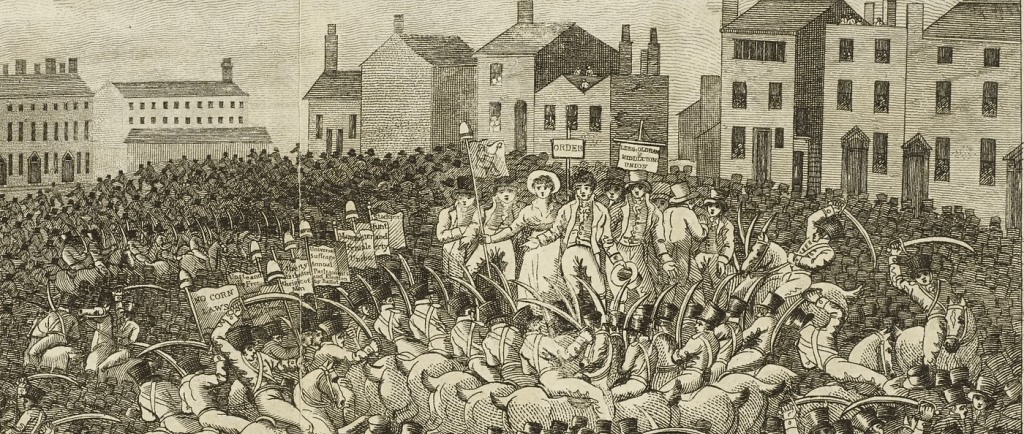
What has been discovered?
The University of Manchester Library has catalogued and digitised a large volume of Peterloo-related documents which was presented to the Manchester Reform Club by the Henry Hunt Memorial Committee on 29 June 1908.
Dr Janette Martin, Head of Research and Modern History Archivist at the John Rylands Library, writes in her recent blog post that the book is relatively unknown amongst Peterloo scholars, and admits that she was not aware of its existence when she curated the ‘Peterloo: Manchester’s fight for freedom‘ exhibition at the John Rylands Library in 2019.
The digitised book can be read in the collection: The Peterloo Massacre: newspapers, cuttings, pamphlets, and other material, 1819–1822 (R150652)
Alongside the original volume, the following two blogs provide a great summary.
- Dr Janette Martin – Documenting Peterloo: the digitisation of a rediscovered bound volume of Peterloo ephemera which investigates the story of the Henry Hunt Memorial Committee and the means by which the book came to be in the John Rylands Library.
- Sergio Alonso Mislata – A Peterloo Scrapbook looks in more detail at the contents of the newly discovered book.
Peterloo resources:
The newly digitised material can be accessed here.
Access the University of Manchester’s Peterloo collection.
Remembering Peterloo: Manchester’s fight for freedom, 2019 exhibition.
Find out more about the People’s History Museum’s recent aquisition of a Peterloo commemorative jug
Discover more from Society for the Study of Labour History
Subscribe to get the latest posts sent to your email.

