The 1984-5 Miners’ Strike saw the National Union of Mineworkers (NUM) engage in an industrial dispute with the government-directed National Coal Board. Despite unprecedented support from coalfield women, the miners returned to work after almost twelve months without having achieved their aims. In the end, the strike ultimately preceded the closure of scores of collieries and the loss of tens of thousands of jobs in the coal mining industry.
For the miners, the strike and its aftermath represented a near-apocalyptic event – catastrophic both for their industry and for their sense of selfhood – stemming from the complex intersection of class, gender, place and professional identities within their roles in coal mining. Coalfield women however, while in many ways as severely impacted as their male counterparts, were comparatively better able to adapt to the post-strike economy, their identity less bound up in a single line of work, while police officers were often forced to reconcile their own sense of class identity with the demands of their profession.
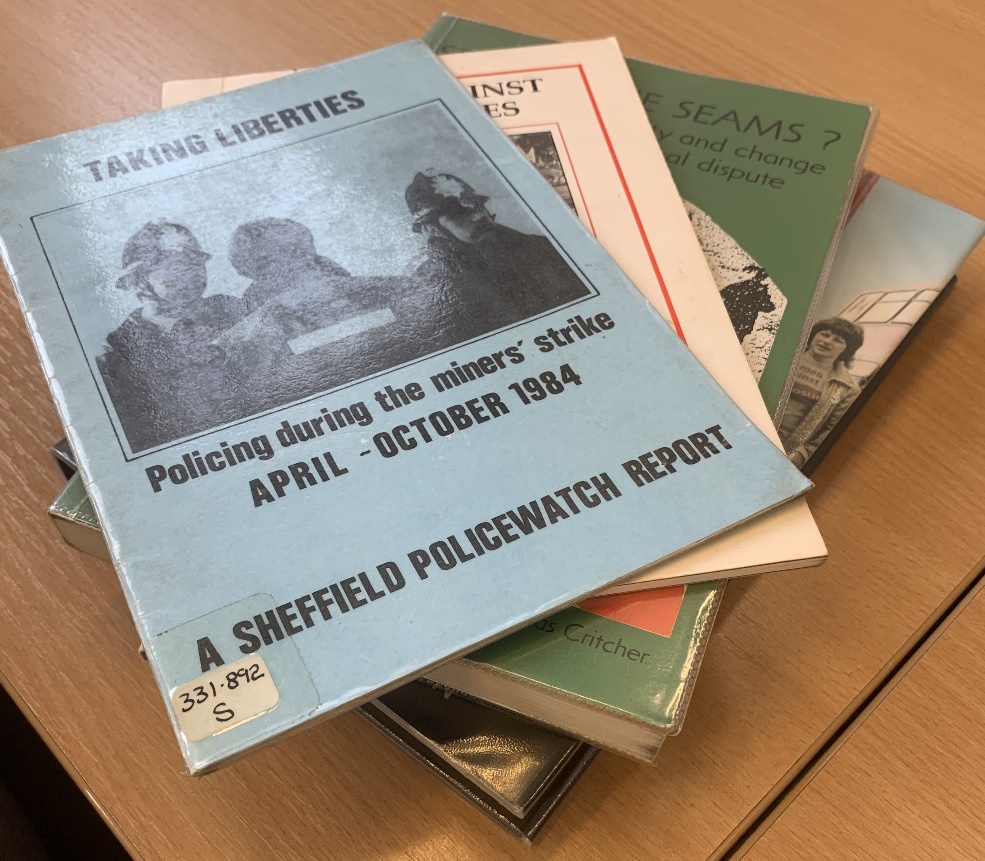
More than a binary conflict between ‘Maggie Thatcher’s Boot Boys’ and ‘The Enemy Within’, the impact of the Miners’ Strike on miners and coalfield women has been discussed in the wider academic literature. Building on the work of Gildea,[1] Sutcliffe-Braithwaite and Thomlinson,[2] and McCabe and Wallington,[3] my MA dissertation draws on a broad range of primary sources, secondary literature and semi-structured interviews with police officers to explore the impact of the 1984-5 miners’ strike on the class, gendered, place-based and professional identities of miners, coalfield women, and the police.
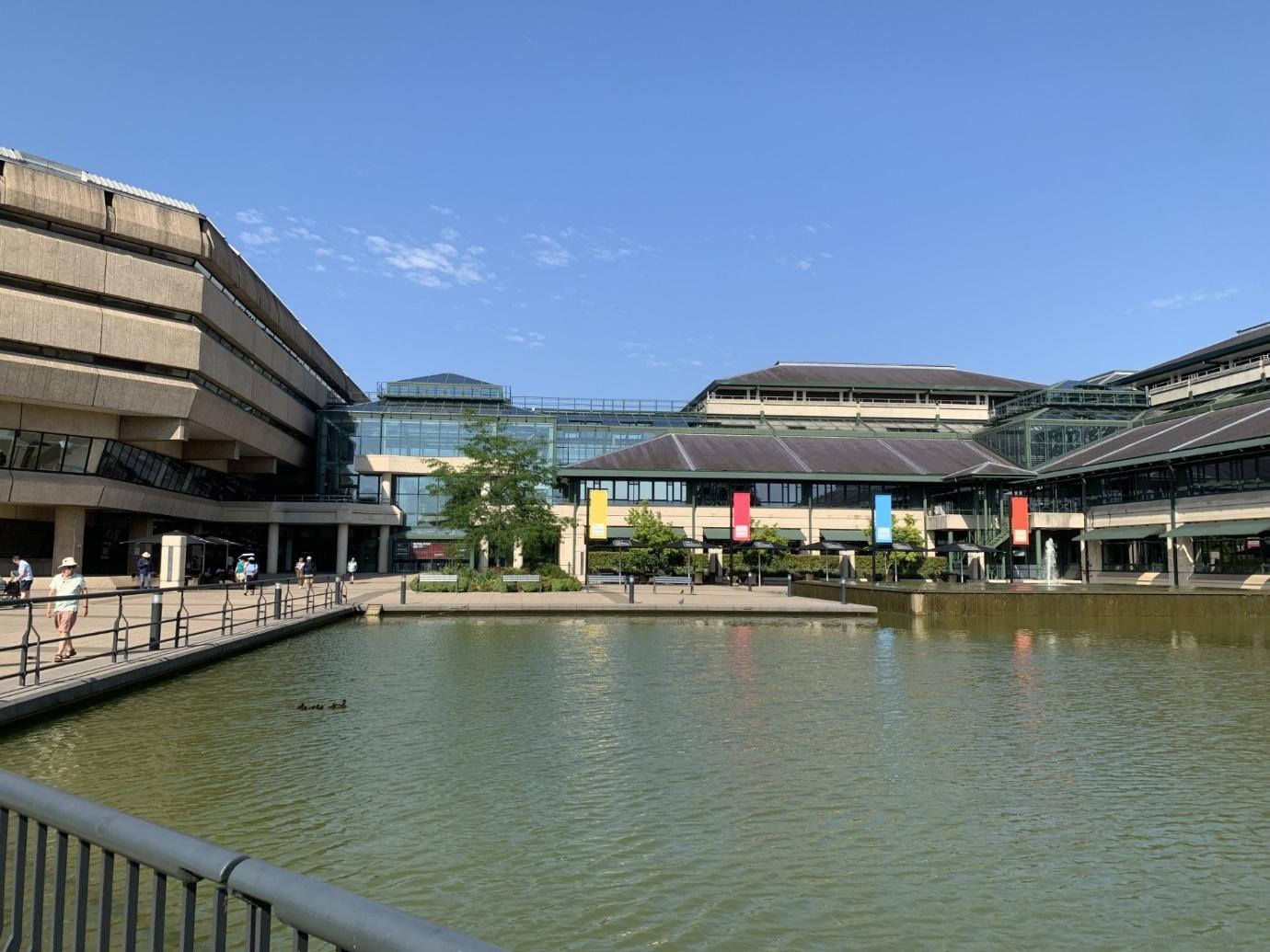
Thanks to the SSLH bursary, I was able to travel to South Yorkshire, to gather data from the Sheffield City Archives and the Sheffield Local Studies Library, as well as to London, where I accessed primary sources housed in the British Library and the National Archives. These visits were vitally important to my research as the vast majority of the most relevant documents and recordings were inaccessible without in-person appointments.
In Sheffield, I consulted documentary and audio sources held in the City Archives including contemporary police reports from South Yorkshire Police on strike action and police conduct. At the British Library in London, I gained access to numerous oral history interviews with former miners and their families, while the National Archives yielded recently-declassified material relating to the Thatcher government’s political and economic strategy through the early 1980s in anticipation of strike action by the NUM.
Robert Gildea’s interview recordings proved particularly illuminating. I found that being able to not only read but actually hear the testimony of former miners and their families had a significant impact both on my research, and on me personally. In one especially useful interview, Anne Harper (formerly Anne Scargill, before divorcing husband Arthur) spoke of how tensions surrounding societal roles and expectations on coalfield women came to the fore during the strike. In the interview, she recalled efforts to establish a soup kitchen at her local Miners’ Welfare being rebuffed by strikers who “didn’t like women [being there]”. Elsewhere, former miner, Steve Walker, reflected on the violent conduct of police officers against him and fellow strikers at a rally in Mansfield early on in the strike, describing the occasion as “just like being at war.”
While reading interview transcripts can convey something of the lived experiences of those involved with the strike, hearing the depth of emotion in the cracking voices of people recounting their experiences emphasised the exceptionally personal, human element of what is so often reduced to a binary contest between the strike’s largest personalities in Thatcher and Scargill.
I extend my heartfelt thanks to the Society for the Study of Labour History and its members for their invaluable support, and for enabling me to explore such a rich and informative range of sources which would otherwise have been entirely inaccessible to me.
Jonathan McDowell is studying for an MA in History (Taught) at the University of Manchester.
[1] Gildea, Robert, Backbone of the Nation: Mining Communities and the Great Strike of 1984-85 (Yale University Press, 2023).
[2] Sutcliffe-Braithwaite, Florence, and Thomlinson, Natalie, Women and the Miners’ Strike, 1984-1985 (Oxford University Press, 2023).
[3] McCabe, Sarah, and Wallington, Peter, The Police, Public Order and Civil Liberties: Legacies of the Miners’ Strike (Routledge, 1988).
Discover more from Society for the Study of Labour History
Subscribe to get the latest posts sent to your email.

