The Young Christian Workers (Juventude Operária Católica/Juventud Obrera Católica, JOC) was founded by Belgian priest Joseph Cardijn in the 1920s, as a response to the perceived de-Christianisation and spread of communist and anarchist ideologies among the industrial working class in Europe.
Rooted in Catholic Action and built around the ‘See-Judge-Act’ pedagogical method Cardijn developed, the JOC aimed for young workers to observe the conditions of their own lives, evaluate them in the light of the Gospels, and organise collectively for change. The movement grew rapidly across Western Europe and, from as early as the 1930s, expanded into Latin America, Africa, and Asia through the coordinating work of the Jeunesse Ouvrière Chrétienne Internationale (JOCI), headquartered in Brussels.
Domestic workers were among the very first young women Cardijn organised in Belgium during the movement’s early years. Yet as the JOC consolidated its identity around the figure of the factory worker, they were increasingly sidelined. The movement’s organisational language, its campaigns, and its international publications came to reflect the world of the factory floor rather than the private household. However, when the JOC expanded into Latin America in the mid-twentieth century, the realities of work and gender in the region made it difficult to sustain this narrow focus.
Elizabeth Q. Hutchison (2022) has shown how, in Chile, the prevalence of domestic service among working-class women drew Catholic organisations into sustained engagement with the sector. Similarly in Brazil, domestic work was one of the largest occupational categories for women. The workforce was overwhelmingly Black and mixed-race, carrying the deep imprint of slavery and racial hierarchy. Millions of women worked in private households with little formal recognition as workers and few legal protections, and the JOC could not ignore the weight of this labour in the lives of its members.
The sheer weight of this labour in the lives of young working-class women meant that the Brazilian JOC could not simply replicate the European model centred on the factory floor. Brazil was the blueprint for my research, where the JOC played a distinctive role in the politicisation of domestic workers from the late 1950s onwards. Brazilian JOC members who worked as domestic workers used the movement’s spaces, language and methods to articulate demands for dignity, citizenship, and labour rights, often in tension with a Church hierarchy as well as members of the JOC leadership more attuned to industrial labour. This Brazilian experience led me to ask whether similar processes had unfolded in Colombia and whether the JOCI’s international structures had facilitated or hindered the inclusion of domestic workers across the region.
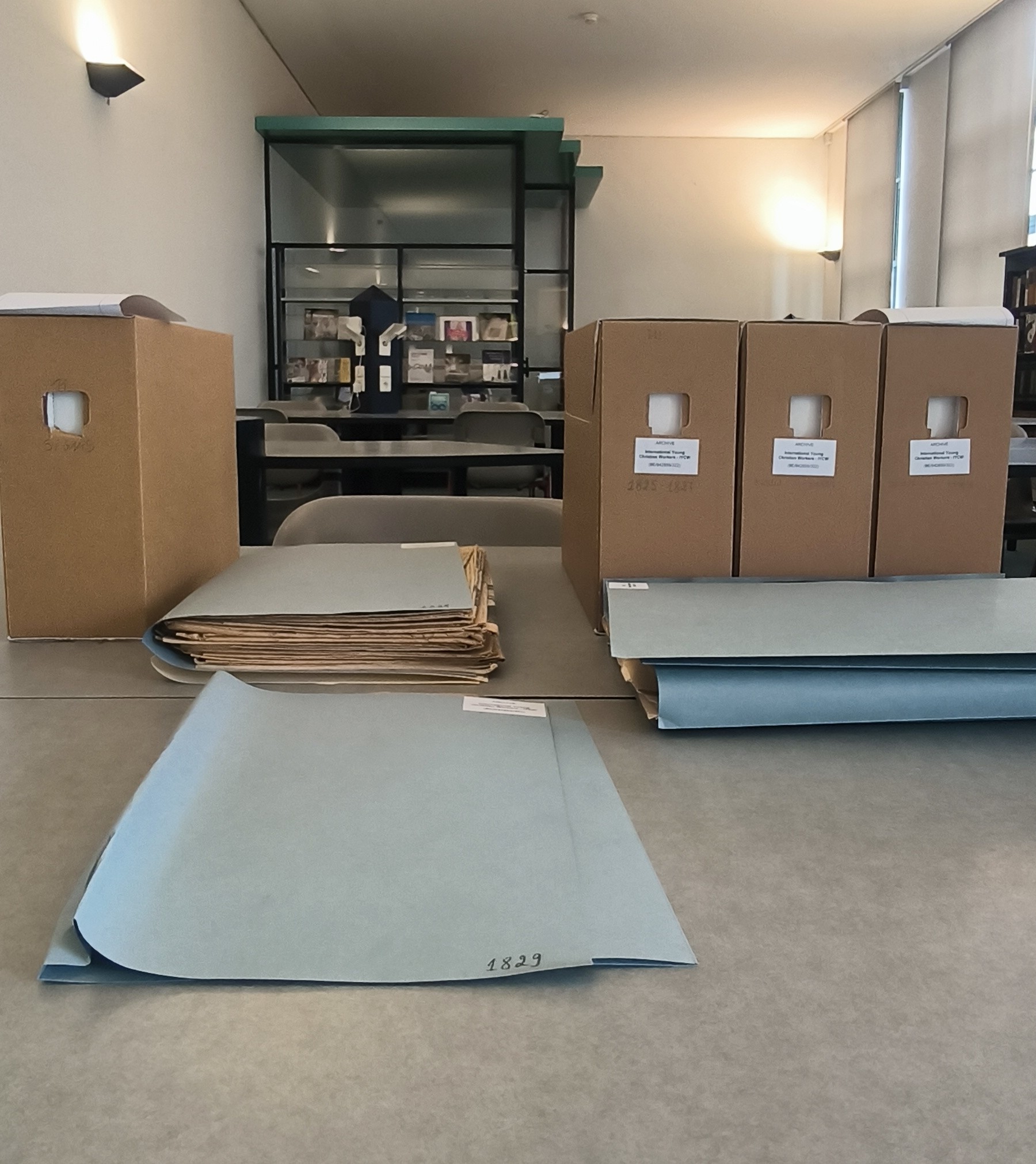
With support from the Society for the Study of Labour History, I spent one week at KADOC, the Documentation and Research Centre on Religion, Culture and Society at KU Leuven. I had already consulted archival material on the JOC in Brazil in São Paulo, but the Colombian case proved more challenging. Whilst in the country, I had learned that the house where the JOC Colombia archive was stored was closed, and after several attempts to access it, I understood I had no available time to try further. KADOC, which holds the records of the JOCI, national JOCs, as well as the papers of several figures connected to Belgian and international Catholic movements, was my only means of accessing archival material on the Colombian JOC from the 1930s to the late 1980s.
I consulted two main collections: the Archief Christine de Hemptinne and the JOC Colombia. De Hemptinne (1895–1984) was a Belgian aristocrat and key figure in international Catholic women’s organising, whose travels around the world (particularly Latin America) impacted the development of women’s participation in Catholic Action initiatives. Unfortunately, I could not make much of the findings in her collection, as they were composed mostly of newspaper clippings on themes she found relevant to the area.
The Colombia JOC collection, on the other hand, proved remarkably rich. Among the material I examined were newspapers produced by the Colombian JOC, including La Juventud Obrera and the publication aimed at women, Trabajo y Alegría. I also found a Colombian edition of the leaflet Unidas, directed at female JOC members, a title I had already encountered in Brazilian archives. This parallel is significant, as it suggests the circulation of shared organisational models and printed materials across the Latin American JOC network. Moreover, it allows me to draw comparisons between the platform for female JOC members in Colombia and in Brazil. The collection also contained hundreds of letters exchanged between the JOCI in Brussels and the Colombian national section, including handwritten letters between Brazilian and Colombian personnel. This will be crucial in showing the transnational solidarity and links between Catholic workers in both countries, as well as with the JOCI.
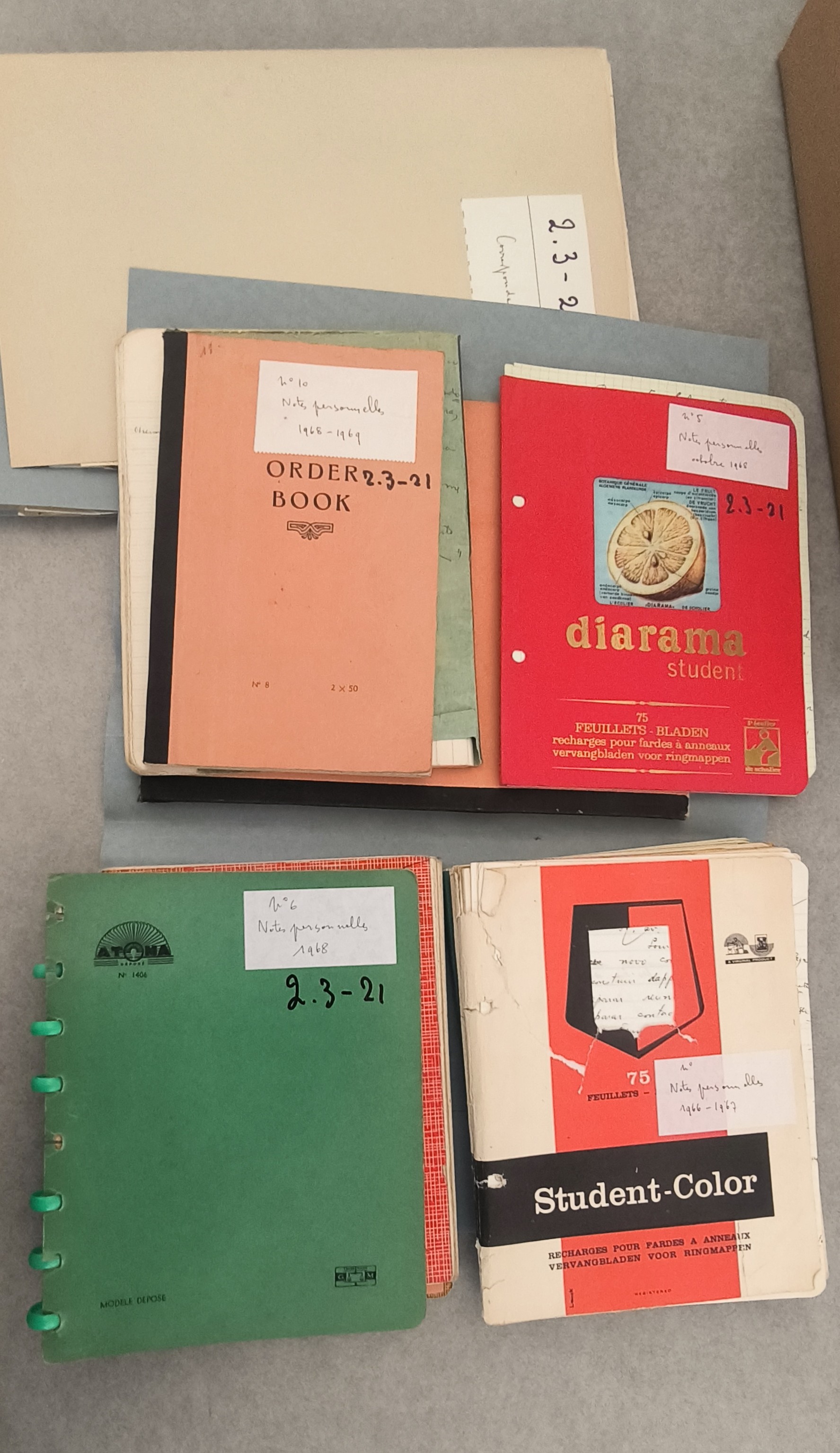
My most unexpected finding was several notebooks belonging to Chilean Sonia Bravo, JOC’s Latin American Vice-President. The reason why I label it as unexpected is that I mixed up Bravo with another Chilean JOC member, Elba Bravo, a domestic worker. Nevertheless, this proved to be a providential mistake, as Bravo’s notebooks recorded her observations on grassroots initiatives during the time she spent in Colombia and traced how those experiences informed the JOC’s broader propaganda and pedagogical materials for the region, including documenting the presence of domestic workers in different JOC groups in Bogotá.
Equally important, her notebooks show her friendship with Angelina Oliveira, a crucial figure in my thesis. Oliveira was a member of the Brazilian JOC, from the Northeast of the country (a region historically less industrialised than the South and Southeast, including the former capital Rio de Janeiro and Brazil’s biggest city, São Paulo). After joining the leadership board of JOC Brazil, Oliveira did an interchange period of two years in Colombia, aiming to increase exchanges between the countries of South America. In that sense, Oliveira’s trajectory links the JOC movements in Brazil and Colombia at a moment when both countries were undergoing profound political upheaval, as Colombia navigated the aftermath of La Violencia (1948–1958) and Brazil entered a military dictatorship (1964-1985). After returning to Brazil, Oliveira was herself arrested and interrogated by the Brazilian police, under accusations of subversive activities as a member of the JOC.

At first glance, these findings might appear disconnected from the history of domestic workers. The newspapers, correspondence, documents and notebooks I consulted at KADOC do not focus exclusively on the sector, and domestic workers rarely appear as named subjects in the JOC Colombia Collection, or in the JOCI’s institutional records. Yet this apparent absence is itself revealing. Where the Brazilian JOC engaged directly with domestic workers as a significant presence among its membership, the Colombian JOC’s relationship with the sector followed a different trajectory. Despite the overwhelming prominence of domestic work for women’s labour in Colombia, the material I consulted suggests that domestic workers entered the Colombian JOC’s agenda as an imported question, shaped by models and materials circulated by the JOCI in Brussels and other regional JOCs, such as those in Brazil and Chile, rather than as a locally identified priority.
The circulation of Unidas across national sections, the content of the correspondence between Brussels and Bogotá, and Bravo’s own notes on her time in Colombia all point in this direction. At the same time, Oliveira’s trajectory between Brazil and Colombia, documented in these very records, shows how the experiences of women workers, including domestic workers, travelled across borders through the JOC’s transnational networks. Understanding why the Colombian JOC engaged with domestic workers differently from its Brazilian counterpart is essential to the comparative argument of my thesis, and the KADOC material provides the archival foundation for that analysis. Arriving at these initial conclusions and consulting this crucial archive would not have been possible without the generous support of the Society for the Study of Labour History, to whom I am most grateful.
Yasmin Getirana is a PhD candidate in International History at the London School of Economics.
Find out more about the bursaries on offer from the Society for the Study of Labour History.
Discover more from Society for the Study of Labour History
Subscribe to get the latest posts sent to your email.

