Manipur was a princely state under British India from 1891 to 1947. Currently, it is a federal state of India located in the far eastern corner, sharing a border with Burma. My research examines the central role of Manipuri women in ensuring economic survival through their work in the market, and how British colonial economic policies and the Second World War in Manipur transformed and threatened market women’s livelihoods. It focuses on two events, the Second Nupi Lan (Women’s War) 1939-40 and the Second World War in the princely state of Manipur.
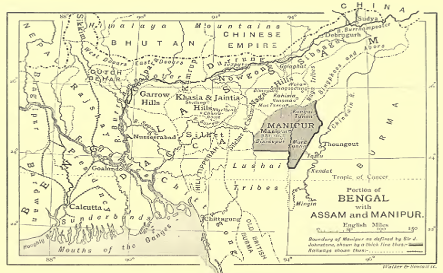
The Second Nupi Lan was a fierce women’s agitation against the excessive export of rice by Marwari traders under the British free trade policy. In Manipur, women have historically managed markets and played a central role in the economy, a tradition that continues to this day. They sold a wide range of local produce, including rice, vegetables, tobacco, fresh and dried fish, salt, oils, mats, baskets, cloth, pots, rag dolls, local slippers, coconuts, brassware, trinkets, and other goods. Though their main item of trade was rice.
Their labour encompassed economic exchange, and the marketplace was a sphere where women exchanged political, cultural ideas, and collective consciousness. Following the transition of Manipur into a princely state in 1891, the British Colonial Government implemented significant changes to the State’s economic policies. In particular, the free trade policy granted exclusive rights to Marwari traders from the North of India to export rice. This policy resulted in excessive rice exports from Manipur and a subsequent rise in the price of rice. In 1920, women responded by boycotting the market, refusing to sell rice and paddy to the traders. Despite these actions, rice exports persisted, accompanied by ongoing price volatility.
With the continued rice exports and the market boycott in the preceding years, the situation worsened in 1939. Excessive rainfall destroyed standing crops, and continued large-scale rice exports led to an acute shortage and a sharp increase in rice prices. The monopoly held by foreign traders, who purchased all available rice stocks, prevented women from procuring rice and paddy to sell in the market. This acute shortage raised widespread concerns about the potential for famine in Manipur.
In response to these escalating hardships was the Nupi Lan of 1939. On 12 December, over 4,000 women held a meeting at the market before marching to the Manipur State office to demand that the President of the Manipur State Durbar, Mr T.A. Sharpe, stop rice exports. The President responded that King Churachand was on a pilgrimage outside Manipur and that he could not issue an order without the consent of the King. Consequently, the women accompanied the President to the Telegraph Office to send a telegram to the King requesting a halt to rice exports.
Tensions escalated at the Telegraph Office as the women insisted on waiting for a reply from the King. With the large crowd of women agitating, the authorities, with the use of force, attempted to control and disperse the crowd. In response, the women pelted stones, and during the ensuing struggle, some attempted to seize rifles from the sepoys. This confrontation resulted in severe injuries to several women, who were struck by bayonets. The Nupi Lan persisted for over a year, during which the women continued to strengthen their demands.
The Japanese occupation of Burma and the resulting influx of refugees contributed to the end of the war. Overall, the Second World War had a devastating impact on the economic lives of Manipuri women, as markets were bombed, and many were displaced from their homes and sources of sustenance. Additionally, women were unable to work in the agricultural fields or sell their produce in the markets. Therefore, through these events, I explore how war, gender, markets, and livelihood are deeply intertwined in Manipur during this period.
I am immensely grateful for the support of the Society for the Study of Labour History (SSLH), which enables me to consult primary sources at the British Library, the National Archives at Kew, the Imperial War Museum, the Centre for South Asian Studies Library, and the Churchill Archives in Cambridge. The archival research helped me a great deal, as I was able to access a wide range of primary
materials.
The materials I consulted included administrative records, fortnightly reports, individual papers, and film archives relating to colonial governance, as well as economic, and social conditions. Examining these materials gave me a better understanding of how colonial administrative systems functioned and how policies were implemented. The administration records of Manipur helped trace detailed information on local events, policing activities, Second World War developments, and matters relating to production, distribution, and revenue collection, as well as the broader political climate.
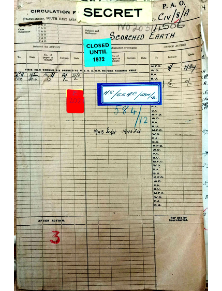
For instance, records on the Second Nupi Lan were particularly helpful in shedding light on the colonial economic policies that affected the livelihood and economic structures in the community. Records concerning the Second World War focused on tax collection, the bombing of Imphal, the war fund committee and overall budget administration. The record brought to light the destruction of the women’s market due to Japanese bombing and also how people’s houses were requisitioned for the use of Allied Forces, leading to the mass displacement of the population. These insights show how the devastation of the war had significant consequences for local communities, disrupting their everyday lives and economic activity.
Women, in particular, have been deeply affected by these events as the archival films from the Imperial War Museum provided visual insights into the suffering of women in the aftermath of the bombing. This evidence is crucial in demonstrating that as households were displaced and markets bombed, women often had to cope with the immediate challenges of maintaining families and securing food and shelter during wartime. The archival material also revealed that the colonial authority made it mandatory for the local population to contribute their resources during the ‘Self-Denial Week’ in Manipur in 1943 to provide relief to the victims of the Bengal famine. This indicates that such an obligation placed economic hardship on people who were already surviving on limited resources and labour opportunities.
The archival sources also revealed several findings that have added new elements to my research. For instance, records relating to revenue and labour were particularly helpful in illuminating the economic structures that shaped everyday life during the period 1939-45. During this time, inflation was high, and the prices of food and essential items skyrocketed. Adding to their misery, food resources were directed towards the military for their consumption. The records show that the daily wage of unskilled labour was lower than in peacetime; however, contracted wartime labourers earned twice as much per day. The emergence of new forms of work during the war illustrates how labour patterns shifted in response to changing economic conditions.
The record also showed that women’s labour was in short supply, as they sought more profitable work, such as rice husking. These details offer important evidence of how women managed the complexities of war and how they evaluated their life choices in precarious conditions. Although historical records rarely highlight women’s condition, these documents, provide important indications of how war reshaped women’s roles and responsibilities within households and led to shifts in livelihood strategies.
Another valuable input from the archival research was that it enabled me to critically reassess findings in the existing literature. While earlier work on the Nupi Lan and Second World War in Manipur often relied primarily on official narratives or secondary accounts, archival materials such as the Fortnightly Report, Manipur Affairs, Manipur State Rehabilitation, Stewart Papers, Gimson Papers, Bor Papers, and the Scorched Earth Policy in Manipur at multiple archival repositories provided direct evidence of how policies were enacted and how women negotiated or protested in Manipur. Consulting these materials offered the opportunity to interrogate dominant interpretations, revealing the complexity of relationships between colonial authorities and the wider responses of the local population.
Overall, the archival research supported by the SSLH has played a crucial role in shaping the direction of my research. The evidence gathered from these sources has helped refine my central research questions, provided new insights into local administrative, economic and labour practices, and clarified previously uncertain aspects of the historical record.
Find out more about the bursaries on offer from the Society for the Study of Labour History.
Discover more from Society for the Study of Labour History
Subscribe to get the latest posts sent to your email.

