My research investigates female migrant mill and factory workers housed at asylums and poorhouses in Dundee and its environs between 1841 and 1900. I have spent the last four years digging through primary sources, assessing and analysing recorded manifestations of anomic symptoms, and evidence of anomic experience, drawing on data principally from the Dundee Royal Lunatic Asylum, Montrose Asylum, the Dundee East poorhouse, and the Liff and Benvie poorhouse.
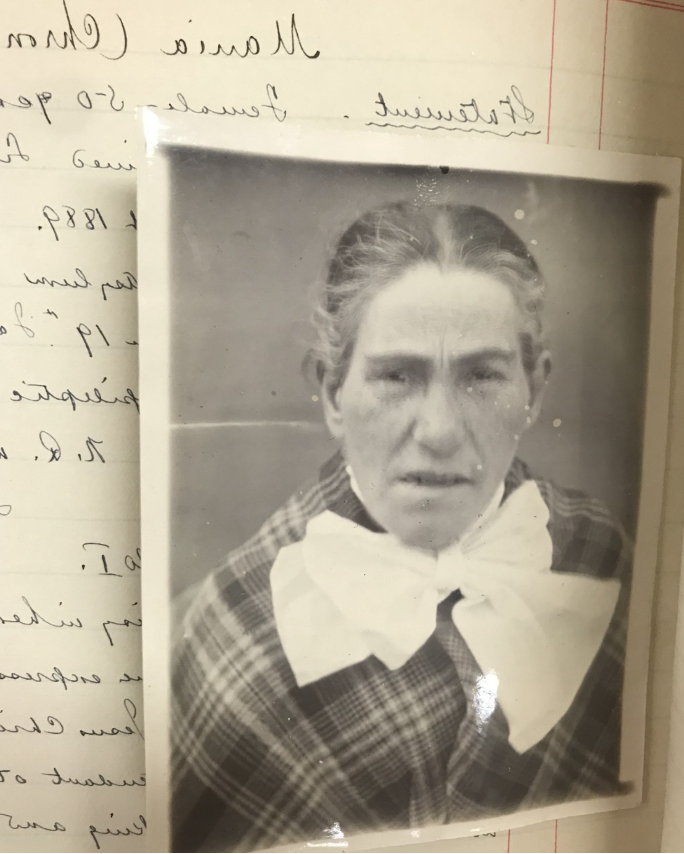
Following Warren TenHouton, I approach anomie as an embodied condition of normlessness that is identifiable through both recurring behavioural and emotional patterns.[1] In this sense, Durkheim’s concept of ‘normlessness’ in society can be examined at an individual level, and becomes observable in everyday experiences of deviant behaviours, anxiety and frustration.[2] My thesis carefully examines how contemporary diagnoses found within asylum and poorhouse records reflected these patterns, and how they can be associated with the socio-economic and working conditions that surrounded the nineteenth-century migrant worker. It examines the impact of lost family ties, disrupted traditions, industrial labour, and social stigma.
My research findings have shown that a hierarchy of formal and informal support existed in Dundee, operating as a sort of web or matrix, which differed according to levels of availability and accessibility. One patient case book I discovered showed a widowed mill worker from Ireland, hospitalised by her daughter and diagnosed with ‘mania’. These women found themselves receiving indoor relief only because all other options of support – mutual aid and kinship networks, church-organised charity, the informal economy—had fallen short in one form or another. All had been at the receiving end of epidemic illness, family death, extreme levels of poverty, and extended periods of unemployment. Many were disabled or fatally ill, others were battling bouts of mental illness. Most had found themselves in and out of different institutions, from poorhouses to asylums, or between various asylums.
My research shows, first, that asylums and poorhouses were sites of some of the most extreme social consequences of industrial labour. Second, it demonstrates that the asylum case notes of mill workers provide evidence of social dislocation and anomie, as seen in their documentation of suicide attempts, drinking, and other ‘deviant’ behaviours.
During my archival trip, I intended to work through Dundee’s city and university archives and gather as much primary material as possible. As a remote student, this was necessary, as I have often had to rely on online sources and secondary material. Archival research is time consuming and anything less than a week would not have been sufficient. Each trip turns into a heavy expense, which, as a self-funded student, only becomes possible with grants, such as this from one from the Society for the Study of Labour History.
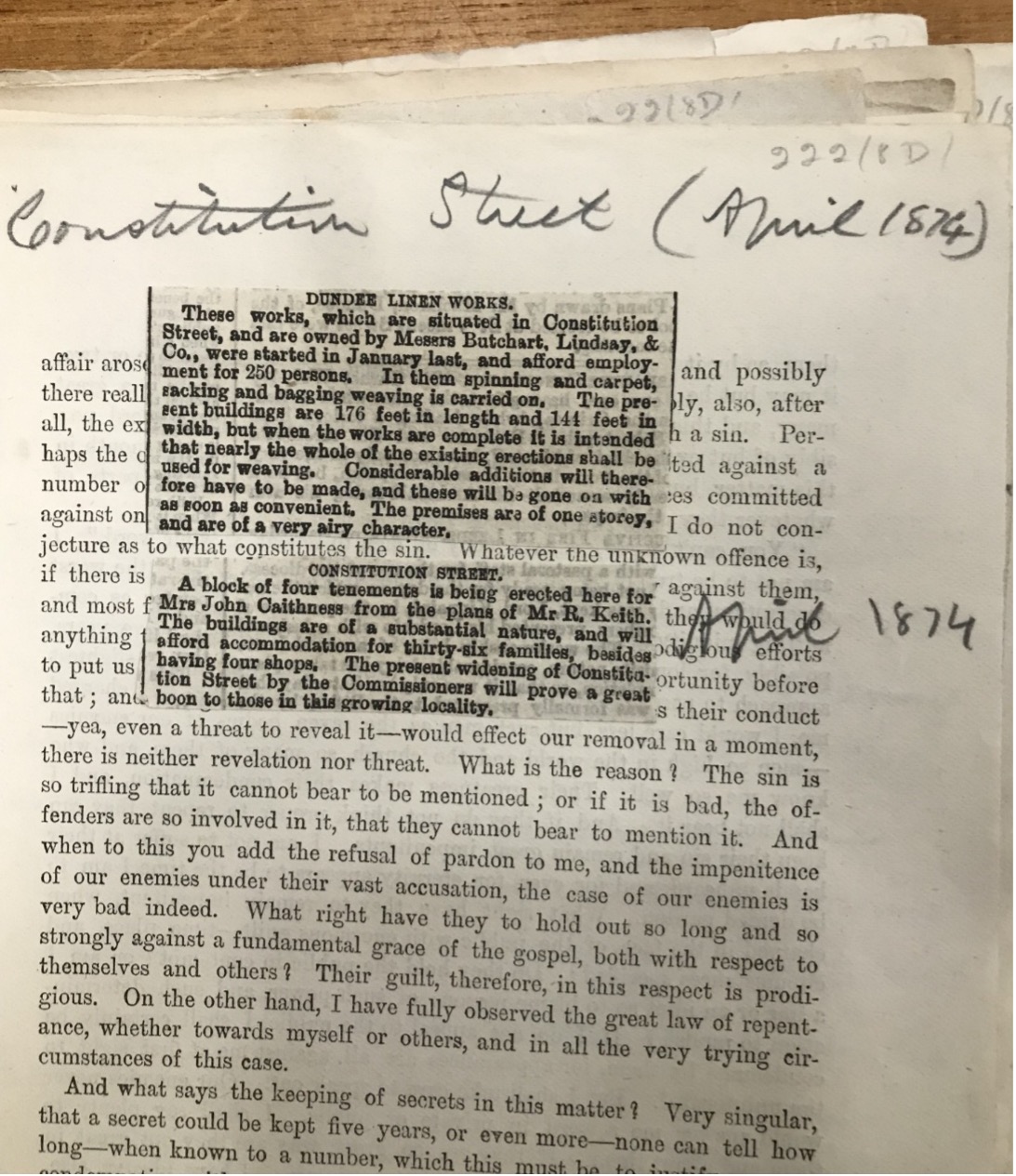
In-person archival visits were the only way I could truly get to the heart of the city. Uncovering the consequences of Dundee’s living and working conditions examining how the city ‘actually existed’ for contemporary Dundonians, and the extent to which Dundee’s development facilitated the growth of mutual aid networks among the Irish diaspora. Records such as the image shown below, preserved in the Lamb Collection, document and reflect on changes in the nineteenth-century cityscape.
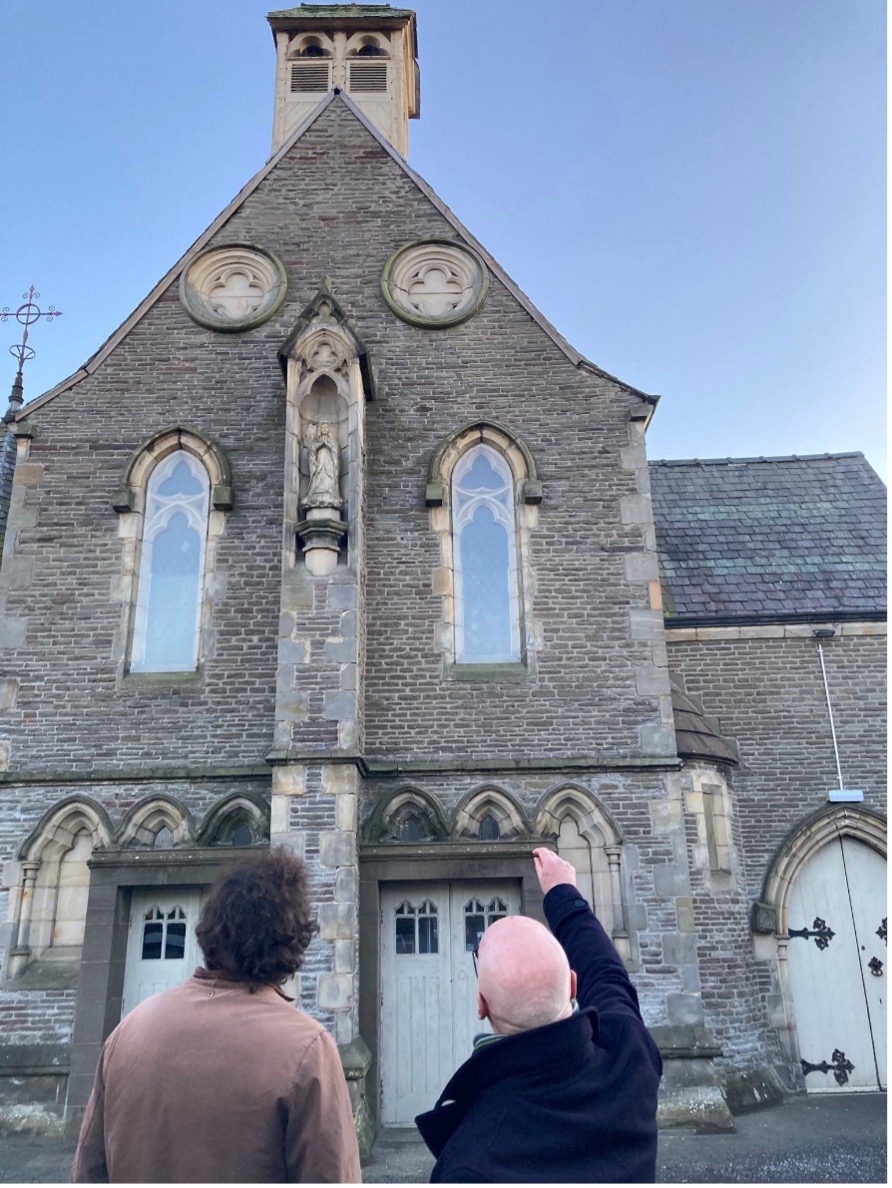
Over the course of my week in Dundee, I was able to pay multiple visits to the city’s various archives. While there, I pored over asylum case books, petitions for admission, poorhouse admission records, newspapers, as well as census and civil records. Most of the material stored in the city’s archives has not been digitised, so this research trip has helped my empirical findings immeasurably. In addition, I was also able to meet and consult with archivists in-person and arrange meetings with members of the St Marys Roman Catholic Church in Lochee, Dundee. I was able to visit the Church’s archives and even given a personal tour of the church and the surrounding area.
Thanks to the support of the Society, the material I gathered during this research trip has ensured significant progress in my thesis, and unexpectedly, improved existing chapters, as I stumbled upon new primary documents. For this opportunity, I am most grateful to the Society for the Study of Labour History and for its generous support.
Find out more about the bursaries on offer from the Society for the Study of Labour History.
References:
[1] Warren TenHouten, ‘Normlessness, Anomie, and the Emotions’, Sociological Forum (2016), 31: 2, 465–486.
[2] Émile Durkheim, The Division of Labour in Society. Translated by W. D. Halls (New York: Free Press, 1933); Durkheim, Suicide: A Study in Sociology. Translated by John A. Spaulding and George Simpson. (New York: Free Press, 1951).
Discover more from Society for the Study of Labour History
Subscribe to get the latest posts sent to your email.
 Society for the Study of Labour History