In our continuing series on places in labour history, Mike Mecham argues that West Ham and Canning Town in East London form a cornerstone of the British labour movement.
There is a good case for West Ham, in East London, being recognized as the cornerstone of the British labour movement and of political radicalism more generally. For Caroline Benn, in her biography of Keir Hardie, West Ham, with Canning town, was ‘the cradle of the new unionism’ and London’s socialist heartland (p.75). In 1888 young women from poor Irish families in Canning Town were central to the historic ‘Matchgirls Strike’ in Bow. West Ham was also the bedrock of the groundbreaking London dock strike of 1889, and in 1892 it elected Hardie as its MP. In 1898 it became the first labour council elected to power in Britain (and remains a Labour stronghold today); West Ham, particularly Canning Town, also had an active working-class suffragette movement supported by the Pankhursts (Emmeline married in Canning Town). In1926 it was at the heart of London’s support for the general strike and in 1936 West and East Ham trade unionists, socialists and Irish settlers joined East London’s Jewish community in resisting Oswald Mosley’s Blackshirts in the ‘Battle of Cable Street’.
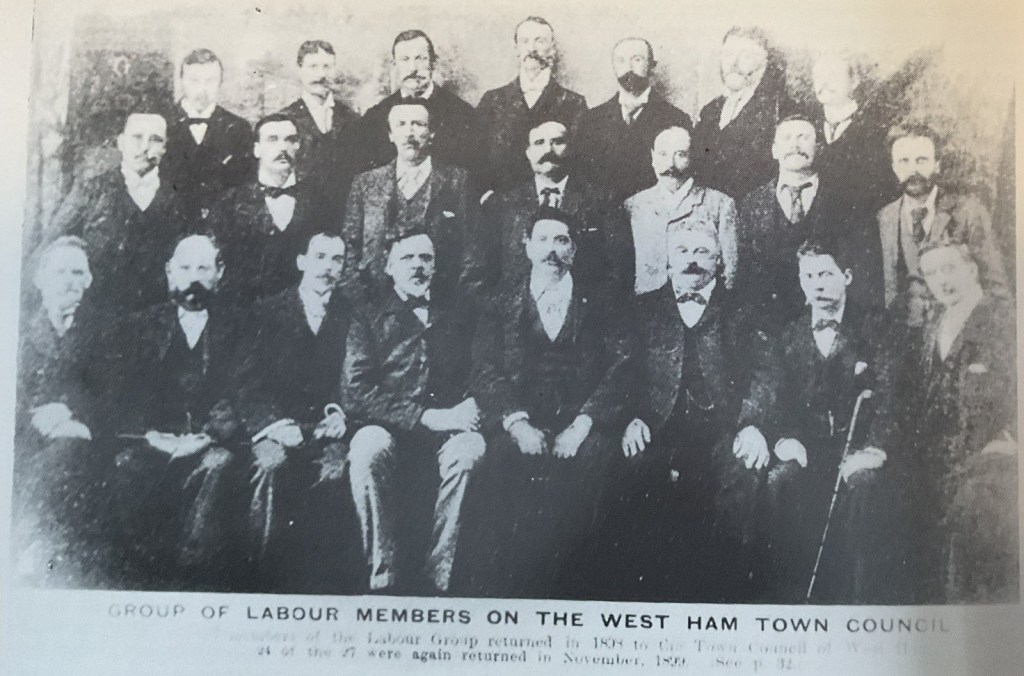
The rate of West Ham’s all-round growth was so rapid that some suggest it was unique in Britain at the time. In 1850 it was a collection of small agricultural settlements with a population of around 17,000; by the end of the century it had grown to 268,000, peaking at 300,000 in 1921. From the 1840s, with the eastwards expansion of London and the improvement in road and rail links, West Ham was transformed into one of Britain’s industrial hubs. ‘Offensive trades’ laws saw chemical manufacturing move to West Ham. The giant Stratford locomotive and carriage building works was opened in 1850 and shipbuilding firms also found southern West Ham convenient with its proximity to waterways and the River Thames. This led to the construction of the Royal Group of docks to accommodate ships and handle goods from all over the world. Thousands of people converged on West Ham from across Britain and Ireland with streets of small houses being built across the borough.
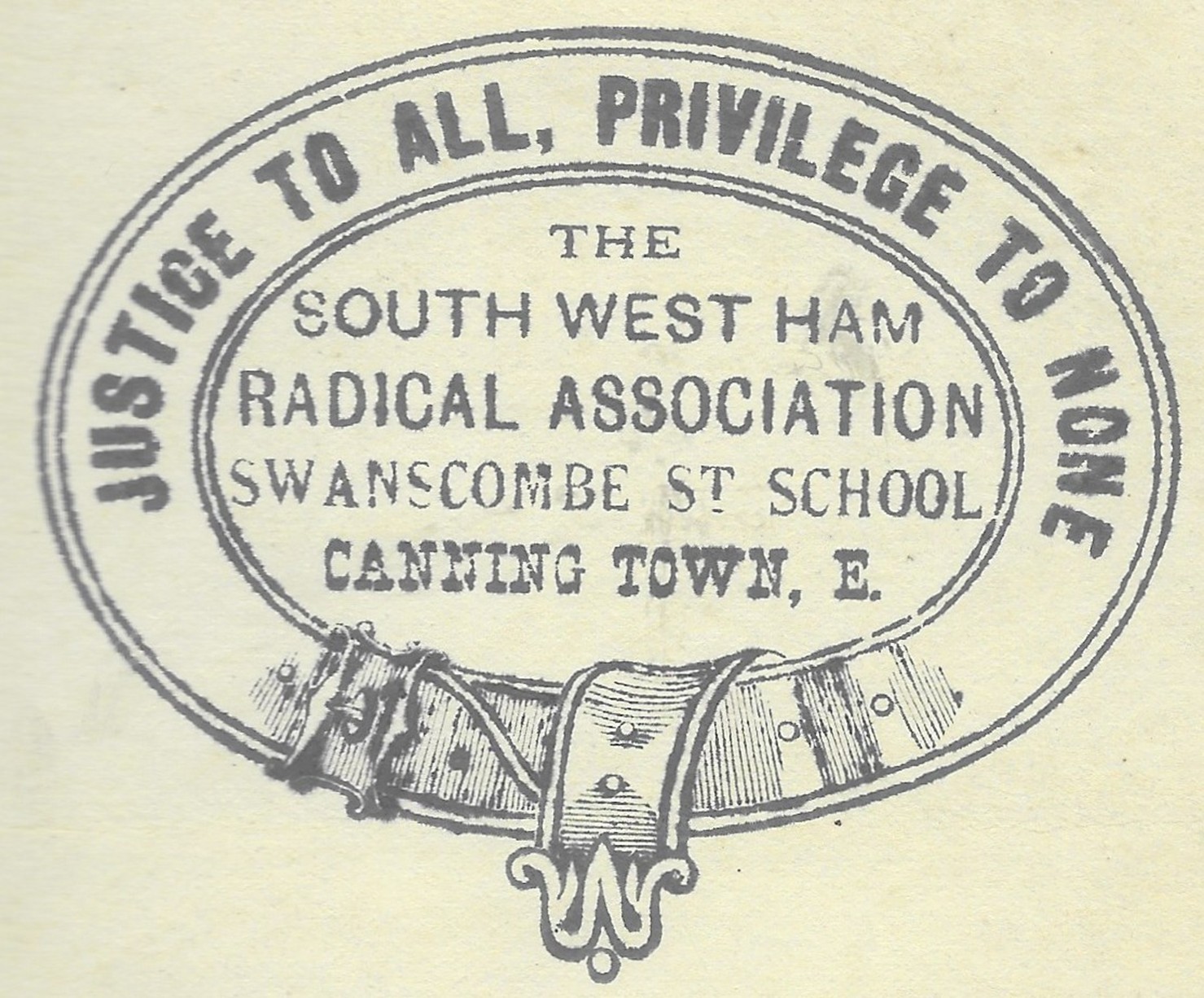
A key moment in West Ham’s political and trade union development came with the construction between 1868 and 1870 of the giant Becton Gas Works, the largest in Europe. Many of its new workforce brought with them experience of struggles for higher wages and better conditions; many were Irish who also brought their own tradition of struggle and poverty. In 1889, Will Thorne, a prodigy of Eleanor Marx, helped form the National Union of Gas Workers and General Labourers, spearheading ‘new unionism’, and leading a successful strike for better pay and conditions, as well as helping to organize the London dock strike. In the twentieth century, the area was devastated during the Second World War, and its strength became its weakness in the 1970s and 1980s when deindustrialization decimated the area. Yet it remains vibrant as part of Newham. Always a migratory hub, the new borough is now the most ethnically diverse place in the UK. Despite having high levels of poverty and deprivation it is also one of the highest educational performers in the tradition of its working class.
Mike Mecham was born and raised in West Ham, met his wife in the West Ham South Young Socialists, and is a former councillor for Canning Town. Growing up in a blitzed East London, he recognised firsthand the debt owed to the labour movement in providing social and educational opportunities even during postwar austerity.
Sources
Caroline Benn, Keir Hardie (London: Hutchinson, 1992)
Newham History Workshop, A Marsh and a Gasworks: One Hundred Years of Life in West Ham (Newham Parents’ Centre, 1986)
London Borough of Newham, West Ham 100: 1886-1986 London Borough of Newham, 1986)
Read more articles in the series ‘A Place in Labour History’.
Discover more from Society for the Study of Labour History
Subscribe to get the latest posts sent to your email.
 Society for the Study of Labour History