In our continuing series on places in labour history, Mark Crail visits a rural churchyard to pay his respects to the first translator of the Communist Manifesto.
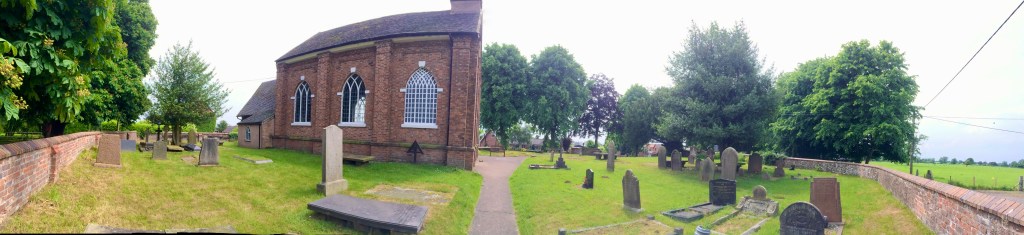
Drive along the narrow country lanes of Cheshire for far enough that you begin to question whether your satnav is working properly and you will eventually come across St Michael’s Church in the small, scattered settlement of Baddiley. The church is grade I listed and parts of the timber-framed building date to the early fourteenth century. But its attraction as a site of labour history lies in the walled churchyard that surrounds it.
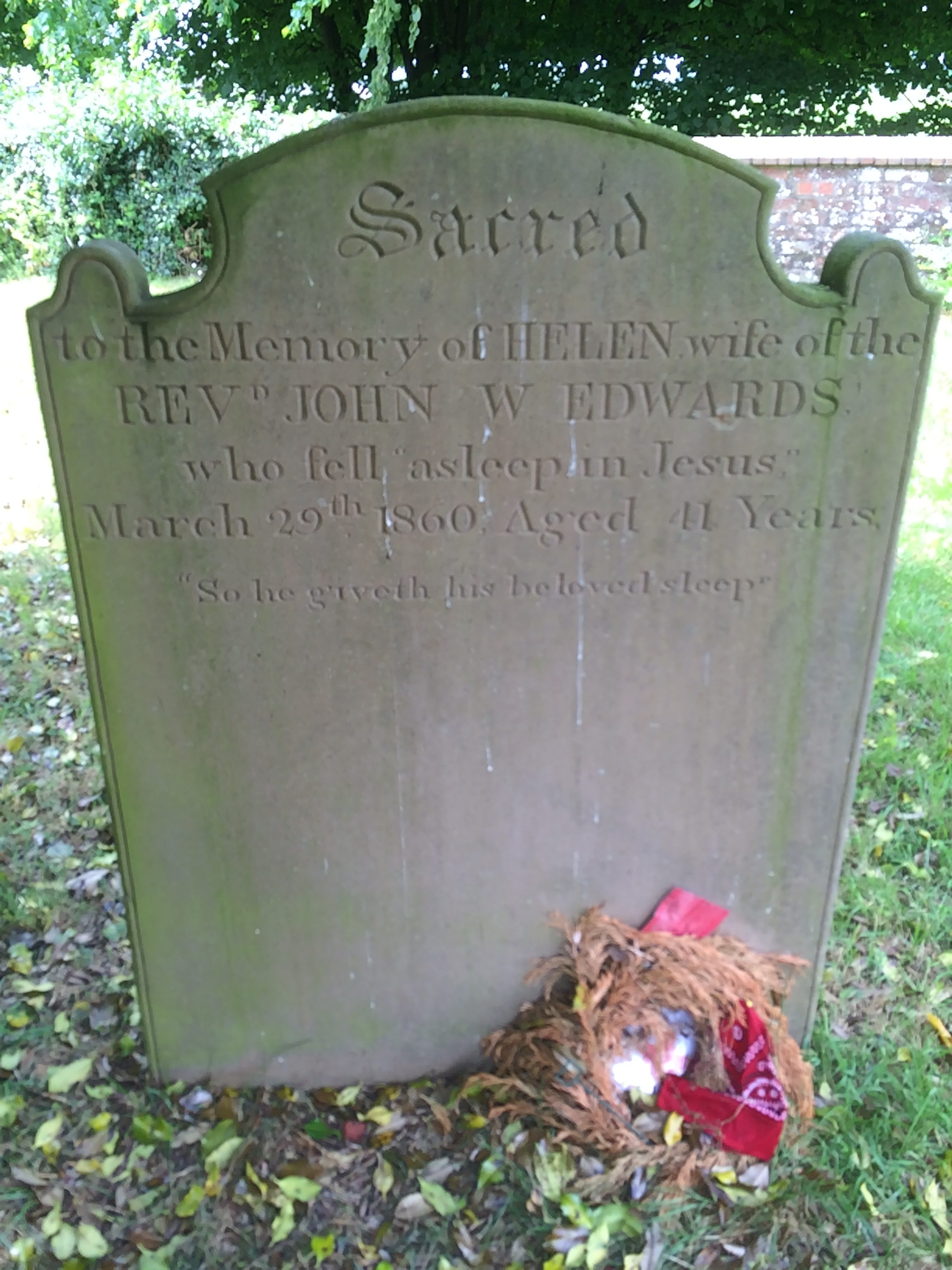
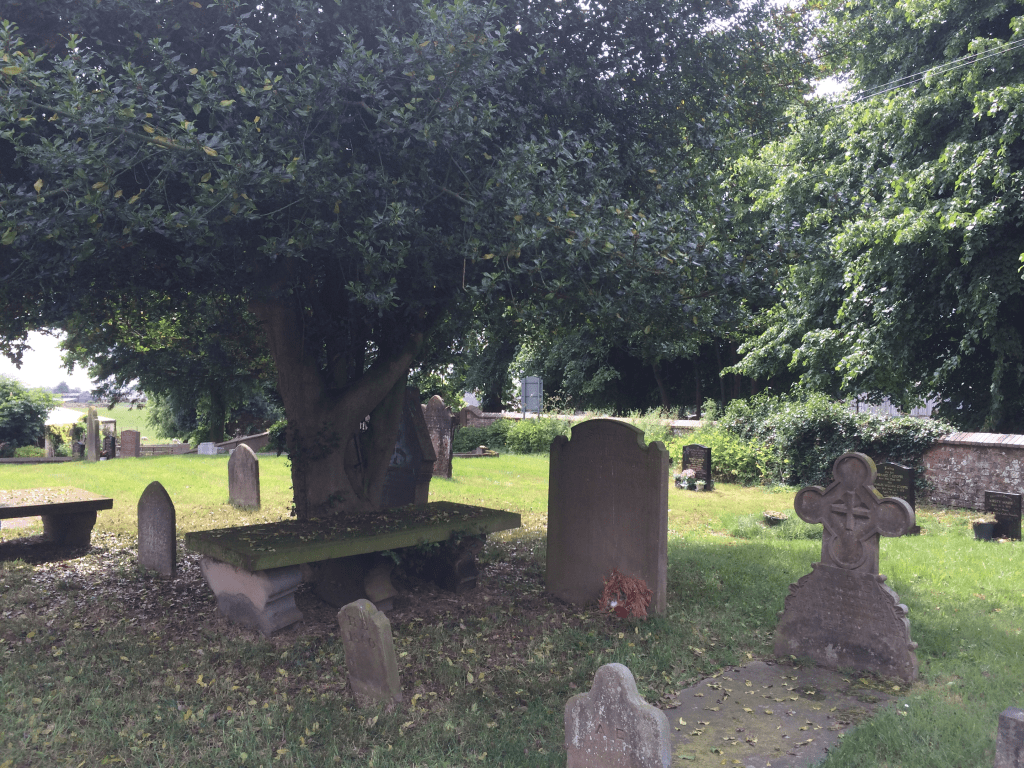
Here, in the quiet of the countryside under an ancient yew tree, you will find a headstone, ‘Sacred to the memory of Helen, wife of the Rev. John W Edwards, who fell asleep in Jesus, March the 29th 1860, aged 41 years.’ It is an idyllic spot, and entirely what one might expect for the wife of a rural vicar. Perhaps more surprisingly, the headstone marks the burial place of the first translator of Marx and Engels’ Communist Manifesto, a woman much admired by the notoriously irascible founders of modern communism, and a significant figure in the late Chartist milieu around George Julian Harney’s Red Republican newspaper.
Born at Barrhead in Scotland in 1818, the youngest of eleven children, Macfarlane had a comfortable childhood. Her father George owned a calico-printing works, and her mother, also Helen, came from a similarly well-off family of calico printers. But the family found itself destitute when mechanisation forced the business to the wall in 1842 and following her father’s death, Helen was forced to make her own way in life.
In 1848, the year of revolutions, while working as a governess, Helen Macfarlane witnessed the Vienna uprising against the Hapsburg monarchy, and on her return to England she began to contribute articles for Harney’s papers under the pen name Howard Morton. Her translation of the Communist Manifesto was serialised over several consecutive issues of the Red Republican, beginning on its front page on 9 November 1850, and has since become famous for its opening words: ‘A frightful hobgoblin stalks throughout Europe…’
The wording can seem amusing, almost quaint, to those familiar with the later Samuel Moore translation, which begins, ‘A spectre is haunting Europe.’ But it would have been carefully chosen. Helen Macfarlane’s text was written to be understood by its working-class readers, not by political scientists. Hobgoblins have fallen out of favour outside folklore circles, but the word was in fairly common usage in the mid nineteenth century, and there are more than ninety of them in the Chartist Northern Star alone, some of them put there by Feargus O’Connor himself.
Alongside this singular work of translation, Helen Macfarlane wrote extensively for Harney’s Notes to the People and the Red Republican over the space of a few months, addressing the ideas of Thomas Carlyle, the legacy of the European revolutions, democracy in America, and the condition of working-class women in London. She also published works on theology that were highly critical of established religion in general and the Church of England in particular.
All this came to an end at a new year’s eve banquet organised by the Fraternal Democrats at the Literary and Scientific Institution, Tottenham Court Road, on 31 December 1850. Though the details are now lost to time, Macfarlane and Mary Harney, had an argument which could not be reconciled, and when Mary’s husband took her side (while Marx took Helen’s), Macfarlane’s association with the Chartist press came to an end.
It would be nice to say that Helen Macfarlane moved on and lived a long and happy life. Alas that was not the case. Some time in 1851, she married a Belgian revolutionary by the name of Francis Proust, and the following year Helen Proust gave birth to a daughter. At the end of 1852, the family boarded a ship bound for Natal, where Helen’s brothers now lived. But before they set sail, Francis was taken ill and was forced to go ashore where he died. Shortly after arriving in Durban, their daughter also died, and by September 1854 Helen had returned to England.
Two years later, Helen Proust married John Wilkinson Edwards, the Anglican rector of Baddiley. He too had been widowed, and brought ten children to the marriage. Helen Edwards, as she now was, would go on to have two sons of her own, born in 1858 and 1859. But in early 1860, aged just forty-one, she fell ill with bronchitis and on 29 March she died at Baddiley rectory with her husband at her side.
Helen Macfarlane, as she is best remembered today, led a remarkable life and in a later century would no doubt have lived longer and left a far greater legacy. But her achievements are significant enough and should not be forgotten. If you are anywhere near Nantwich, do try to find the time to pay her a visit.
Further reading
Red Antigone: The Life and World of Helen Macfarlane, by David Black (2024) is the result of many years work uncovering Macfarlane’s life story. He is also responsible for The Complete Annotated Works of Helen Macfarlane (2024).
Chartism Day 2024 heard two presentations on Helen Macfarlane. David Black spoke about her life and ideas; and Sam Miller explored her translation of the Communist Manifesto. Read more.
Mark Crail runs the Chartist Ancestors website and is the author of Chartist Lives.
Read more articles in the series ‘A Place in Labour History’.
Discover more from Society for the Study of Labour History
Subscribe to get the latest posts sent to your email.
 Society for the Study of Labour History