My MA dissertation focuses on the ways in which anti-fascism manifested in 1930s Merseyside, a topic that has received little attention in existing scholarship. I am particularly interested in identifying the key individuals and organisations active in the region, and in exploring how class, religion, and ethnicity intersected in shaping local anti-fascist responses. I am also examining what made Merseyside a significant battleground for fascist and anti-fascist forces during the interwar years.

Thanks to the generous support of the Society for the Study of Labour History, I was able to spend three days conducting research at The National Archives in Kew. The bursary enabled me to access a wide range of essential primary sources, including MI5 (Secret Service) files, Home Office papers, and Metropolitan Police records. These documents provided both direct references to fascist and anti-fascist activity in Merseyside, and broader context on how national authorities understood and responded to these movements.
One of the most striking findings was the perspective of the police and security services. While fascist activity was certainly monitored, many records revealed that authorities often saw communism as an equal or even greater threat to public order. This shaped how law enforcement approached anti-fascist protests and may have influenced the relative leniency shown towards British fascists in the early 1930s. This insight will play an important role in my dissertation’s analysis of state responses to political extremism, particularly in how class anxieties and anti-communist sentiment intersected with local policing.
During my time at The National Archives, I was also able to identify some of the key individuals who were involved in both the fascist and anti-fascist movements in Liverpool. Tracing their activities through surveillance records and official correspondence has helped me begin to build a clearer picture of the grassroots political landscape in Merseyside. This includes references to local branches of the British Union of Fascists (BUF) and the Communist Party of Great Britain (CPGB) as well as the broader efforts by trade unionists to resist fascist organising. Notable names were George Hardy who was active in the British seaman’s union and later went on to be part of the Communist Party faction within Liverpool. This research also allowed me to see how major figures within the CPGB could be connected to Liverpool’s anti-fascist resistance. A key figure was Harry Pollitt who was the general chairman of the CPGB; he can be seen to be making trips to Liverpool to address members of the local resistance. One trip to Liverpool involved him being kidnapped on the train by members of Liverpool’s branch of British Fascism.
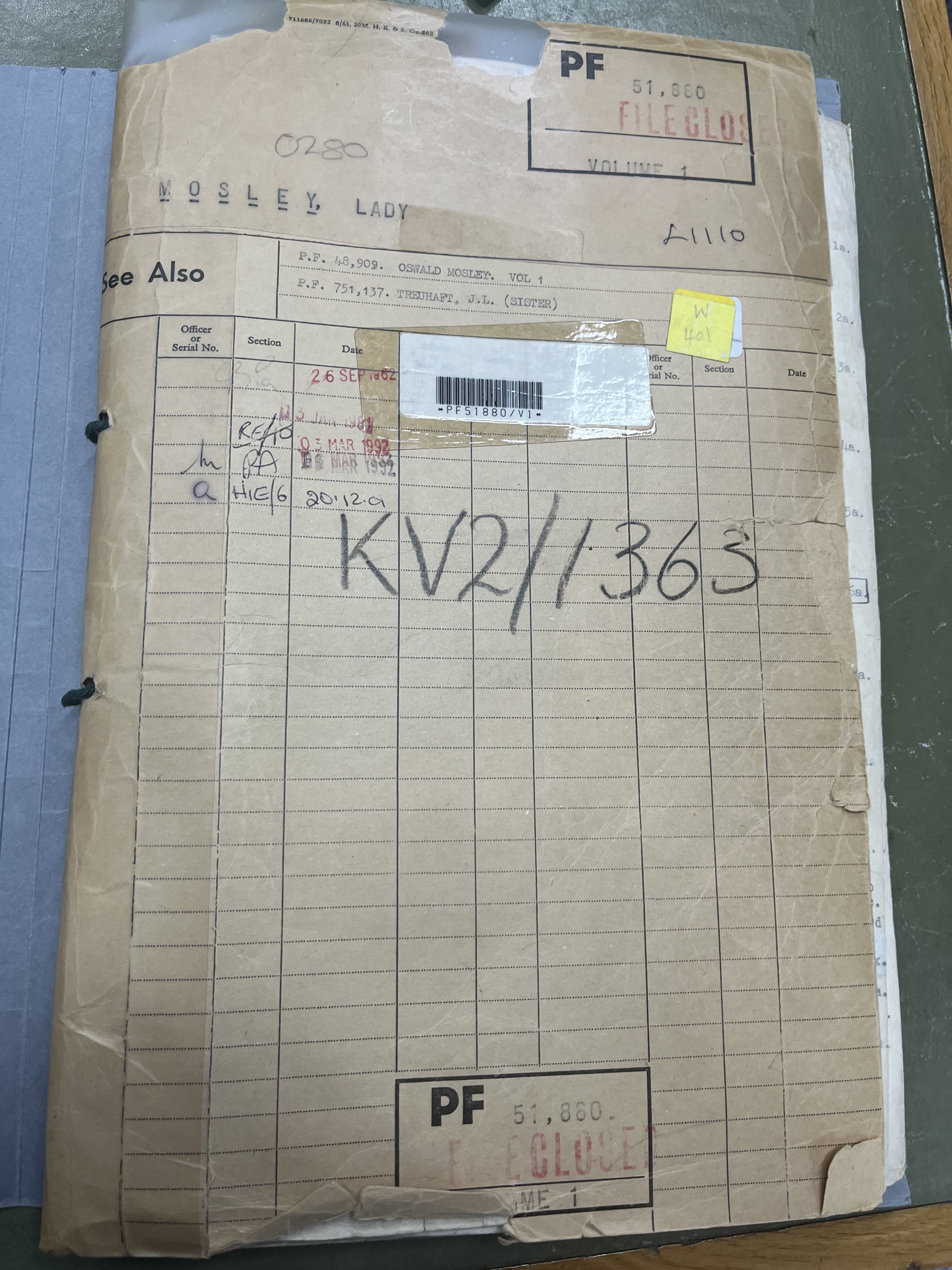
A highlight of my trip was looking at Oswald Mosley’s personal Secret Service file. While national in scope, it provided crucial context on how the leadership of the BUF was perceived and monitored, which in turn sheds lights on how local branches operated under central direction.
While looking at documents relating to BUF members and leaders gave me a broader scope of the climate in Britain at the time, there were also many documents that specifically dealt with anti-fascism. Documents such as Secret Service files on the CPGB throughout the 1930s gave insights into how the party looked to counter fascism, such as the organisation of counter demonstrations planned on the same days as BUF marches. Another example was Metropolitan Police records on clashes between the BUF and Jews, which highlighted the way in which Jewish communities their anti-fascist response.
In addition to shedding light on Merseyside’s unique local dynamics, these national level documents allowed for meaningful comparisons between regional experiences and broader anti-fascist trends across Britain. This archival research has been instrumental in developing the direction of my dissertation. I’m deeply grateful to the Society for making this research possible.
Ben Howarth is studying for an MA in Modern History at Liverpool John Moores University. His dissertation is titled Anti-fascist mobilisation in Liverpool during the 1930s.
Find out more about the BA/Taught Masters Dissertation Bursary Scheme.
Discover more from Society for the Study of Labour History
Subscribe to get the latest posts sent to your email.
 Society for the Study of Labour History