My dissertation investigates how professional photography both presented and produced the figure of the coalfield woman during and after the 1984-85 miners’ strike across Yorkshire and County Durham. After attending the inspiring third annual John L. Halstead Memorial Lecture delivered by Natalie Thomlinson in November 2024, I became interested in understanding how photographic material and practices helped to construct and consolidate the ‘heroic narrative’ of coalfield women’s personal and political transformation through their participation in support activities. These group activities included setting up canteens, food distribution, fundraising, twinning arrangements, picketing and travelling abroad.
Within most strike literature, a few iconic photographs are frequently reproduced by historians to illustrate arguments and conclusions. Photographic material is often perceived as too fragmentary and subjective and has therefore been relegated to the margins in historical scholarship. Instead, my research strives to understand how photography subtly and directly intervened in creating dominant narratives of the strike.
First, I had the opportunity to travel to the Side Gallery Archives in Newcastle to view a collection of photographs which Izabela Jedrzejczyk made of the women from the Easington Women’s Support Group. Although the gallery is currently closed to the public, I was fortunately able to access the photographs and associated ephemera which formed part of the 1985 Photographer’s Gallery exhibition, ‘Striking Women’. I also discovered reviews of the exhibition, as well as original letters and interviews between Izabela Jedrzejczyk and coalfield women. Next, I visited the Richard Burton Archives in Swansea to consult the strike photographs made by Raissa Page portraying the support activities of Bentley Women’s Action Group. Across two days at the Richard Burton Archives, I discovered a wealth of photographic prints, publications and communications painting a vivid portrait of coalfield women’s contributions to the 1984-85 dispute. This material was complemented by a fascinating recording of an oral history interview with Raissa Page from 1994, which I consulted while on a research visit to the British Library in London.
During the visits, I was struck by the abundance of visual material depicting coalfield women’s personal and collective experiences of the strike. These photographs represented ‘ordinary’ coalfield women as the backbone of the community through their dedication to collective action. The range of source material also developed my understanding of Raissa Page’s and Izabela Jedrzejczyk’s connections to a broad network of social documentary photographers across Britian, and how this fundamentally informed their approaches to making photographs of coalfield women.
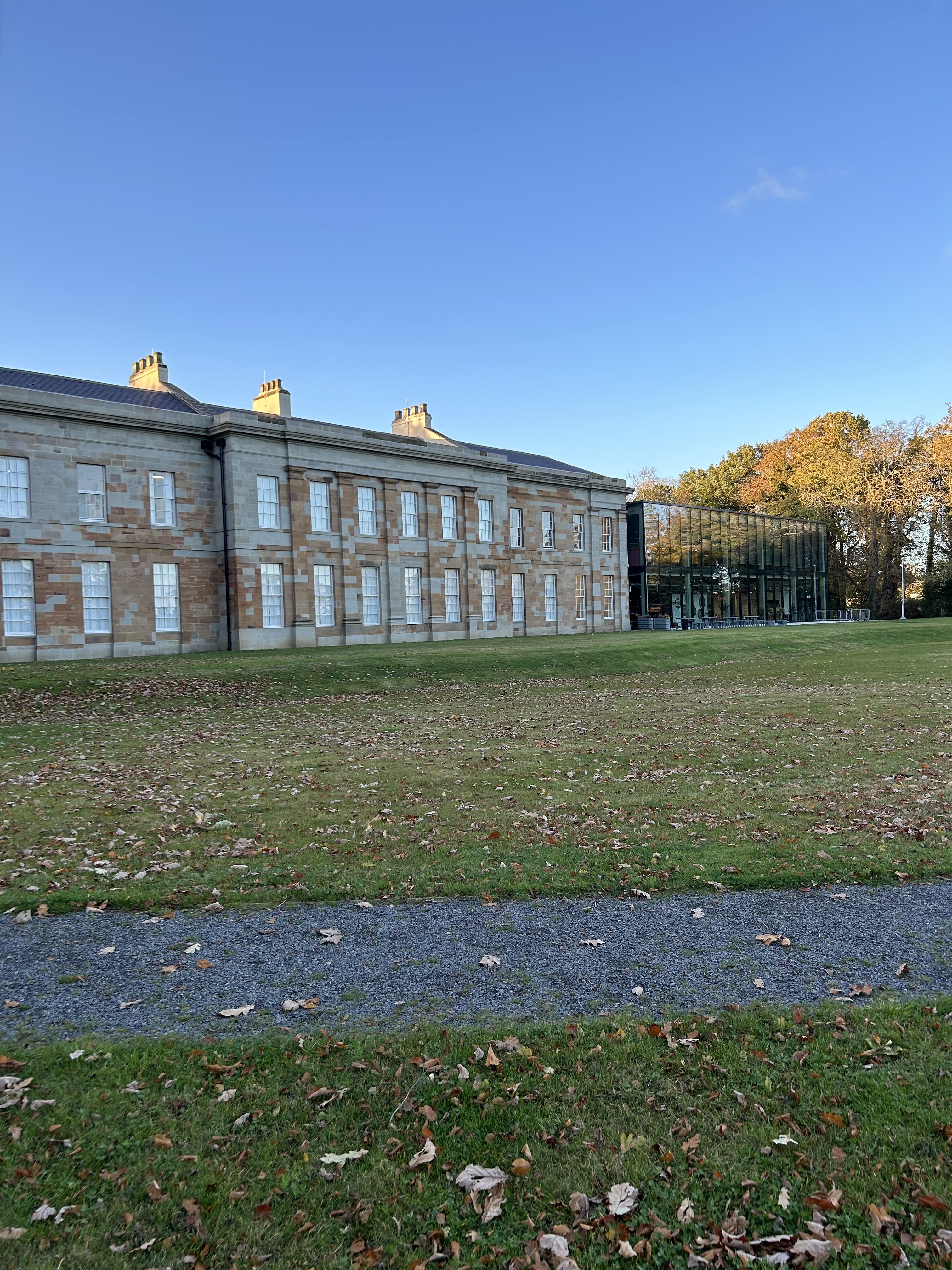
One of the highlights of my research was a visit to the newly opened County Archives in Durham, otherwise known as The Story. Within The Story’s collections, I found a copy of The Last Coals of Spring, a collection of poems, children’s drawings and photographs relaying Easington mining women’s memories of the strike. This discovery enabled me to understand how coalfield women actively took control of photographic material to celebrate the support group’s collective achievements, as well as inscribing their contributions to the strike into history.
I am incredibly grateful for the generous financial support provided by the SSLH, which has enabled me to access a breadth of source material held in archives across England and Wales. In particular, the material held in Doncaster Archives, the British Library in London, the Richard Burton Archives in Swansea and the Side Gallery Archives in Newcastle has been crucial in developing my understanding of the complexities inherent in coalfield women’s experiences of the dispute.
Emily Thorpe is studying for a BA (Hons) in Modern European Languages and History at the University of Durham. Her dissertation is titled How did professional photography present and produce coalfield women during and after the Miners’ Strike of 1984-85?
Find out more about the BA/Taught Masters Dissertation Bursary Scheme.
Discover more from Society for the Study of Labour History
Subscribe to get the latest posts sent to your email.
 Society for the Study of Labour History