From 1885 when she first arrived in London aged twenty-four to become secretary to her aunt, the writer, suffragette and trade unionist Emily Dilke, until her retirement in January 1921, Gertrude Tuckwell was among the most prominent and influential figures in the women’s trade union movement.

In nearly four decades of activism, she first became active in the Women’s Trade Union League, serving as its secretary and as editor of the Women’s Trade Union Review before serving as its president in 1905. Three years later she would be made president of the National Federation of Women Workers. She continued to work extensively with both organisations until 1 January 1921 when the WTUL merged into the Trades Union Congress. In 1924, the NFWW would merge with three unions that had emerged from the New Unionism of the 1880s to found the National Union of General and Municipal Workers (today’s GMB).
Gertrude Tuckwell worked on after her retirement as one of the first women to be a Justice of the Peace, and in 1926 she served on the Royal Commission on National Health Insurance. She was also a lifelong Christian Socialist and an early member of the Labour Party.
Gertrude Tuckwell’s papers, and those of the Women’s Trade Union League, have long been held as part of the TUC Library Collections at London Metropolitan University. Filling forty archive boxes, they include correspondence and notes, as well as a substantial press cuttings collection, pamphlets and reports. There is also a typescript of “Reminiscences”, her unpublished autobiography, and files of correspondence, articles and personal papers, dating from 1907 to her death in 1951.
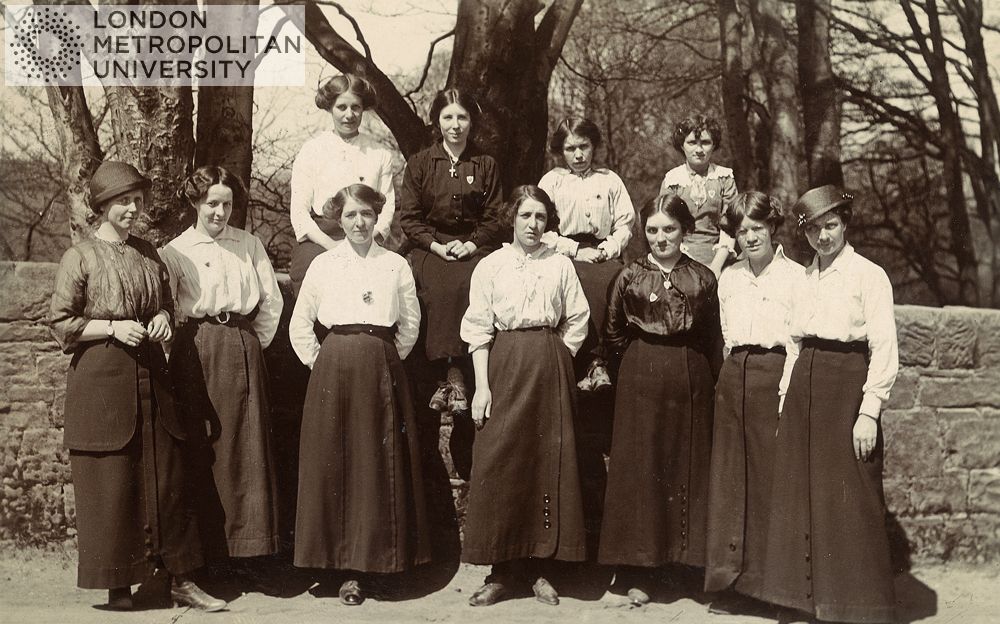
Work is now under way at the library to digitize the collection, with a selection of material viewable online, including photographs of disputes in which Gertrude Tuckwell was involved, newspaper cuttings, and correspondence relating to strikes supported by the National Federation of Women Workers.
- Gallery: Gertrude Tuckwell and the Women’s Trade Union League
- Archive Description: Gertrude Tuckwell Papers and Women’s Trade Union League, 1890-1951
Discover more from Society for the Study of Labour History
Subscribe to get the latest posts sent to your email.
 Society for the Study of Labour History