My dissertation investigates the role of women in the Anarchist movement of the Spanish Civil War. I have a particular interest in the revolutionary organisation Mujeres Libres founded in 1936 which united thousands of women across Spain in the broader anarchist and anti-fascist cause. Mujeres Libres was dedicated to the development of unique educational and labour initiatives and ideologically committed to empowering Spanish working-class women as agents of social change.
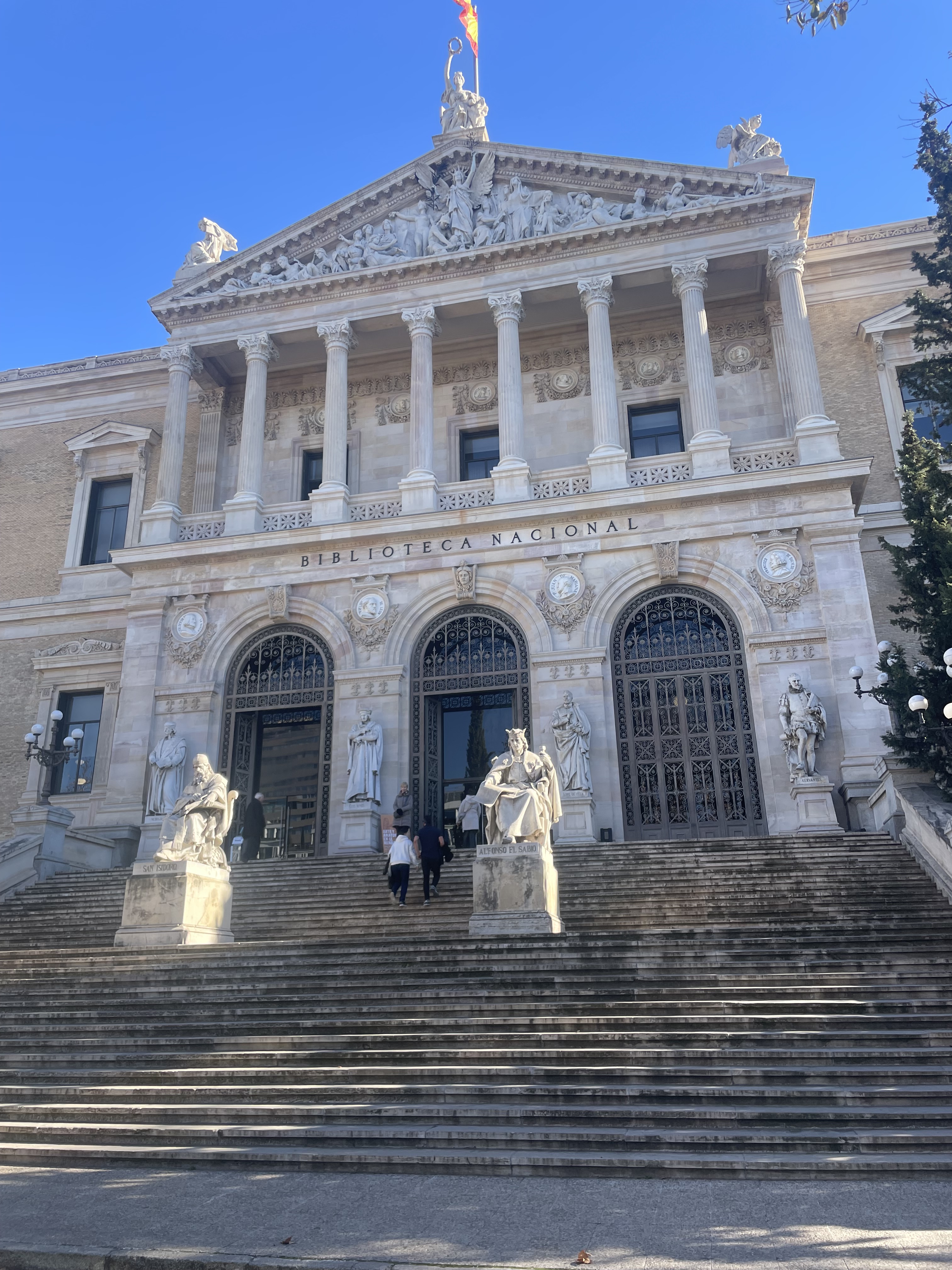
The generous bursary from the Society for the Study of Labour History allowed me to visit Madrid to access essential archival material housed in the National Library of Spain, the National Historical Archives and the Anselmo Lorenzo Foundation for Libertarian Studies.
I began my first day in Madrid at the National Historical Archives, looking at state documents and correspondences. This included reports sent from Mariano Ruiz Funes, the Spanish ambassador in Brussels, to the Spanish Prime Minister José Giral. These expressed solidarity from the Belgian Socialist Revolutionary Party to all the workers’ organisations in Spain and in particular their sympathies to the Spanish Workers’ Party of Marxist Unification and the anarcho-syndicalist union of the National Confederation of Labour in their enduring repression at the time.

I spent the rest of the day at the Anselmo Lorenzo Foundation Madrid Headquarters founded in honour of Lucía Sánchez Saornil, one of Mujeres Libres’ founding members. I met with archivist Juan Cruz and we discussed my research and established how the Foundation could assist me with their resources. I was permitted to handle several original copies of the Mujeres Libres newspaper and pamphlets dating back to 1937. The newspaper copies included advice to women on how to organise strikes and protests as well as reports from regional branches of their revolutionary activities and demands for improvements to their working conditions and hours. There was also an interesting excerpt on the movement’s goal to ending prostitution and the creation of rehabilitation centres to offer education and qualifications for women to enter the workforce.
On my final day in Madrid, I went to the National Library of Spain. The first part of my day was spent in the Maria Moliner Reading Room where I looked at various books surrounding anarcho-feminism published during the war. A personal favourite was anarchist activist Amparo Poch y Gascón’s book La Vida Sexual de La Mujer, which takes a scientific approach to sexual liberation and education highlighting the ongoing sexual revolution for women in Spain and both challenging patriarchal norms but also empowering women through education and advocacy for bodily autonomy.
Later, I visited the library’s Goya Room, which looks after posters, photographs and maps. I looked at several posters including originals published by Mujeres Libres as well as photographs of female activists handing out propaganda and images of the Milicianas, women who fought in the war.
I am deeply grateful to the SSLH for their support, which enabled me to access these archival materials in Madrid, enriching my understanding of the extraordinary contributions to both the anarchist movement and the fight for women’s emancipation.
Ariane Weller is studying for a BA (Hons) in Politics and Modern History at the University of Manchester. She was awarded a SSLH BA/MA Dissertation Bursary for her research on The Role of Women in the Anarchist Movement of the Spanish Civil War 1936- 1939.
Find out more about the BA/Taught Masters Dissertation Bursary Scheme.
Discover more from Society for the Study of Labour History
Subscribe to get the latest posts sent to your email.
 Society for the Study of Labour History