The People’s History Museum 2025 Banner Exhibition opens on Saturday 18 January.
Running until 29 December 2025, the exhibition includes banners produced by trade unions, political parties, the co-operative movement, peace campaigns and others over more than a century of campaigning.
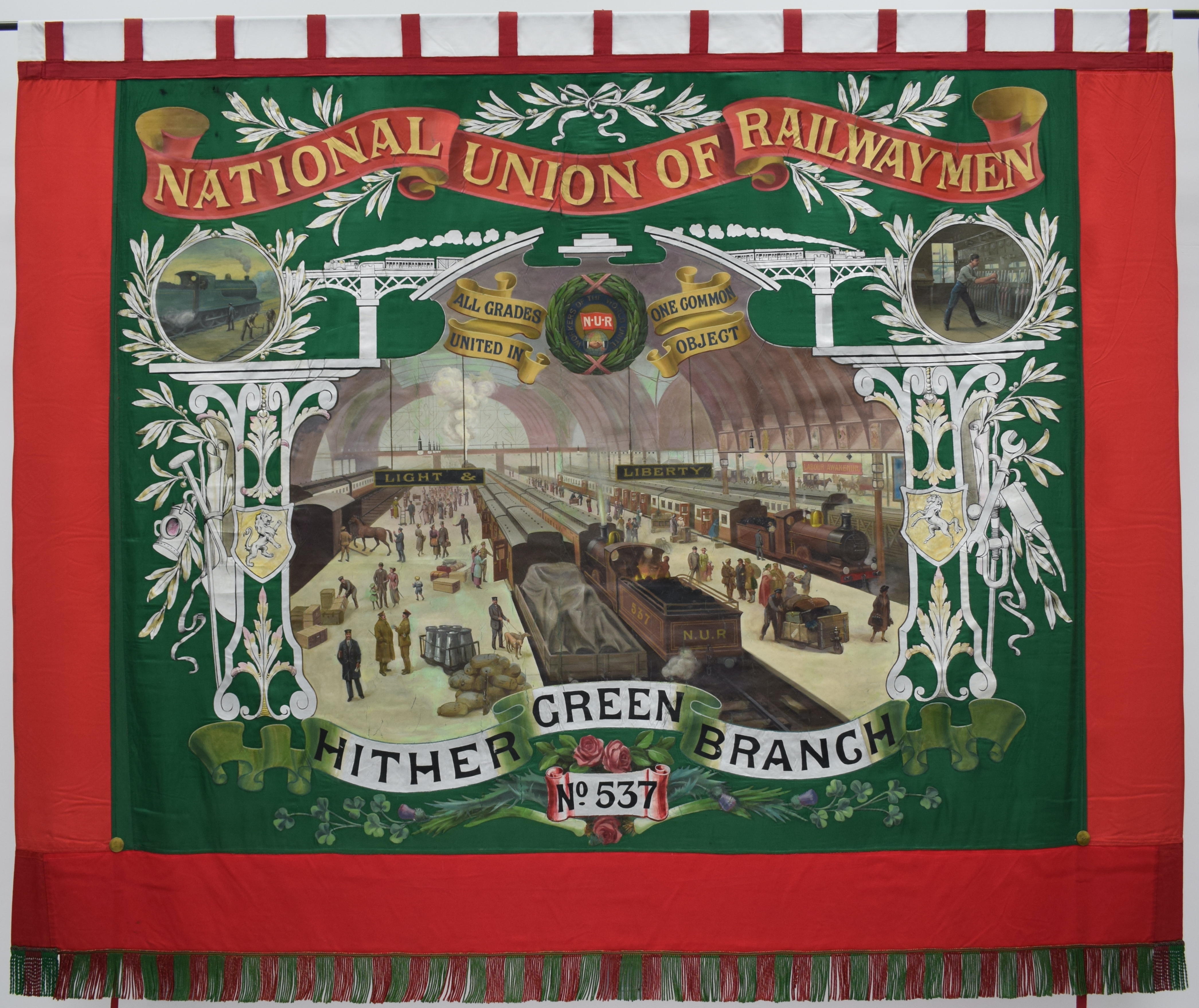
Among the historic trade union banners represented in this year’s exhibition is that of the National Union of Railwaymen, Hither Green branch banner, made in around 1917.
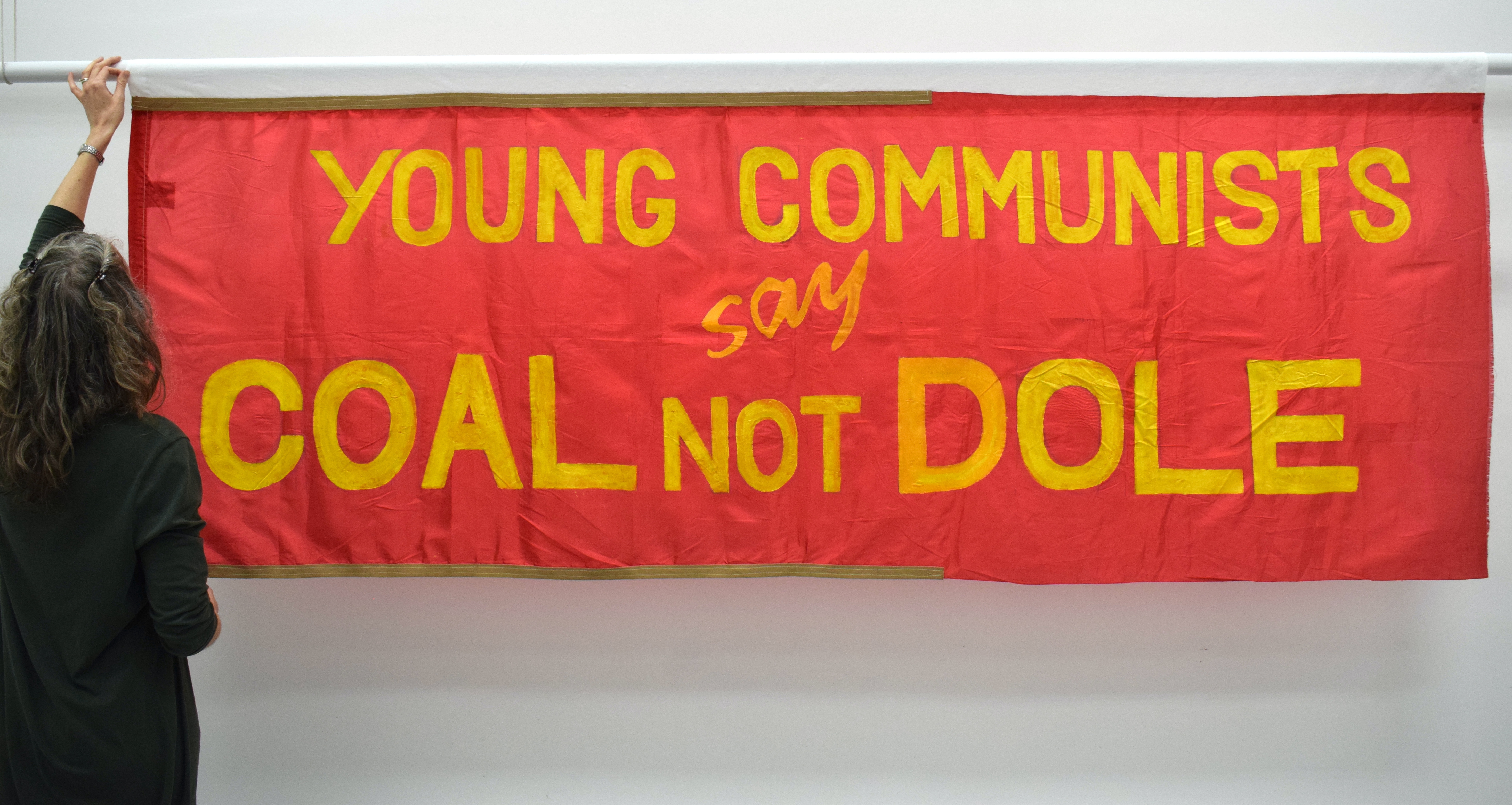
The fortieth anniversary of the miners’ strike of 1984-85 is represented by two banners: a ‘Young Communists say Coal Not Dole’ banner and the Lesbians & Gays Support the Miners banner, which for the first time will be hung in such a way that both sides of the design can be seen. One of the most popular banners in PHM’s collection, it represents a story of solidarity between the activists who founded Lesbians and Gays Support the Miners (LGSM) and the striking miners and their communities, as famously explored in the film Pride (2014).
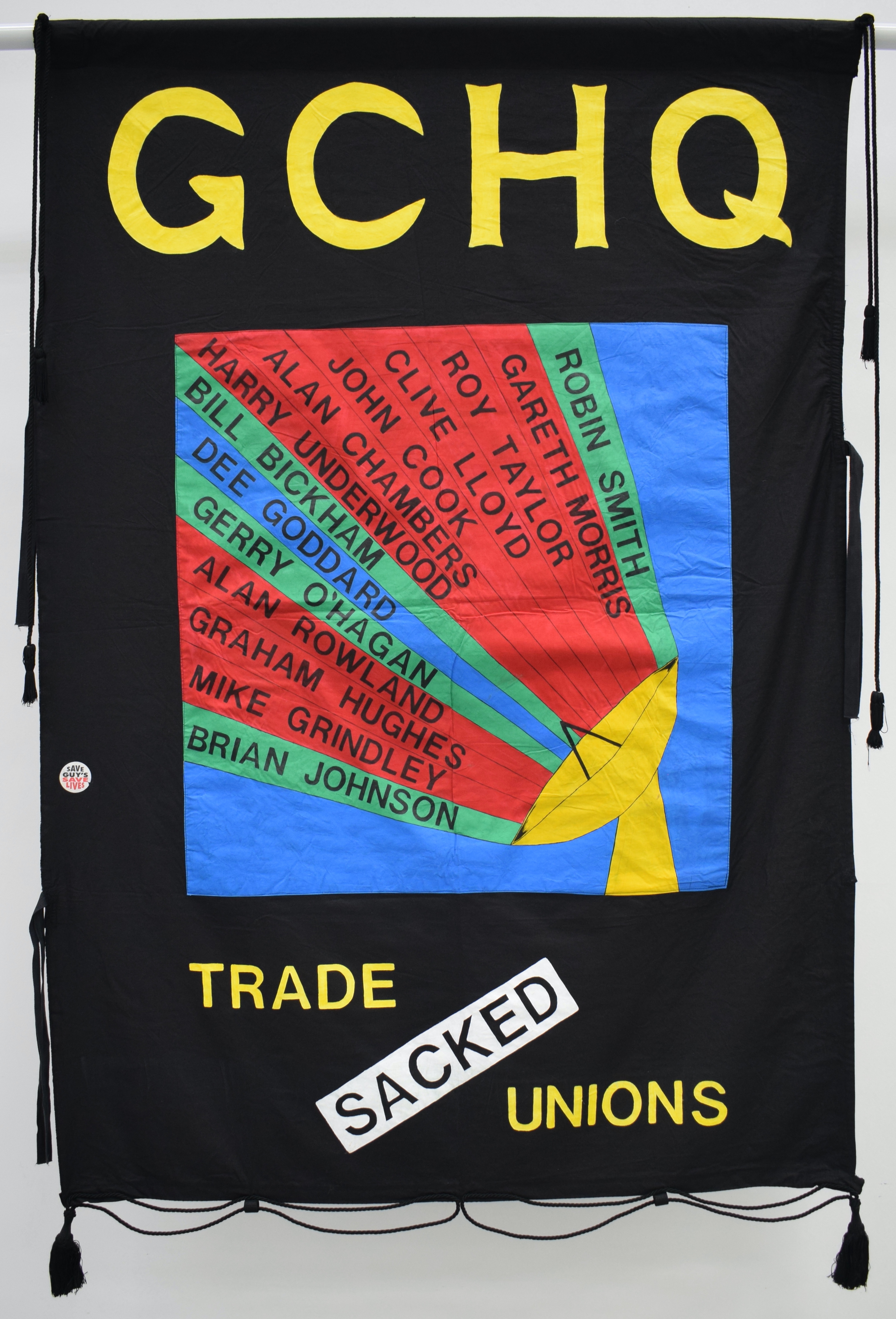
Trade union activism is further represented in the 1992 banner made in support of sacked trade unionists at the Government Communications Headquarters (GCHQ).
Some banners were chosen for inclusion to highlight key anniversaries that fall in 2025. The Chronically Sick and Disabled Persons Act 1970 was passed fifty-five years ago; the Disability Discrimination Act 1995 thirty years ago; and the Equalities Act 2010 fifteen years ago.
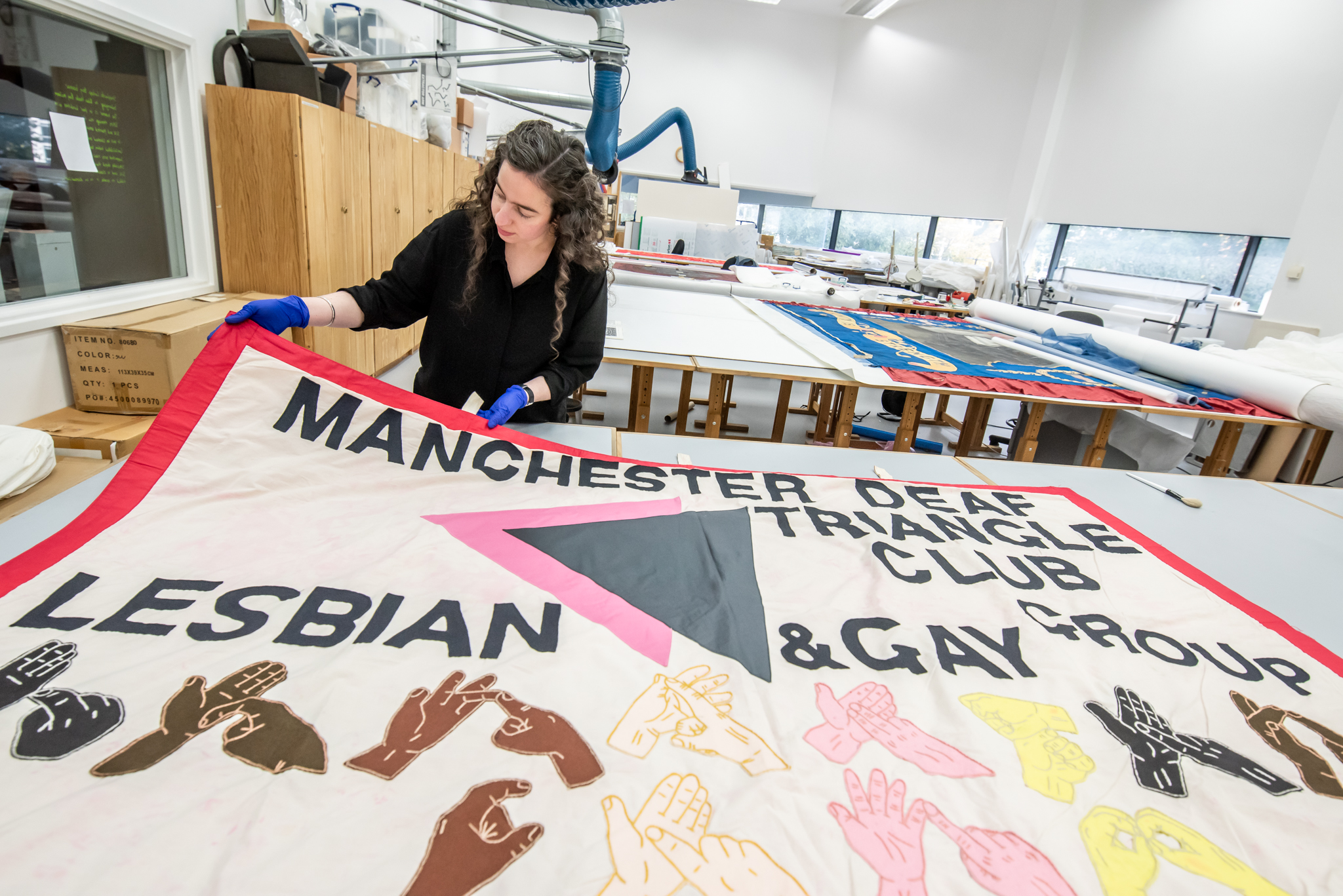
Capturing the theme of disabled people’s rights is the Nothing About Us Without Us banner, created at People’s History Museum in 2015 by six learning disabled textile artists. There is also a banner made for the Triangle Club in 1985. Formerly known as the Kings and Queens Club, it was a social club for deaf gay, lesbian and transgender members at the Rembrandt pub in Manchester. On loan from the British Deaf History Society, the banner features a pink triangle – a symbol used to identify LGBTQIA+ people in Nazi concentration camps and reclaimed by LGBTQIA+ groups from the 1970s onwards.
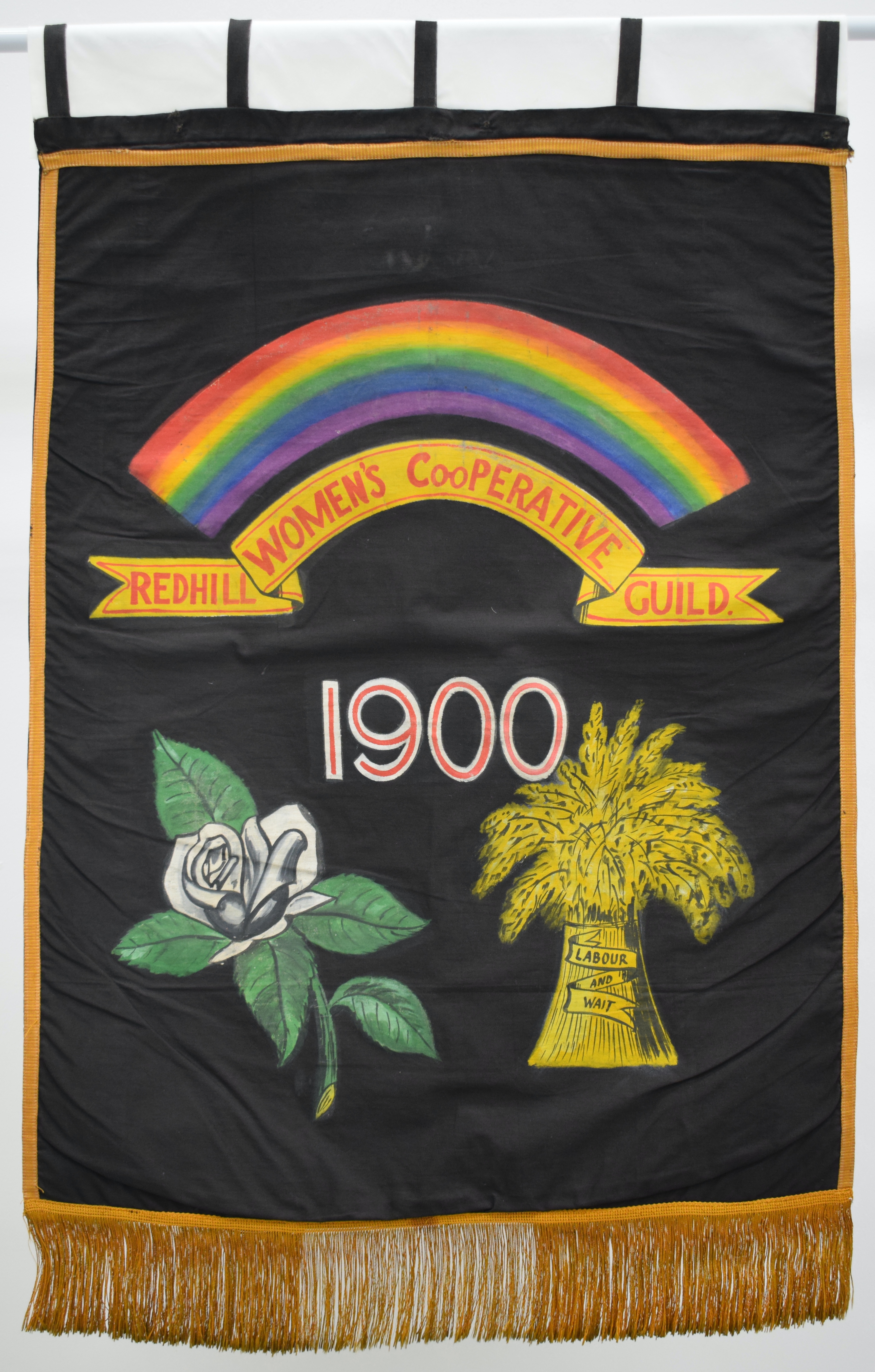
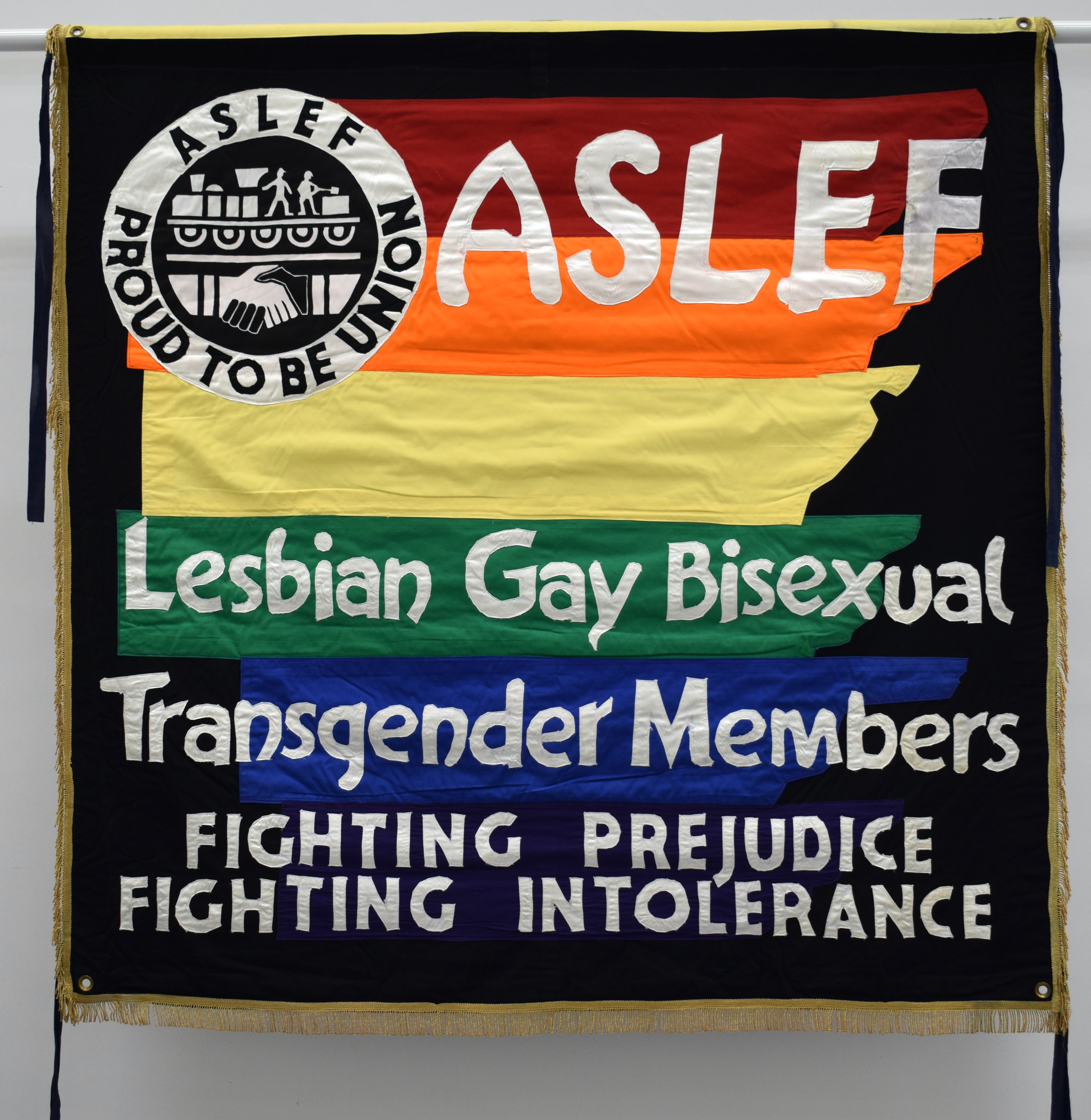
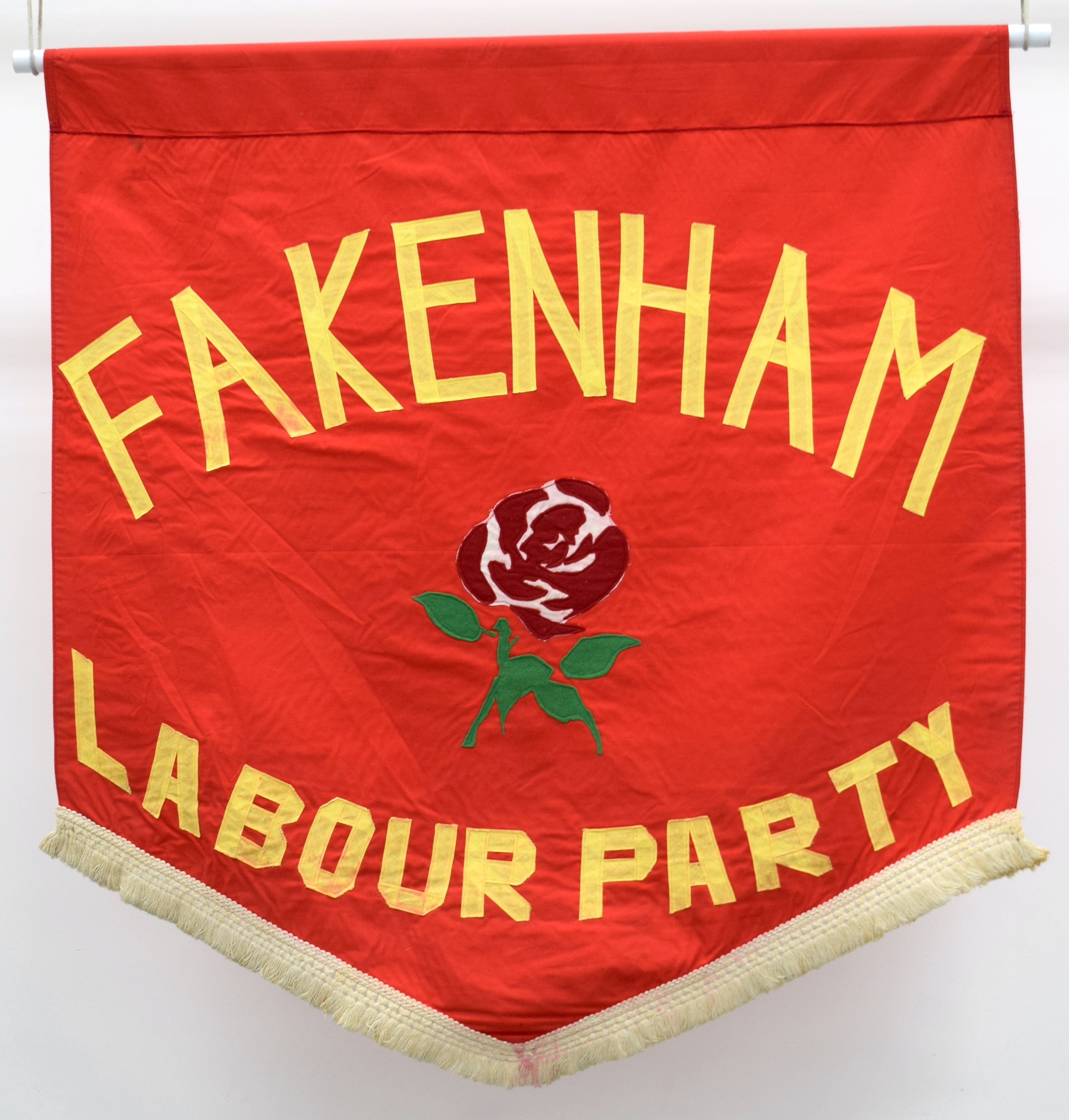
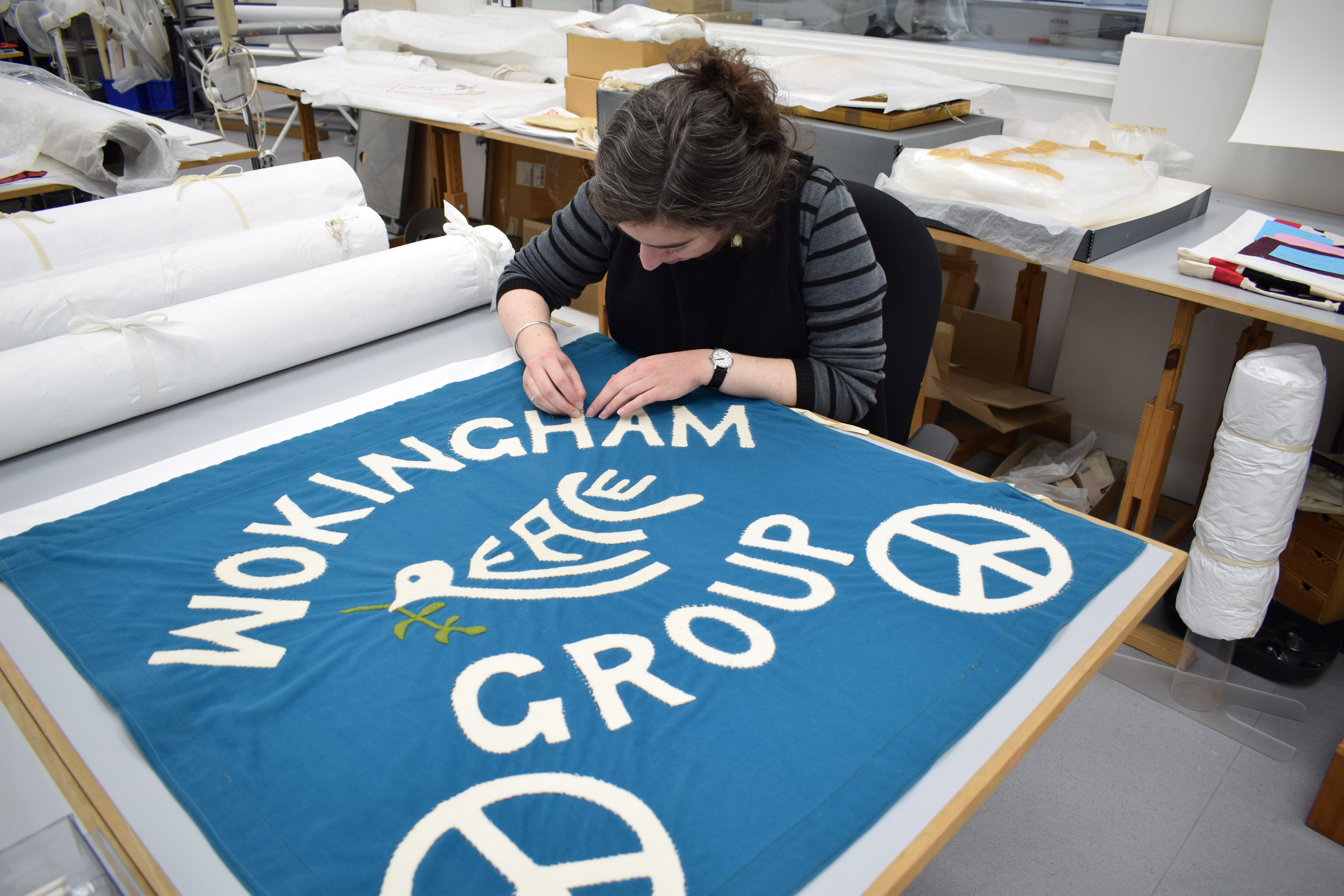
The exhibition also draws attention to the symbolism used in banners – including the dove used to signify peace on the Wokingham Peace Group banner used at the Greenham Common Peace Camp (1981-2000). Redhill Women’s Co-operative Guild from around 1900 uses the rainbow as a symbol for international co-operation. And the Fakenham Labour Party banner (after 1987) is an early example of the party’s use of the red rose, adopted under the leadership of Neil Kinnock.
People’s History Museum is open 10.00am to 5.00pm, every day except Tuesdays.
Discover more from Society for the Study of Labour History
Subscribe to get the latest posts sent to your email.
 Society for the Study of Labour History