In the twelfth of our series on meetings with figures from labour history, Gregory Billam encounters Walter Hannington of the National Unemployed Workers’ Movement.
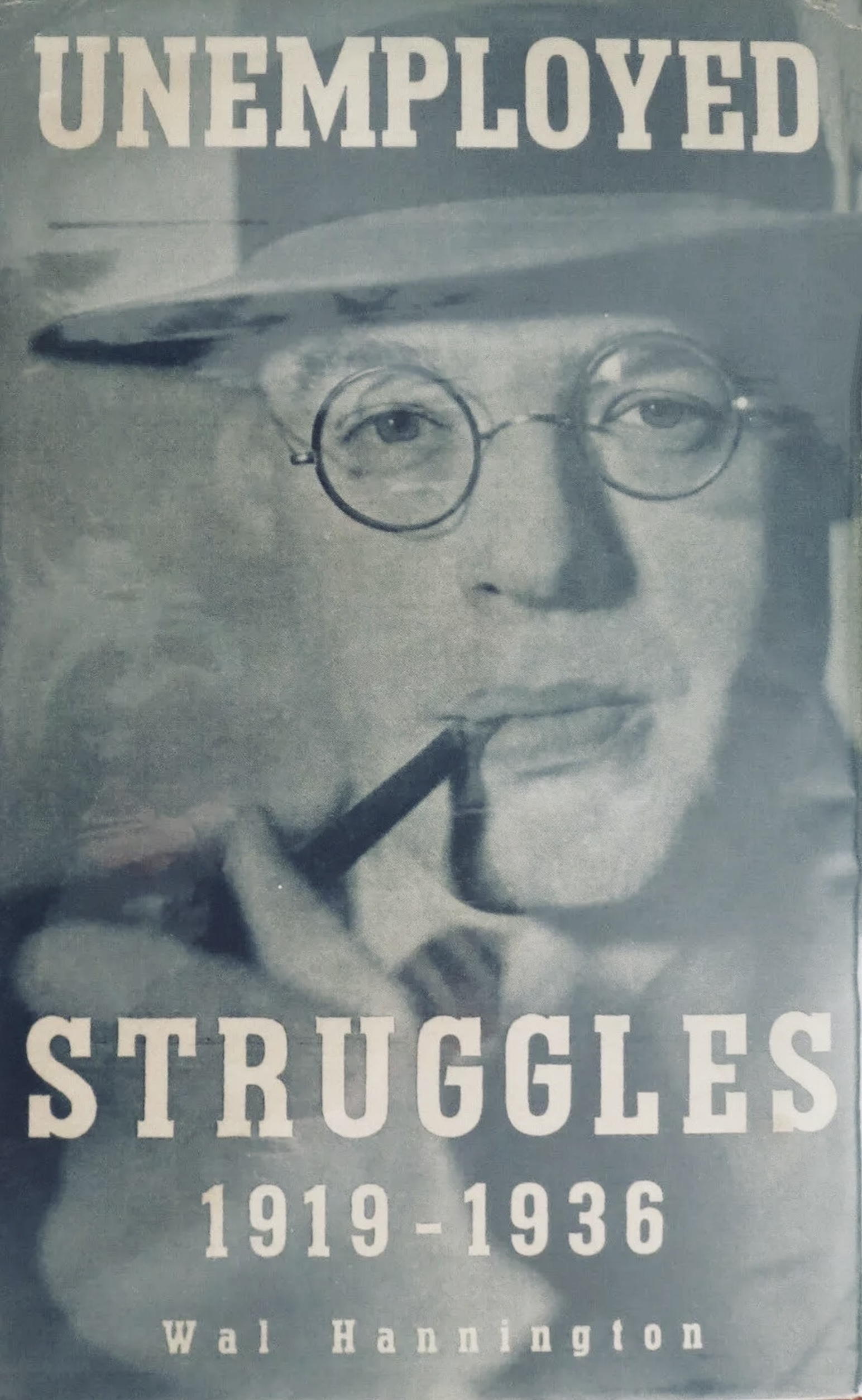
Walter Hannington was a young toolmaker from Camden, best known as the National Secretary of the National Unemployed Workers’ Movement (NUWM) during the interwar period. The 1930s, often popularly referred to as the ‘Hungry Thirties’, was a period marked by high unemployment, chronic underinvestment, and deprivation. The veteran trade unionist Tom Mann wrote in a foreword to Hannington’s memoir, Unemployed Struggles, that ‘unemployment is a condemnation of society; there is no necessity for anyone to be short of life’s essentials’. In 1932, national unemployment stood at around 22% and only began to fall as the Second World War loomed on the horizon.
Hannington, a self-taught Marxist and member of the Communist Party of Great Britain (CPGB), was at the forefront of numerous local and national campaigns for unemployed workers, including national hunger marches in 1929, 1932, 1934, and 1936, which mobilised thousands of workers. He was jailed multiple times for his activism and was regularly harassed by the police. The NUWM was responsible for twelve out of the sixteen national protest marches during the interwar period – all without the official support of the Labour Party and the TUC. Stephanie Ward has summed up the mindset: ‘The unemployed marched for work, food, fuel and, above all else, the abolition of the means test.’
Hannington and the NUWM organised unemployed workers, providing them with an outlet and much-needed agency in shaping their own interests and livelihoods. By 1935, the NUWM represented around 50,000 workers. Whilst its closeness to the CPGB at times undermined its efforts, Hannington remained steadfast in the NUWM’s independence and privately clashed with Harry Pollitt and the party leadership over its direction and was largely resistant to the sectarian excesses of the ‘Class against Class’ period (1929-1934). Richard Croucher once estimated that around one million people passed through the ranks of the NUWM during the interwar period. Membership was often brief and rarely resulted in the card-carrying activism the CPGB leadership desired, but on the ground, the NUWM’s impact was decisive. The NUWM was not simply a communist ‘front’ organisation.
In the present, the new Labour Government appears committed to a crackdown on ‘benefit scroungers’ and is repeating the workfarist rhetoric of New Labour, drawing distinctions between the ‘deserving’ and ‘undeserving poor’. The efforts of figures like Walter Hannington and the NUWM, therefore, gave unemployed workers dignity and self-respect at a time when a lack of hope and misery was the norm. Given the chance to meet him, I’d like to ask what message he would have for the current government – and what he would say to those struggling to survive on benefits and low pay today.
Gregory Billam is a final-year PhD candidate
You can read all the Class Encounters in this series here.
Discover more from Society for the Study of Labour History
Subscribe to get the latest posts sent to your email.
 Society for the Study of Labour History