In the eighth of our series on meetings with figures from labour history, Keith Flett encounters the Black London Chartist leader William Cuffay.
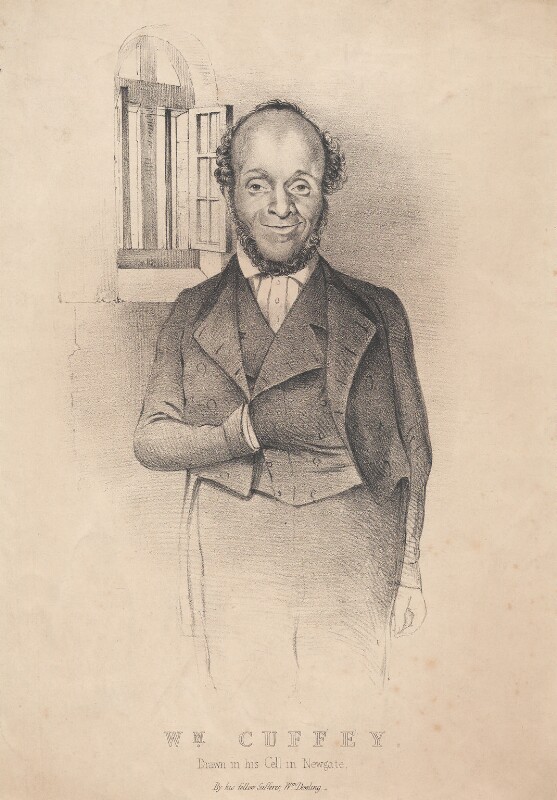
William Cuffay (1788-1870) was born in Medway to a local woman and a descendant of slaves who had come to the area as a sailor. He worked as a tailor in London and became active in the Chartist movement to the extent that he was one of the auditors for the Chartist National Land Scheme in the 1840s.
At this time he lived in central London on the Strand and aside from his political activity was also a performer on the stage.
By 1848 he was a leader of Chartism in London and was an organiser of the Chartist protest held on Kennington Common on 10 April 1848. He was one of those who argued for a militant stance to be taken to achieve the vote. In August 1848 he was one of those arrested for involvement in a planned Chartist rising in central London. He was sentenced to transportation to Tasmania where he arrived in late 1849. He remained active in the trade union and labour movement there until his death in 1870.
While the Chartist Northern Star carried reports of Cuffay’s speeches and there are some records from his period in Australia, no diary or memoirs are known to exist aside from one letter written from Wakefield gaol in 1849.
Some questions for William Cuffay…
The press of the time portrayed you in what would now be called a racist way. Was this taken up by the Chartists? Were you aware of other black Chartists in London or elsewhere?
Given that you disagreed with Feargus O’Connor’s strategy to win the vote in 1848 do you think there was another way to achieve it then? If so what kind of society would you have envisaged it would have brought about?
When you arrived in Tasmania you remained active politically. How did that compare to your Chartist activity in London?
We don’t have any diaries or memoir aside from one written letter in 1849. Did you document your life in anyway or have any idea what might have happened to any papers you did have?
As a leader of London Chartism in 1848 how did you find that experience? How easy or conversely difficult was it to organise an event like Kennington Common on 10 April 1848? In 2024 there are many tools available to organise such things but in 1848 you had only posters, leaflets and word of mouth. Would you say that this worked well?
What would be your advice to someone trying to change the world for the better today, given your Chartist experiences?
Keith Flett is a Convenor of the London Socialist Historians Group
You can read all the Class Encounters in this series here.
Discover more from Society for the Study of Labour History
Subscribe to get the latest posts sent to your email.
 Society for the Study of Labour History