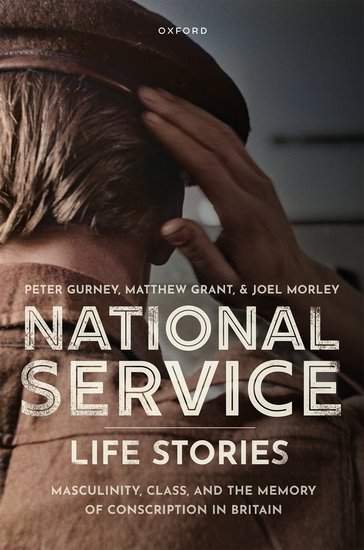
National service was a defining feature for a generation of young men in post-war Britain. Around 2.3 million of them were called up between the end of the second world war and 1963, when conscription ended. But national service was forgotten almost before it had ended, a process aided subsequently by professional historians who have been reluctant to assess its longer-term influence on British social and political history.
National Service Life Stories: Masculinity, Class and the Memory of Conscription in Britain, to be published in February 2025, explores how compulsory military participation reverberated in the memories of interviewees long beyond the end of conscription, and how those early military experiences shaped their later life stories.
Based on unpublished oral interviews with more than one hundred men, this book uncovers hitherto marginalised voices, highlighting the voices of working-class men rather than officers. It explores the way in which compulsory military participation reverberates in the memories of men from working-class backgrounds, who constituted the majority of conscriptee, and shines new light on important areas of current scholarly interest and historiographical concern, including the changing meaning and experience of class, masculinity and citizenship.
Co-author Professor Peter Gurney commented: ‘Interviewees frequently stated that national service “made a man” of them – usually meaning that it made them more independent and mature – and helped them in their later careers. They did not believe that national service made them more aggressive or eager to engage in military combat. They had seen and heard enough of war to know that it was not glamorous. Their fears only increased with the proliferation of nuclear weapons in the 1950s, a development that worried many interviewees and strengthened their belief in the futility of war.’
Interviewees were also asked whether they thought national service should be brought back. ‘Some agreed that national service should be reintroduced as a way of instilling social discipline, but the majority doubted that this was feasible for various reasons. They considered young people more ethnically and religiously diverse in contemporary Britain, suggesting this would make them less likely to agree to such an imposition by the state. Most important, young people had not been subject to the same disciplines of family, school and community life as the national service generation.’
Written by Peter Gurney (Professor of British Social History, University of Essex), Matthew Grant (Reader in History, University of Essex), and Joel Morley (Professor of British History, University of Bristol), National Service Life Stories is published by Oxford University Press.
Pre-order online here, using AAFLYG6 for a 30% discount.
Discover more from Society for the Study of Labour History
Subscribe to get the latest posts sent to your email.
 Society for the Study of Labour History