The organisers of this year’s HistoryLab+ conference report back from an event focused on human exploitation and its legacies. The day was supported by the Society for the Study of Labour History.
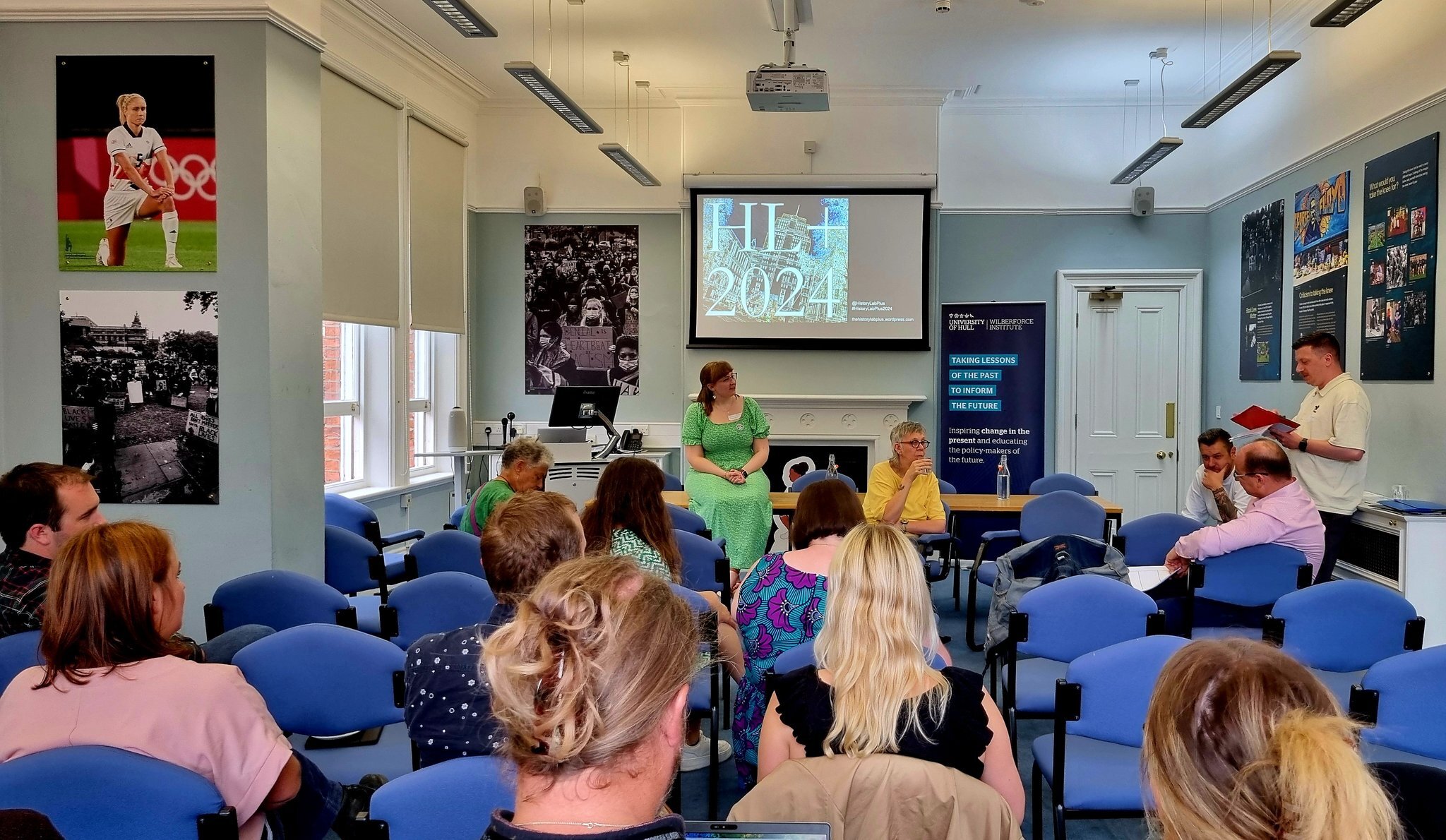
This year’s HistoryLab+ conference took place at the Wilberforce Institute for the Study of Slavery and Emancipation (WISE), and focused on the histories of human exploitation and its legacies. The event took place on 25-26 July 2024.
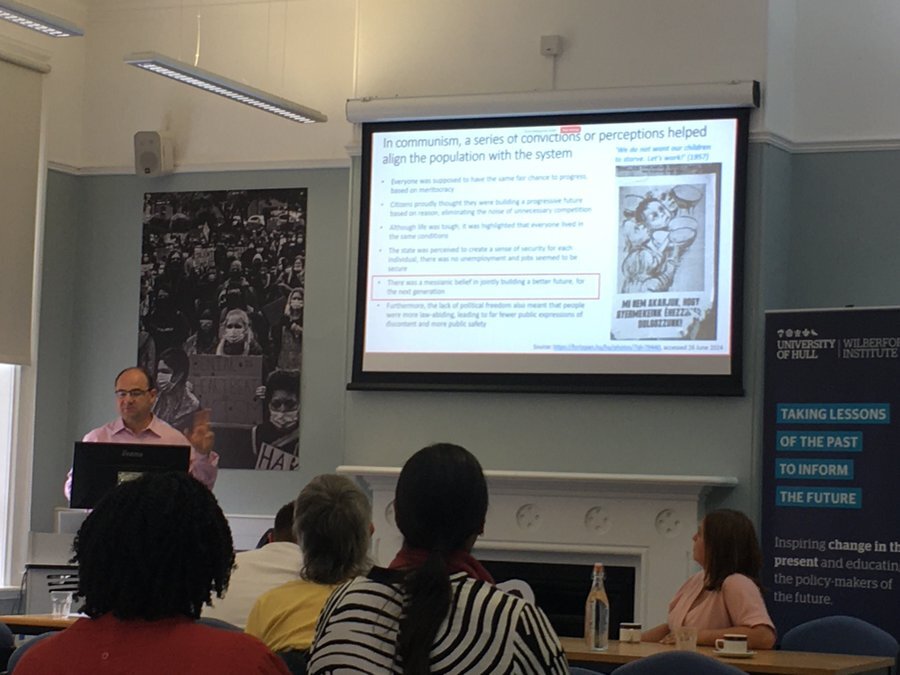
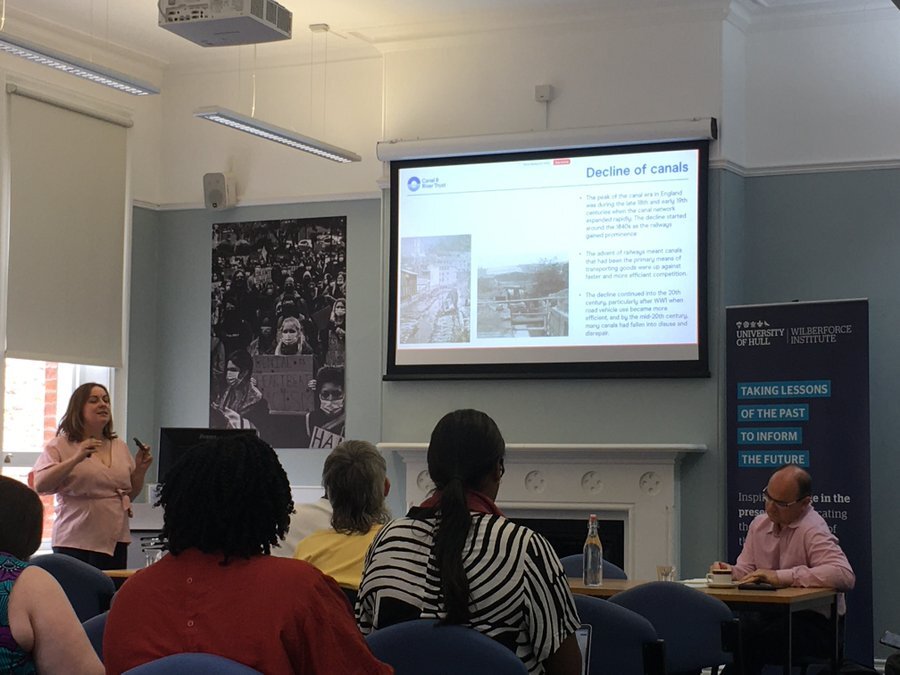
The first two panels engaged with labour exploitation: Anna Baatz, representing the Canal and River Trust, reflected on the use of waterways to transport coal and cotton between cities during the long nineteenth century; Benedek Marton Vasy delved into communist ideologies in central and eastern Europe before 1989; and, Samantha Hosein studied the treatment of mental illness in colonial Trinidad.

Chris Townsend began the third panel, ‘Writing Enslavement?’, by exploring the economics of—if and how to value—antislavery poetics after 1774. Alex Dold then moved the discussion to Diana Gabaldon’s representations of slavery and coloniality in Jamaica and in Scotland in her Outlander novels.
The final panel addressed the International Slavery Museum’s developing curatorial approach to collections related to the nineteenth-century abolitionist movement: Zofia Kufeldt spotlit the breakfast set gifted to abolitionist Thomas Clarkson for his eighty-first birthday; Madelyn Walsh’s focus was the anonymous painting, Am Not I A Man And A Brother (c. 1800); and, Alexander Scott looked to The Hunted Slaves (1861) by Richard Ansdell.
The conference also included a workshop, keynote discussion, and walking tour keyed to the histories and legacies of colonialism and enslavement. For the workshop, four researchers each described one relevant, inspirational public-facing project:
- Bussing Out immersive exhibition, by Shabina Aslam
- Uncomfortable York walking tours, by Anna Hill
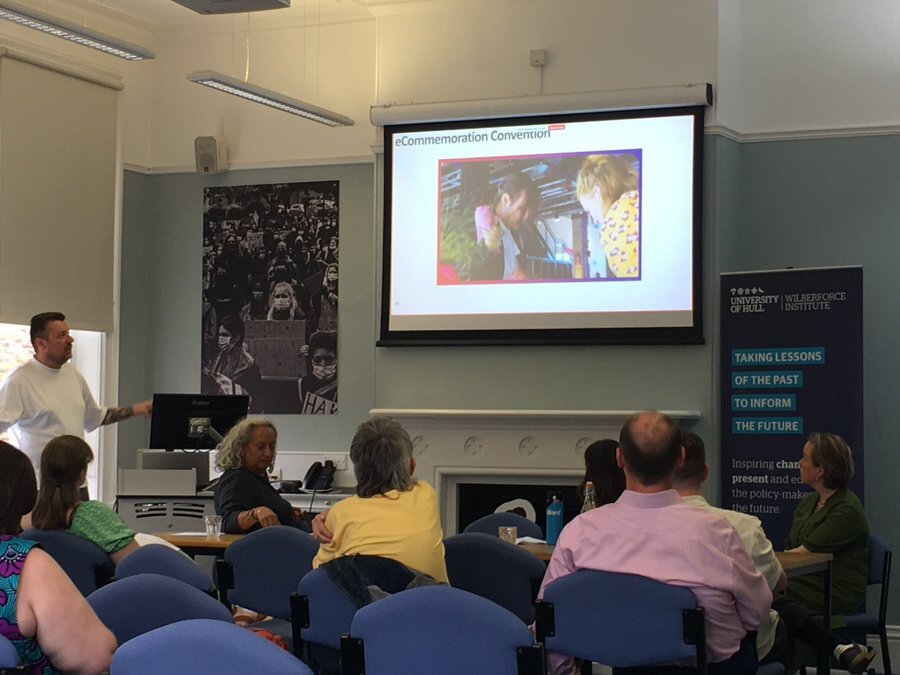
- eCommemoration, by Felix Fuhg
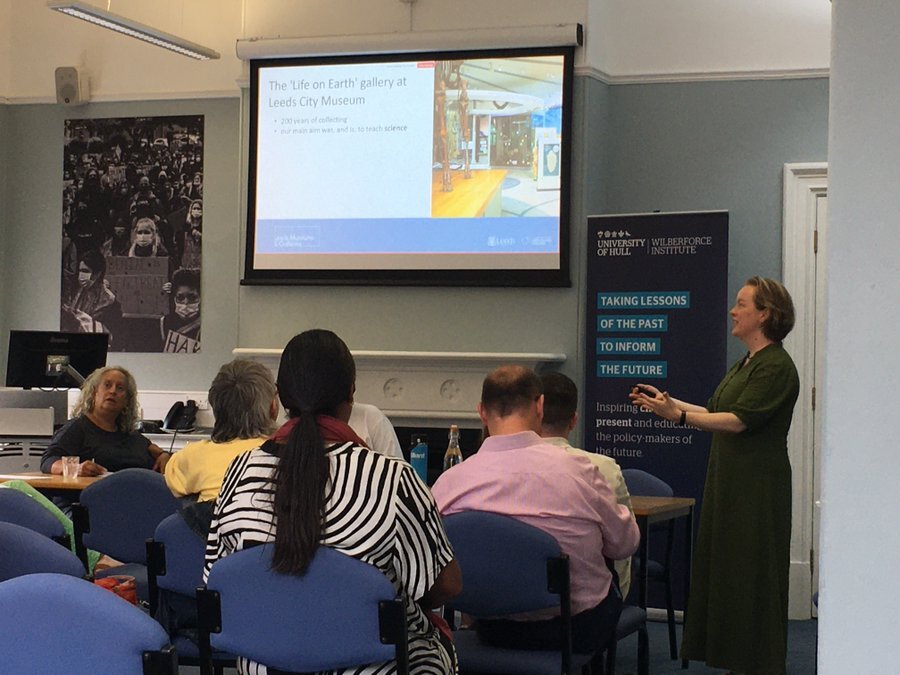
- Life On Earth gallery, by Clare Brown
Participants were then challenged to curate selected visual and material culture from Leeds Museums and Galleries collections
The conference’s keynote speakers, David Stirrup, Kesewa John, Danielle Terrazas Williams, and Nicholas Evans together reflected on the (psychological, institutional, disciplinary, sectoral, cultural, national, any) contexts in which researching and sharing histories of exploitative colonial practices and their legacies now happens, and the role of the early career historian in this picture. We were delighted that this conversation included so many tributes to the Director of WISE, Trevor Burnard’s world-leading research into colonial North America and the Caribbean and generous support of early career historians, including of this conference. This brilliant, lovely man died on 19 July; our thoughts are very much with his family, friends, and colleagues.
Nicholas, finally, led all attendees on a fascinating walking tour of sites in Old Town with links to colonial exploitation: the WISE Humanitarian Wall, Wilberforce House Museum, Trinity Square, Hull Minster…

We would like to thank our speakers, everyone else who helped to make discussions so informed and lively, and our generous sponsors, the WISE, IHR, Society for the Study of Labour History, and Economic History Society.
HistoryLab+ is the UK’s national network for early career historians, for those in the final leg of a PhD in history or a related discipline or, after they graduate, starting out on any career path. The fourteen-strong committee of volunteers works with its parent organisation, the Institute of Historical Research (IHR), learned societies, and professionals across the education, GLAM (galleries, libraries, archives and musums), media, publishing, and other job sectors to provide members with tailored support, including career development training, networking opportunities, resources, and a programme of events showcasing recent historical research.
Sarah Wride, Michael Reeve, Lauren Theweneti, Amelia Clegg, and Duncan Hamilton
Further information
Wilberforce Institute for the Study of Slavery and Emancipation

Discover more from Society for the Study of Labour History
Subscribe to get the latest posts sent to your email.
 Society for the Study of Labour History