From equal pay to the Beeching cuts, Labour’s record in office has been distinctly mixed. Here, Richard Temple introduces his new book, drawing on a century-long record of government to provide a balanced assessment of the party’s impact on ordinary people.

It’s unusual to remember the exact moment when you have an idea for a book. But I remember mine. It was prompted by the Labour Party’s worst performance in a general election since 1935. That day in December 2019, I rang my father and told him about the plan. ‘Labour’s Biggest Balls-ups’ would have chapters devoted to various debacles over the years. There seemed so much to choose from – devaluations, the Winter of Discontent, 1931, the 1983 election, Iraq etc. Dad, a long-time socialist, thought the idea had promise. Unfortunately, such a catalogue of despair would have compelled him to seek out the nearest cliff-top. Driving the audience to suicide is never the best plan, not least for sales figures.
So I reconsidered. A nuanced account of some of Labour’s highs and lows would be a much fairer representation of the party’s history. I adjusted my focus accordingly. Besides, it was a timely moment. The first Labour government had taken office on a blustery winter’s day in January 1924. That anniversary should be marked with an evaluation of Labour’s record in government and opposition over the last century. There are already plenty of highly competent chronological versions of the party’s history. A thematic approach seemed best instead.
But what to write about? Another guiding principle was to avoid subjects, which had been considered recently and in depth by other historians. Robert Saunders’s excellent account of the 1975 Common Market referendum was one example. (In my eyes, the referendum would have been a highpoint for Labour. Others might disagree.) Iraq was out too. This was partly for emotional reasons – I was part of the two-million strong demonstration so fatefully ignored by the Blair government. Also, a lot of ink had been split over Iraq in the recent past. It had hardly been ignored.
Above all, I wanted to consider the Labour Party’s impact on ordinary people. And what mattered (and matters) to people? Housing, transport, health, equal pay between the sexes, and education are central to our lives. We expect, quite rightly, to be free from sexual and racial discrimination. Our sexual orientation shouldn’t give the judicial system grounds to oppress us. Many of these things we now take for granted. It wasn’t always that way.
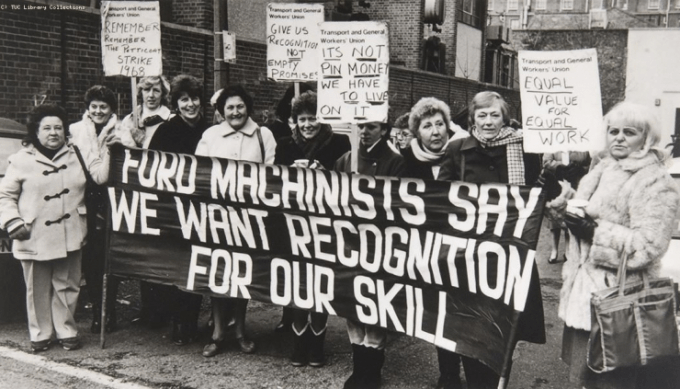
Moreover, as a child of the 1970s, I felt the need to re-evaluate Labour’s achievements in government in that decade. Partly because of the bitter and lasting recriminations which followed the 1979 general election, these are often ignored, derided or simply forgotten. A party which closes its eyes to its own achievements will not thrive. Indeed, it will be complicit in the lies told about it by unscrupulous opponents, Maddeningly, this is a lesson Labour has had to re-learn time and time again.
The book draws on a wide variety of sources, including the testimony of public figures such as John Betjeman, Richard Hoggart, Friedrich Engels, and George Orwell. These complement pen portraits of political titans such as Harold Wilson, Nye Bevan, Hugh Dalton, Ellen Wilkinson, and Barbara Castle. Others, such as John Wheatley, Somerville Hastings, Sydney Silverman, and Mary Macarthur, deserve to be better known.
Taken as Red starts, appropriately enough, with the first Labour government, and with John Wheatley’s housing Act, in particular. Wheatley had long been a figure of fascination for me, since a research trip to Glasgow in the late 1980s. The last Clydesider, Harry McShane, was still alive when I was researching then in the Mitchell Library. A man of contradictions – a teetotaller with alleged connections to the booze trade – Wheatley suffered the cruelties of sectarianism but wasn’t averse to rhetoric, which occasionally hinted at xenophobia. Nevertheless, his achievements in office transformed the lives of hundreds of thousands of working-class lives. Housing was, and remains, central to Labour’s mission.
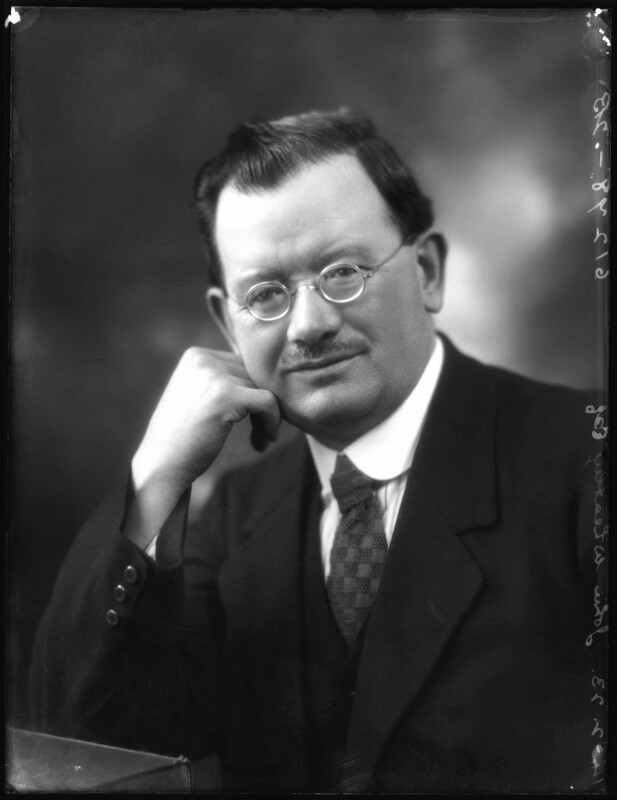
whole-plate glass negative, 14 February 1923. © National Portrait Gallery, London
If the Wheatley Act of 1924 was a high for Labour, the party’s myopia about Hitler, and its obtuse resistance to rearmament until perilously late in the 1930s, was a low. The second chapter explores this in depth. Labour’s towering achievement of the National Health Service is the subject of the next chapter. Political opponents, such as Jeremy Hunt, have subsequently tried to appropriate the political credit for the NHS, or at least muddy the waters. There is a grain of truth in this. But no more than that. The NHS under a Churchill government would have been very different, a pale imitation of the mighty, transformative institution which emerged under Bevan.
Taken as Red examines Labour’s lamentable record in failing to mitigate the social privileges conferred by public schools. Another chapter in the book describes the Beeching cuts to the railways under the 1960s Wilson governments, which have blighted the mobility of millions ever since. This chapter draws on the fine work of Charles Loft and others about the Beeching era. Nevertheless, it reaches more damning conclusions than Loft did. The book also considers high points of the 1960s and 1970s Wilson governments, such as the social legislation of the 1960s, the Equal Pay Act in 1970, and the anti-discrimination and comprehensive health and safety legislation which followed in the mid-1970s. Throughout, Taken as Red narrates the impact of these developments on ordinary lives.
The volume ends with the Brown government’s response to the world financial crisis of 2008-09 in the context of Labour’s often testy relationship with the City over decades. The myths about the financial crisis, often ludicrous, contributed hugely to Labour’s electoral demise in 2010 and also to the party’s failure to regain power in 2015. Given the deep malaise which has enveloped Britain since, it’s time to re-examine the events in that period.
What did I glean from my research? Many things, of course, but there were a couple of overarching lessons from the party’s first century in and (mostly) out of government. Firstly, it is always essential to prepare exhaustively for power. The party’s mis-steps over Beeching were partly caused by its failures in this respect. Whitehall mandarins quickly filled the vacuum. The new government simply carried on from where its predecessors had left off, with disastrous consequences. Also, boldness is often the better part of caution. Britain remains a hierarchical, class-ridden society dominated by a (largely) privately-educated elite, despite the feeble efforts of a series of Labour governments to ameliorate this.
Taken as Red was written to be read. It was conceived as an accessible account of Labour’s last century. With luck, readers will enjoy it. If they learn anything like as much about Labour’s record since 1924 as the book’s author did, then it will have done its job.
Richard Temple is the University Archivist at Senate House Library, University of London. He is a former chair of the SSLH Archives and Resources Sub-Committee.
Taken as Red: Highs and Lows of the Labour Party, 1924-2019 is available at Waterstones and other bookshops.
Discover more from Society for the Study of Labour History
Subscribe to get the latest posts sent to your email.
 Society for the Study of Labour History