My dissertation considers how innovative theatre and cinema produced across Spain and Britain during the Spanish Civil War mobilised new audiences to engage with political propaganda. The final chapter considers the actions of Unity Theatre to reach working-class communities and contest national policies of non-intervention.

The bursary allowed me to visit four archives in Manchester and London: the Working Class Movement Library (WCML) in Salford, People’s History Museum (PHM), Bishopsgate Institute and the Marx Memorial Library (MML). I am highly appreciative of the support provided, which enabled my engagement with publications, play scripts and letters that proved integral to a deeper understanding of the organisation’s national and local influences.
During my visit to the WCML I found issues of New Theatre, a Unity bulletin designed to report on the progress of the organisation, provide advice and coach groups on basic dramatic skills. Also, access to a copy of the Communist writer Jack Lindsay’s On Guard for Spain provided a major focus for analysis in my final chapter. The prominence of the mass declaration piece was cemented through tours and demonstrations of various working-class groups in solidarity with the Republican government. The PHM archives similarly proved useful because I was able to access a copy of You’ve Got to Fight (1936), another original provocative piece on working-class action on the streets of London against Moseley’s blackshirts. The piece was written following the infamous ‘Battle of Cable Street’ clashes in late 1936 and contains references to Republican Spain and gives perspective on domestic reverberations of the wider clash between fascism and communism being played out in Europe.
My second trip to London took me to the Bishopsgate Institute, where I found administrative documents of the Unity Theatre School of Dramatic Studies designed to train actors and technicians from the working-class districts of London. The accompanying programme and pamphlet material was significant for insight into memorial services held for a Unity member killed in Spain as part of the International Brigades. My final inquiry at the MML was the most significant experience because I found magazines contextualising the contributions of amateur political theatre and the extensive letters of a working-class Communist, Bruce Boswell. The letters reveal a concrete correspondence between Unity Theatre and the International Brigades, even making reference to an ad-hoc Unity-inspired monologue performed on the front lines.
Overall, the SSLH bursary helped the progress of my research significantly through my discoveries of the scope, creativity and personal stories associated with Unity Theatre’s mobilisation of the masses. My understanding of the intricacies of the organisation, its constant appeals for new members and its actions to fundraise and inform on developments in Spain and their relevance have been extremely beneficial. I must reiterate how incredibly thankful I am for the support to make these archive visits possible.
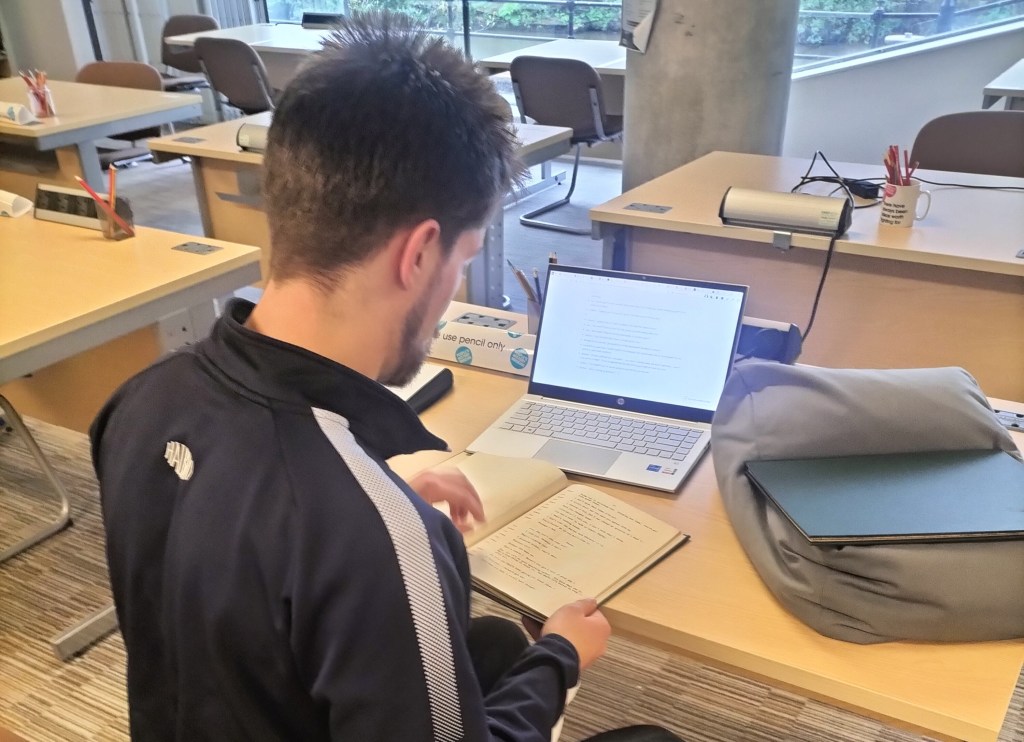
Callum Campbell is in the final year of his BA hons History degree at Northumbria University. His dissertation is on Unity Theatre’s mobilisation of the British working-class through theatre on the Spanish Civil War.
Find out more about bursaries on offer from the Society for the Study of Labour History.
Discover more from Society for the Study of Labour History
Subscribe to get the latest posts sent to your email.
 Society for the Study of Labour History