Chris Williams, who has died at the age of sixty-one, was one of the foremost historians of Wales and of the labour movement. Well known as the author of Democratic Rhondda: Politics and Society, 1855-1951, he wrote extensively on Robert Owen, the South Wales miners, and on political cartooning and caricature, and was Head of the College of Arts, Celtic Studies & Social Sciences at University College Cork.
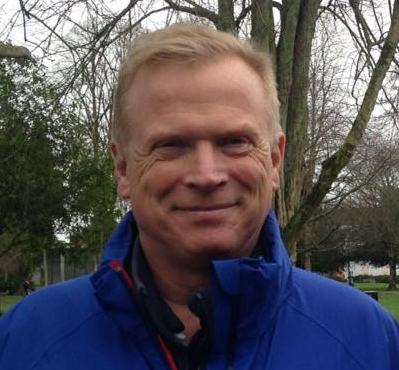
Following a short service commission as second lieutenant in the Duke of Edinburgh’s Royal Regiment (Berkshire and Wiltshire), Chris Williams read Modern History at Balliol College, Oxford, graduating in 1985 with a first class degree. He subsequently pursued a doctorate at University College Cardiff supervised by Professor Dai Smith, and his thesis on Democratic Rhondda: Politics and Society, 1885-1951 led to associate lectureships at the Open University and Coleg Harlech Adult Education College before he was appointed to a lectureship in Nineteenth-Century British History at University of Wales College of Cardiff in 1988.
From 2001 to 2004 he was Professor of Modern and Contemporary Wales at the University of Glamorgan, and from 2005 to 2013 Professor of Welsh History at Swansea University. In 2013 he returned to Cardiff University as Professor of History and Head of the School of History, Archaeology and Religion. He took up his appointment at University College Cork in 2017.
Most recently, Professor Williams’ research had focused on the history of political cartooning and political caricature in Britain from the French Revolution to the Second World War. He was also working on the social and political history of Newport, South Wales, from the late eighteenth century to the First World War.
In addition to the The Richard Burton Diaries (2012), Professor Williams edited, sometimes alone and often with others, such volumes as The Labour Party in Wales, 1900-2000 (2000), Robert Owen and His Legacy (2011), volumes 4 and 5 of The Gwent County History (2011 and 2013), and With dust still in his throat: the writing of B. L. Coombes, the voice of a working miner (2014). He was the author of a book on Coombes (1999), and of Capitalism, Community and Conflict: The South Wales Coalfield, 1898-1947 (1998). The full list of his publications is extensive, and includes work on cartooning and the rise of Labour, and the religious politics of Late Victorian and Edwardian Wales – in cartoons. In 2023 he edited a special issue of the Journal of Co-Operative Studies on Robert Owen and co-operation.
Professor Williams was active as a Fellow of the Royal Historical Society and of the Learned Society of Wales. He served on the editorial board of University of Wales Press, and on the Research Advisory Committee of the National Museum of Wales. He was Advisory Editor for Wales of the Oxford Dictionary of National Biography, and contributed regularly to both the ODNB and Dictionary of Welsh Biography.
While at the universities of Cardiff, Swansea and Glamorgan, Professor Williams supervised sixteen research students to doctorates, and taught across a wide subject range at undergraduate and postgraduate level. At Cork, he taught a final year undergraduate course on political cartoons and political caricature in Britain, 1789-1945, but had previously taught on subjects as varied as modern south-east Asian history, modern European history, modern Welsh history, nineteenth-century British history, modern women’s and gender history, thematic courses on Celtic histories, on borders and border studies, national identities in the British Isles, popular politics in Britain and on the history of the South Wales coalfield.
Labour and social historian Professor Keith Gildart, who had known Professor Williams as a friend and colleague for many years, said he was shocked and saddened by the news of his death. He described him as ‘a great historian of Wales and the labour movement’. He was, said Professor Gildart, ‘a good friend and genuinely nice person’.
David Smith, secretary to the Robert Owen Museum Trustees, said he was shocked. Posting on X (formerly Twitter), he wrote: ‘We were starting to discuss a topic for Robert Owen Day 2025. Chris gave his time so generously and we shall ever be indebted for his incisive contribution to Welsh and Labour movement history. Our fulsome condolences to his family.’
Dr Ben Curtis, historian of modern South Wales and the coal industry, said news of Professor Williams’ death was ‘a terrible shock and a great loss’. He added: ‘Chris Williams was my PhD supervisor and mentor, and one of the leading Welsh historians of his generation. He will be greatly missed by many people.’
Chris Williams: Research Profile, University College Cork
Reminiscence: SSLH secretary Dr Quentin Outram recalls a conversation with Chris Williams:
‘I always thought I’d been quite well brought up,’ said Chris. We were chatting together in a Swansea hotel car park waiting for others to join us and I’d been telling him what I’d seen in the breakfast room. It was a fairly cheap hotel, academic expenses rates being ungenerous, then as now. In the far corner were four roadies to a rock band; jeans and souvenir t-shirts, greying and receding hair tied back in pony tails, full English breakfasts, very quiet. In the middle of the room by herself was a middle-aged but thin and heavily made-up woman in very high heels despite the time of day and in front of her an orange on a white plate. She held it fast with the fork and expertly sliced away the skin, turning it this way and that, and finally sliced the flesh into pieces small enough to eat. There was no orange juice on her fingers or spilt on the table-cloth. I was astonished. It had never occurred to me that this could be other than a purely manual operation. And I thought I’d been quite well brought up, too. Though not perhaps as well brought up as Chris who seemed possessed of an unfailing ease and grace. But he, too, he told me had been faced with an orange on a white plate together with a knife and fork as a young man in an officers’ mess during his short army career. ‘Mr. WILLIAMS! WHAT are you doing?’ bellowed the senior officer from the head of the table as Chris picked up the orange and dug his finger-nails into the skin, as we all do. A little while later I asked him why he had left the army. ‘Oh, I realised it wasn’t for me,’ he said in the way men do when they are telling you that they don’t want to talk about it. So we talked of other things.
Discover more from Society for the Study of Labour History
Subscribe to get the latest posts sent to your email.
 Society for the Study of Labour History