Paul Topley reports on a one-day event that brought together Essex trade unionists and others involved in supporting the 1984-85 miners’ strike.
A one-day conference on the role of the Essex labour movement in supporting striking miners during the strike of 1984-85 took place on Saturday 9 March. Organised by Essex Association of Trades Councils, with financial support from the Society for the Study of Labour History, and attended by more than forty people, the event heard presentations from trade unionists and political activists involved at the time, from authors Jim Westover and from Matt Foot, and Adrian Weir of the Campaign for Trade Union Freedom.
In the morning session Malcolm Wallace, of Chelmsford Trades Council’s erstwhile Miners’ Support Committee, described how it co-ordinated fundraising and material support for Kent NUM. This was a huge financial and logistical operation, unprecedented in the history of the Essex labour movement, that utilised the skills and talents of many working class activists.

Tom Topley from Harlow spoke of his experiences as a trade unionist who had been on strike for a month and how difficult that was. For him it put into context the determination of the miners to stay out on strike for a whole year. He had been involved in Harlow Miners’ Support Group which had agreed to support Nottinghamshire strikers as they faced a difficult situation because most mines in Nottinghamshire had not joined the strike. Harlow supporters had raised £53,500 for two mines, Hucknall and Limby. Tom considered this to be a good barometer of the strength of the workers’ movement locally at the time, and an impressive achievement. He concluded, however, that the key to winning the dispute would have been stopping coal production in Nottinghamshire. This was something the support group movement as a whole was unable to do.
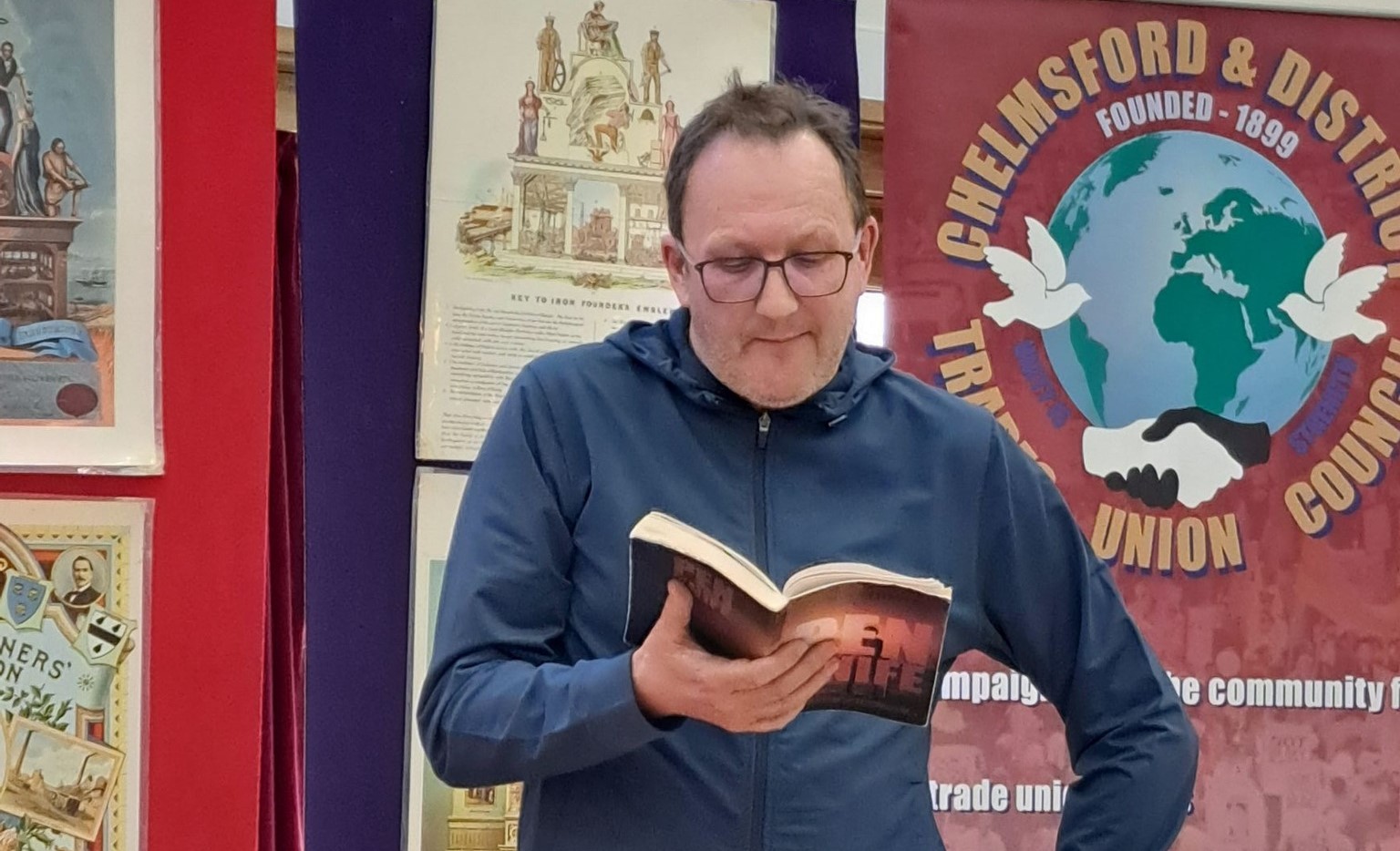
In a change of pace, Jim Westover read from his novel Penknife, set in Colchester during the strike. He presented extracts featuring the impact of mass picketing, when miners from Kent joined local supporters and students from the University of Essex in attempting to stop strikebreaking coal imports being brought through local ports. Jim described how he had interviewed participants and spent time in the archives to ensure the historical accuracy of his vivid description of events.
The morning session also featured Bill Hodge, then convenor of West Thurrock power station. Bill described how a well organised and politicised trade union cadre at the power station was able to thwart Central Electricity Generating Board plans to break the strike by increasing power output using oil instead of coal. The Transport and General Workers’ Union branch held the line throughout the whole dispute despite huge pressure and intimidation. Bill described how output was eventually reduced to zero and argued that fear of an escalation into a joint miners’ and power workers’ dispute prevented the CEGB from taking disciplinary action against trade unionists at the plant. He concluded that, if similar action had been taken by workers at two or three other Thameside power stations, the dispute would have been won and the Thatcher government brought down.
Speakers from the floor of the conference also relayed their memories of the strike and the widespread support given by Essex locals to help the miners.
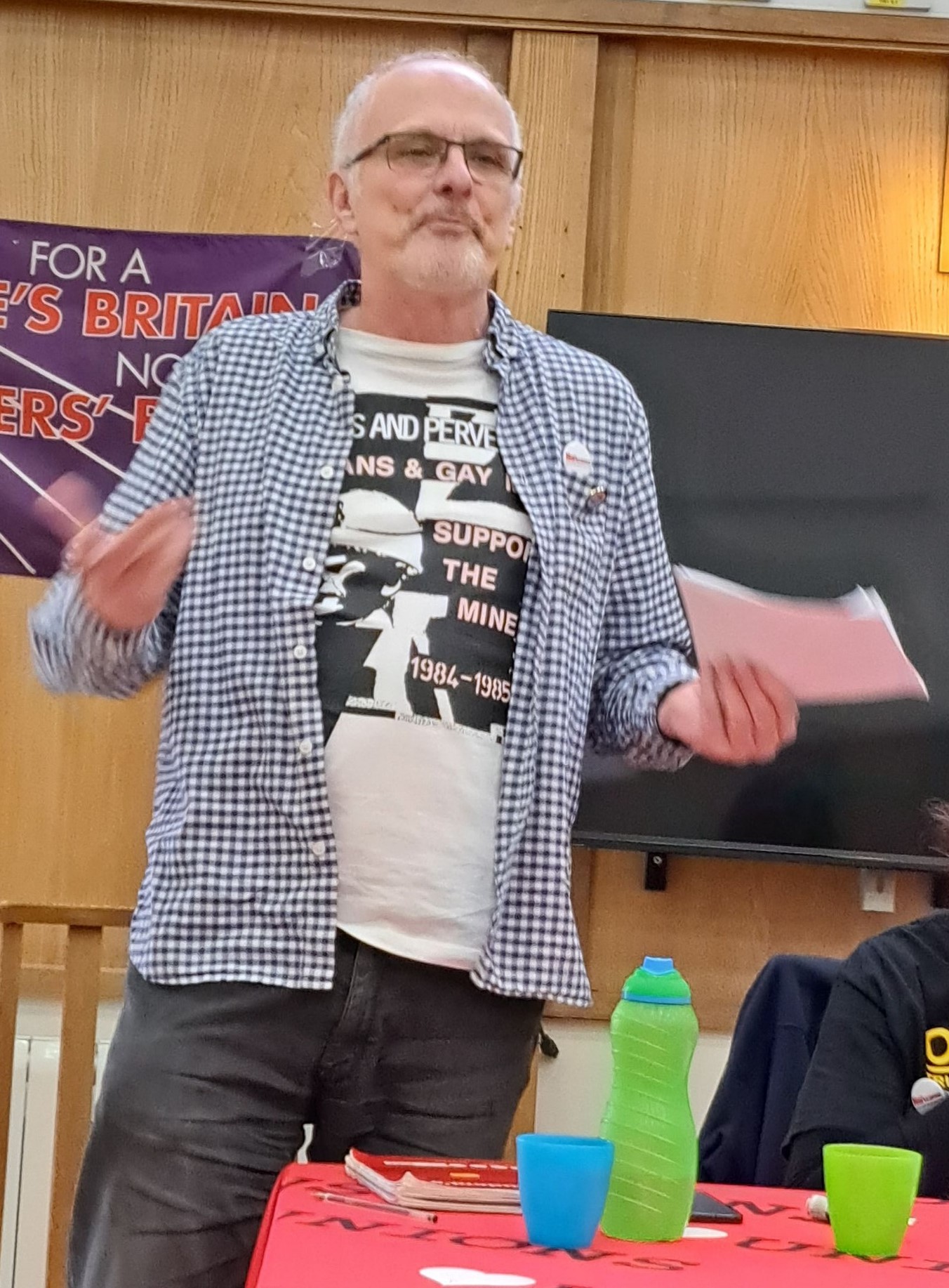
In the afternoon session, Ray Godspeed from Lesbians and Gays Support the Miners (LGSM) described the importance of forging solidarity between the oppressed and workers in struggle. For him the miners’ strike was crucial in making clear the common bonds between all working-class people, despite their differences in experience and identity. He also related the real story behind the making of the film Pride. He said that the film, for dramatic effect, had mischaracterised the relationship between the South Wales NUM and LGSM. In fact, the political solidarity between the two was much more deeply understood and felt than was portrayed. He also emphasised that the real heroes of the story, from the LGSM perspective, were always the miners and their families, not LGSM members, in contrast to the narrative of the film.
Author and lawyer Matt Foot spoke about the policing of the strike, which is featured in his book, Charged: How the Police try to Suppress Protest. He described how plans for the use of paramilitary style policing and national co-ordination had been put in place before the strike as part of an integrated ruling-class response to deepening economic and political crisis. The success of this paramilitary strategy in breaking the strike has seen it become the model for the policing of protest ever since.
Adrian Weir from the Campaign for Trade Union Freedom rounded off the conference with his analysis of the ever more restrictive trade union laws being put on the statute book. He argued that the Strikes (Minimum Service Levels) Act 2023 was a fundamental threat to the right to strike in the public sector which must be fought and defeated.
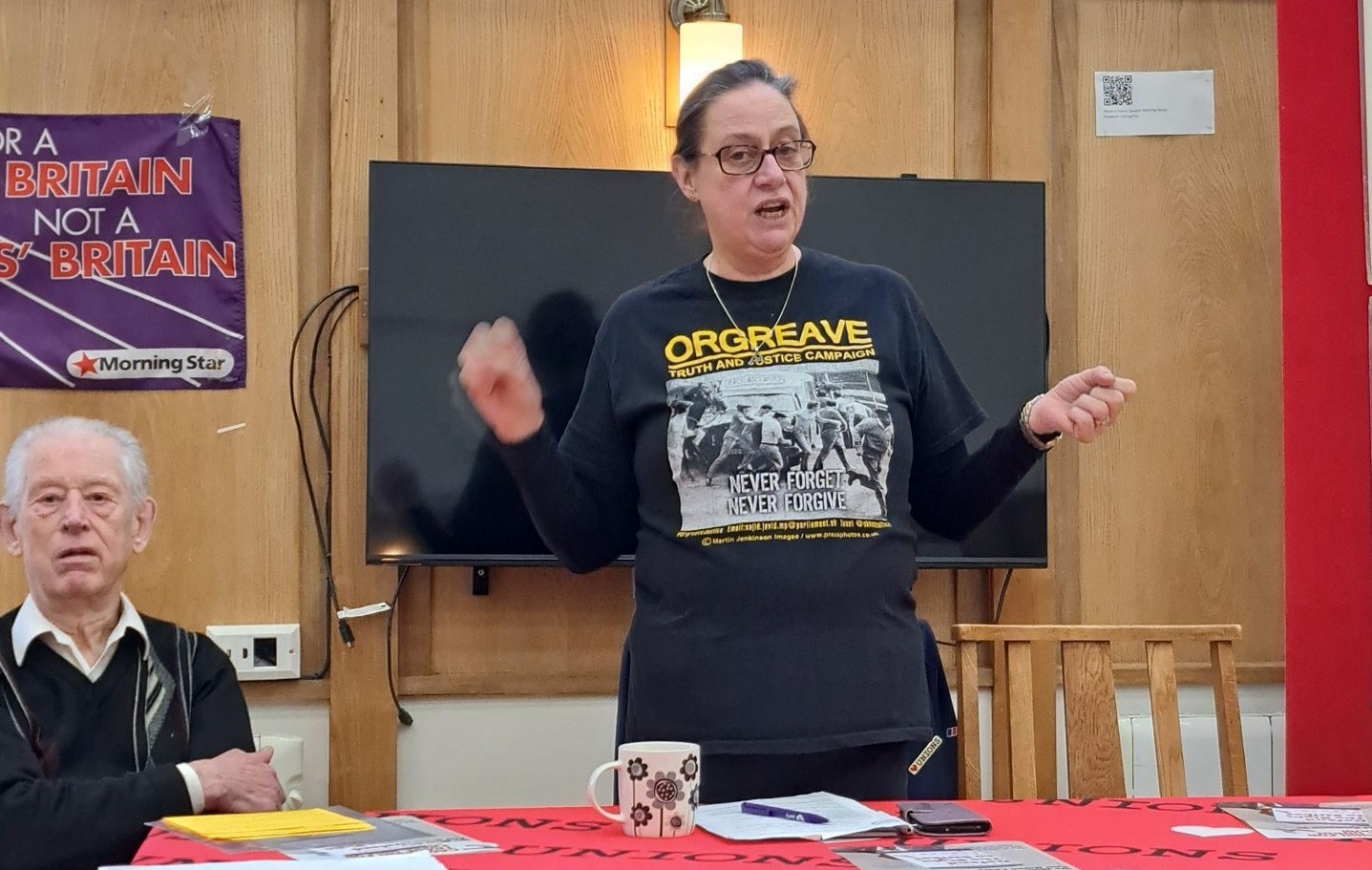
The event was chaired by prominent Essex trade unionist Rachel Heemskerk, from the Public and Commercial Services Union, who is also secretary of Southend Trades Council.
The organisers recognised that despite its success, the event had limitations. Most prominent among these was that it was too white, middle-aged, and male. The idea was floated that it could evolve into a more regular, cultural event, like the Burston School Strike Festival. It was accepted that, if this is to happen, the event’s social diversity will have to develop, for example by having representation from Women Against Pit Closures, which had been of crucial importance during the strike.
Visit the Essex and the Miners Strike 1984-85 YouTube channel featuring speeches from the day.
Discover more from Society for the Study of Labour History
Subscribe to get the latest posts sent to your email.
 Society for the Study of Labour History