Kate Gibson reports on a conference that explored the richness and diversity of current research into experiences of care, and the need for researchers to reflect on the way they approach and interpret archives of care.
The Society for the Study of Labour History funded five bursaries to enable postgraduates to attend the conference ‘Compassion and Care: Emotions and Experience in the Care of Children through History’. Taking place at the University of Manchester in March 2023, the conference was attended by forty delegates in person as well as online attendees from around the world.
A major strength of the conference was that attendees included academic researchers from history, sociology, and literature, archivists, social work practitioners and representatives from care organisations such as the Care Leavers Association and Who Cares? Scotland. This diversity meant that we had some great discussions about historic issues in the care system, and also its impact on current practice, such as adult care leavers’ access to their care records.
Our presenters were extremely generous in sharing their research, and also in many cases personal stories of care experience. Panels included papers on the ethics and practice of care research, parish and kinship care, the effect of care experience on children’s life courses, colonisation and race, maternity and emotion, institutional care, and feelings of legacy, loss and ‘home’ among Care-Experienced people and their families. The papers covered a considerable range, from the sixteenth century to the present, and experiences across Britain, Ireland, Finland, India, Nigeria, Canada and Portugal.
As part of the conference we also held a public ‘collections encounter’ organised by curators and archivists at the John Rylands Library, highlighting archives of care in the University of Manchester’s special collections, including photographs and documents from homes run by religious philanthropists George Müller and Thomas Barnardo.
Our discussions highlighted the importance of seeing care research as part of labour history and care as a form of work, from midwives transporting baby boxes on skis in twentieth-century Finland, to wet nurses caring for foundlings in nineteenth-century Lisbon.
Some papers examined the emotional labour of carers, job satisfaction and occupational identity. Andrew Burns asked ‘Where is the joy?’ in studies of residential childcare, emphasising the need to acknowledge the importance of joy both for children and care staff. Building in time for happiness and play improved care workers’ love for their jobs, helped them cope with stress, reduced burnout and improved staff retention, allowing staff and children to build stable relationships.
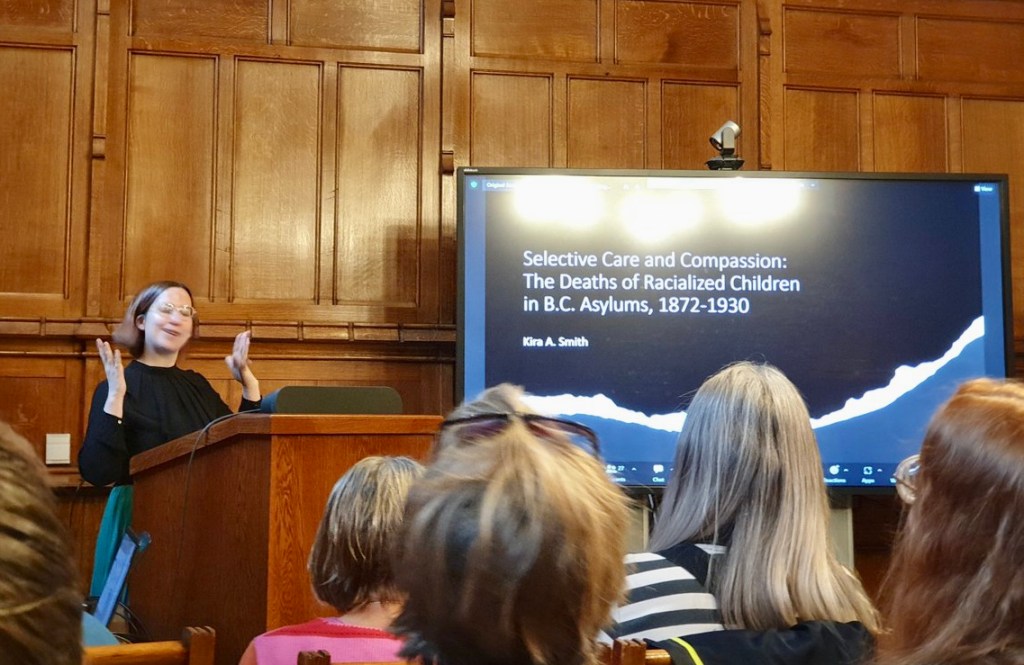
Several papers investigated the complicity of care workers in institutional abuse cases. Michael Lambert argued that bureaucracy facilitated abuse in twentieth-century British institutions, while Kira Smith provided compelling insight into the indifference and racism of institutional staff towards Asian and indigenous children kept in British Columbian asylums in the early 1900s. A further panel on kinship care and parish care in British history examined the role of paid and unpaid carers in the community, and the existence of a ‘care economy’ before the twentieth century that both provided state-sponsored employment for the poor and care for vulnerable children.
In addition, many of the papers touched on the work of researchers: the ethics of research into care experience, the emotions of the researcher and the relationship between the researcher and their subject. Róisín Farragher, Petra Göbbels-Koch and Annie Smith reflected on the ‘insider’ position of Care-Experienced researchers, who were simultaneously researching and part of a Care-Experienced community, and the impact of this position on their research methods.
Tina Hodgkinson, Victoria Hoyle and Cate O’Neill’s panel on archives examined the work of archivists in supporting Care-Experienced people to access often traumatic records about their early lives, and the need for training and occupational support in this.
The conference highlighted the richness and diversity of current research into experiences of care, and the need for researchers to reflect on the way they approach and interpret archives of care, particularly as governments and institutions react to growing calls for transparency and accountability in the present.
The conference was organised by Dr Kate Gibson, Leverhulme Early Career Fellow at the University of Manchester, and Dr Claudia Soares, a British Academy Postdoctoral Fellow and NUAcT Fellow at Newcastle University
Find out more about the Society for the Study of Labour History’s bursaries and grants schemes.
Discover more from Society for the Study of Labour History
Subscribe to get the latest posts sent to your email.
 Society for the Study of Labour History