The rise of comparative and transnational history offers an opportunity to rejuvenate the study of labour history itself, argues Neville Kirk. Here, tracing his own transnational engagement with labour history through more than fifty years of teaching, publication and research across continents, he introduces his recent book on the lives of labour activists Tom Mann and Robert Samuel Ross.
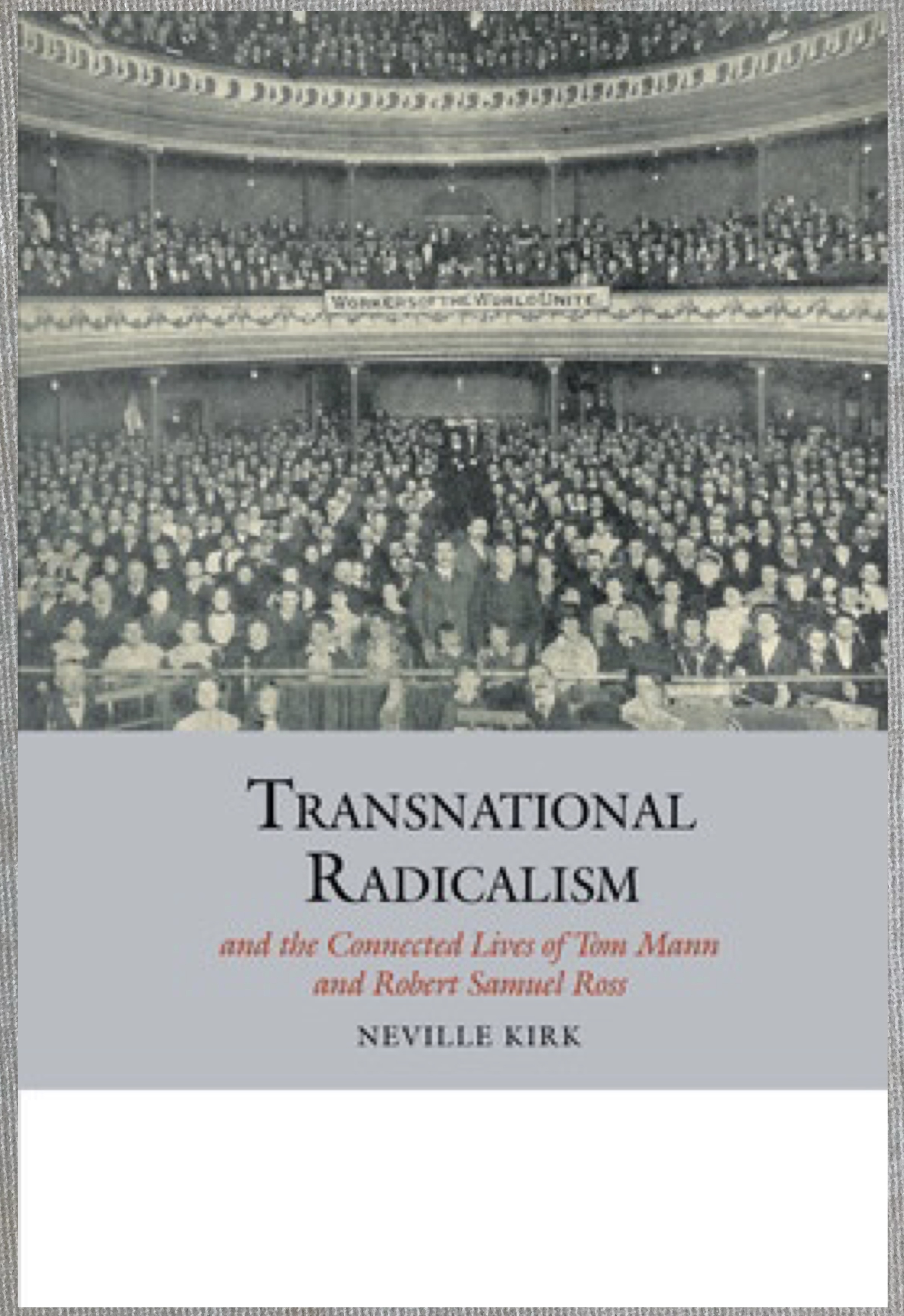
While interests in comparative and transnational history are by no means solely the products of the ‘globalized’ present and recent past, they have certainly mushroomed since the end of the twentieth century. In some places they have come to challenge the traditionally dominant concern of historians, including labour historians, with the nation state and its sub-elements of regions and localities.1 My book seeks to make a case for comparative and transnational history. The latter comprises of, respectively, the study of similarities and differences and the movement and effects of people, ideas, institutions and structures within and among nations and other places and spaces across the globe.2 My focus rests upon the lives and careers of two prominent left-wing labour-movement activists, English-born socialist and communist Tom Mann (1856-1941) and Australian-born socialist Robert Samuel (‘Bob’) Ross (1873-1931), their developing personal and labour-movement relationship over time, their many contacts, networks with other labour activists across the world (Mann was a truly global organiser and inspiration) and the ways in which they were influenced by and shaped the labour movements and wider societies in which they were active.
Before looking in more detail at the contents of my book, it may useful to outline to the reader the development of my own interests in comparative and transnational history. Their origins may be traced back mainly to my experiences as an MA student in Comparative British and US Labour and Social History at the Centre for the Study of Social History, Warwick University, 1968-9, and as a PhD student in the Department of History in the University of Pittsburgh, USA, 1970-1974.3
The Centre at Warwick was founded by E.P. Thompson and his colleagues in 1968. Thompson, of course, became famous for his work in English social history, particularly his classic book, The Making of the English Working Class (1963). Sometimes portrayed as too insular or ‘peculiarly English’ in his research, Thompson, in fact, was a true internationalist in terms of his upbringing and familial influence, his Left politics and his encouragement of his students and others to cast their interests, knowledge and understanding well beyond the United Kingdom. His reluctance to extend his main area of primary research beyond England lay in his strong belief that it would be well nigh impossible for one historian in their career to undertake the depth and breadth of primary and secondary based research necessary to do justice to the processes of ‘working-class making’ (and ‘unmaking’) in several countries. He also believed, quite rightly, that there existed many other historians better equipped to undertake this wider task for their own societies, for example, Herbert Gutman and David Montgomery for the USA.4
Fortunately for me, Montgomery, a US labour historian at the University of Pittsburgh, was teaching on the MA course at Warwick while I was there and instructed me in US labour history. It was David, above anyone else, who indeed convinced me of the importance of comparative and transnational history. Montgomery, himself, concentrated his core research focus upon workplace relations. Yet his brand of labour history went much wider and his knowledge of labour movements across the world was awesome. At Warwick, he introduced me to the key importance of the concepts and practice of race and ethnicity, migration and mobility (both geographical and social in character), as well as of class and individualism, in American history and encouraged all his students to think about these matters across national boundaries. His foresight in ordering key primary sources in US labour history for the university library at Warwick enabled me to write a dissertation on the US Knights of Labour.
Having successfully completed my MA at Warwick, I spent the next six months wondering what to do with my life. I enjoyed working as turf cutter for most of this time, until the reality of labouring outdoors in the Pennine hills during the cold winter months meant that I gleefully accepted Montgomery’s offer to take up a Teaching Assistantship and study for a PhD in his home department in Pittsburgh. I undertook these duties between 1970 and 1974. These were exciting and heady days, of student radicalism, of anti-Vietnam protests and working together with the outstanding group of labour students and staff brought together by Montgomery at ‘Pitt’. The 1970s and early 1980s, furthermore, was the time when the pioneering work of feminist historians opened my eyes to the much neglected importance of gender in history and radical politics.5
Following my PhD, I returned to England. I continued to follow Montgomery’s invaluable advice that, given my ‘apprenticeship’ in wide-ranging comparative and transnational labour history (involving not only institutions but social relations, politics and ideology), it made good sense to teach and research in these ‘new’ subject areas and attempt to push their boundaries further. I maintained invaluable close ties with leading labour historians and institutions in the USA and Canada and over time developed new ones in the UK, Europe, Canada, Australia, New Zealand and Brazil. Many colleagues and institutions in these places have very generously supported my research. They have helped me to complete four single-authored books in the areas of comparative and transnational studies. These are: Labour and Society in Britain and the USA, 2 volumes (Aldershot: Scolar Press, 1994); Comrades and Cousins: Globalization Workers and Labour Movements in Britain the USA and Australia from the 1880s to 1914 (London: Merlin Press, 2003); Labour and the Politics of Empire: Britain and Australia 1900 to the Present (Manchester: Manchester University Press, 2011, 2014); and my Transnational Radicalism study.
The latter, my most recent publication, logically developed out of my previous comparative and transnational studies, but this time with a particular biographical twist. It charts key ‘moments’ in the connected lives of Tom Mann and Bob Ross. It shows how these two working-class autodidacts and ‘organic intellectuals’ developed very close and lasting friendship and political ties, especially while Mann was in Australia and New Zealand during the later nineteenth and early twentieth centuries. Despite differences of opinion, especially around the merits of communism, syndicalism, the ‘political road to socialism’ and the White Australia policy, both Mann and Ross were totally committed to building the organised labour movement, preached unity, were opposed to ideological divisions and factionalism and had a major influence in creating and developing trade unions and other key institutions of ‘the movement’.
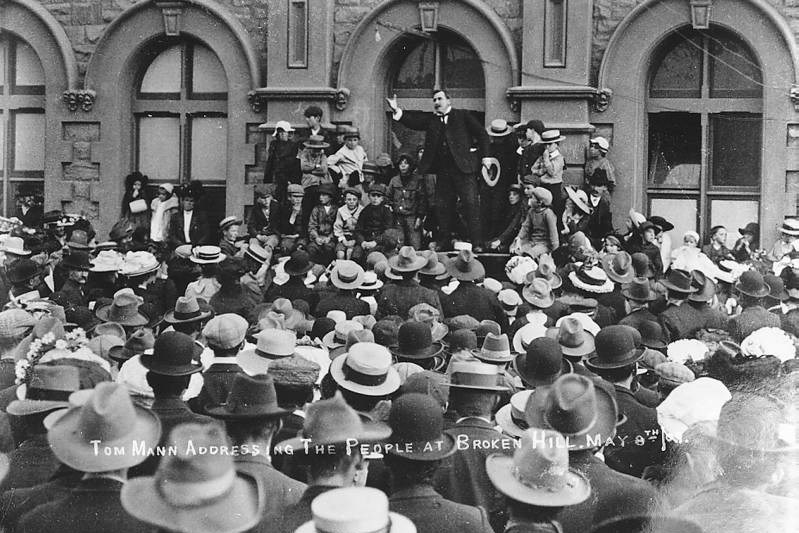
While Ross’s activities and influences were largely confined to Australia and New Zealand, Mann was a true global labour activist and inspiration. He campaigned and organised in the UK, Europe, North America, South Africa, the Soviet Union and China as well as Australasia. Both men demonstrated the fact and power of transnational ties and organisation. They inhabited a truly transnational world in which workers and labour leaders crossed national, international and hemispheric boundaries, or ‘globe hopped’, in search of work, new opportunities, encounters and an escape from poverty, oppression and persecution. In the process, some of them became radicals, complete with extensive extra-national ties and commitments, and sought to reform or transform the predominantly capitalist societies in which they lived (see chapter 2 of Transnational Radicalism). At the same time, the class-based ‘universalism’ of this radical transnational world was sometimes seriously weakened by differences and conflicts around issues of skill, race, gender, nation, empire, war and labour-movement tactics and strategies (see Transnational Radicalism,chapters 2, 5,6,7).The experiences of Mann and Ross, along with the many other transnational radicals highlighted in my book, offer many lessons to radical activists across today’s globalized world.
In conclusion, I wish to bring the reader’s attention to four key characteristics of my interest and publications in comparative and transnational labour history. First, I have consistently argued that while these kinds of history can usefully widen and deepen our knowledge and understanding of ‘the world of labour’, especially ‘from below’, they should not be seen as a panacea, as the cure-all for the ills of labour history. Second, they should be studied, where appropriate, alongside and in a productive dialogue with more traditionally-based national and sub-national accounts rather than being in conflict with them. As I concluded in Transnational Radicalism, we should ‘explore and engage experiences, processes and structures across a variety of places and spaces’ (p.41). Third, in adopting this course of action, we may hopefully help labour history to ‘regain much of its former vitality, relevance and appeal’ (p. 41). Fourth, my book will hopefully encourage others to set out on fascinating and productive comparative and transnational journeys and so aid this process of much-needed rejuvenation. I am keen to be involved in further discussions on this crucial matter.
Neville Kirk is Professor Emeritus in History at Manchester Metropolitan University
Golspie, Sutherland, Scotland, January 2023, n.kirk@mmu.ac.uk
Notes
1. Pierre-Yves Saunier, Transnational History (Basingstoke: Palgrave Macmillan, 2013), p. 2, ch. 1; Kirk, Transnational Radicalism, pp. 56-62; Leon Fink (ed.), Workers across the Americas: The Transnational Turn in Labor History (Oxford: Oxford University Press, 2011).
2. Saunier, Transnational History, pp. 4-5; Kirk, Transnational Radicalism,pp. 4—6, 40-55.
3. Kirk, Transnational Radicalism, p. 57.
4. Kirk, Transnational Radicalism, pp. 58-9; Marcel van der Linden, ‘Labour History beyond Borders’, in Joan Allen, Alan Campbell and John McIlroy (eds), Histories of Labour: National and International Perspectives (Pontypool: Merlin Press, 2010),pp 357-8; Jan Lucassen, ‘Writing Global Labour History c 1800-1940: A Historiography of Concepts, Periods and Geographical Scope’, in Jan Lucassen (ed.), Global labour History: A State of the Art (Bern: Peter Lang, 2006), pp. 40-2.
5. One of the leading feminist historians, Dorothy Thompson, had been my teacher on her third-year special subject course on Chartism at the University of Birmingham, during 1967-8. This course included material on women and Chartism. Dorothy was instrumental in directing me to the MA at Warwick and remained an important influence and friend up to her death in 2011.
Transnational Radicalism and the Connected Lives of Tom Mann and Robert Samuel Ross is published in the Studies in Labour History book series.
Discover more from Society for the Study of Labour History
Subscribe to get the latest posts sent to your email.
 Society for the Study of Labour History