As the first of George Lansbury’s papers go online, Daniel Payne sets out how LSE Library is digitising its vast archive of material relating to the former Labour Party leader, and introduces some of the treasures it contains.

Starting with the first two volumes, which are available online now, LSE Library recently announced plans to digitise its entire George Lansbury archive. An early supporter of women’s suffrage and MP for Bow and Bromley, adopted East-Ender George Lansbury (1859-1940) was a life-long campaigner for peace, local democracy, women’s rights and improvements in labour conditions. He led the Poplar rates revolt in 1921 as a borough councillor, and was leader of the Labour Party from 1932 until his resignation in 1935.

It is difficult to talk about George without heading off on a trail of all the other extraordinary people in his family. His daughter Daisy worked as his secretary and is noted for her activism, famously dressing up as Sylvia Pankhurst in order to help the real Pankhurst evade capture from the police (listen to Elsie Flint recount this story). Daisy married Raymond Postgate, who would work as a journalist on his father-in-law’s newspaper the Daily Herald. Daisy and Raymond’s son, Oliver Postgate, became a famous animator creating iconic children’s television programmes such as Bagpuss and the Clangers. One of George’s son’s, Edgar Lansbury, was involved in the Communist Party, joined his father in the Poplar Rates Revolt, and married Moyna Macgill. Their daughter, the extraordinary actress Angela Lansbury, very recently died at the age of 96.
Raymond Postgate wrote a biography of his father-in-law called The Life of George Lansbury. During the course of the research for this book, he gathered a considerable amount of George’s personal and political correspondence and donated these to the archives of LSE Library in 1950. Covering over 30 volumes, the collection includes topics of interest to Lansbury throughout his life such as schools, the Labour Party, unemployment, poverty, the 1931 Cabinet crisis, personal and professional photographs, press reviews, pamphlets, election addresses, and more.
It is a wonderfully rich collection that offers a diverse resource for historians. As well as giving an insight into the development of the British left in the early 1900s, two volumes are dedicated to correspondence relating to independence movements in India in the 1930s, with Bhimrao Ramji Ambedkar sending copies of his report from the Roundtable Conferences directly to George. Mirabehn, a British activist who moved to India and was a disciple of Gandhi sends Lansbury letters about the civil disobedience movement in India.

I have spent a lot of time with this archive, and what strikes me the most about it is the outpouring of love and respect that so many people felt for George. Here is a letter from a young girl thanking Lansbury for his ‘paddle pool’ in Regents Park, which was built thanks to Lansbury’s role as First Commissioner of Works. Another letter shows his constituents addressing him as ‘Dear Old Pal’ after losing an election; offering him words of consolation: ‘This is not a defeat – Bow and Bromley is lost politically but the cause you fought for LIVES!’
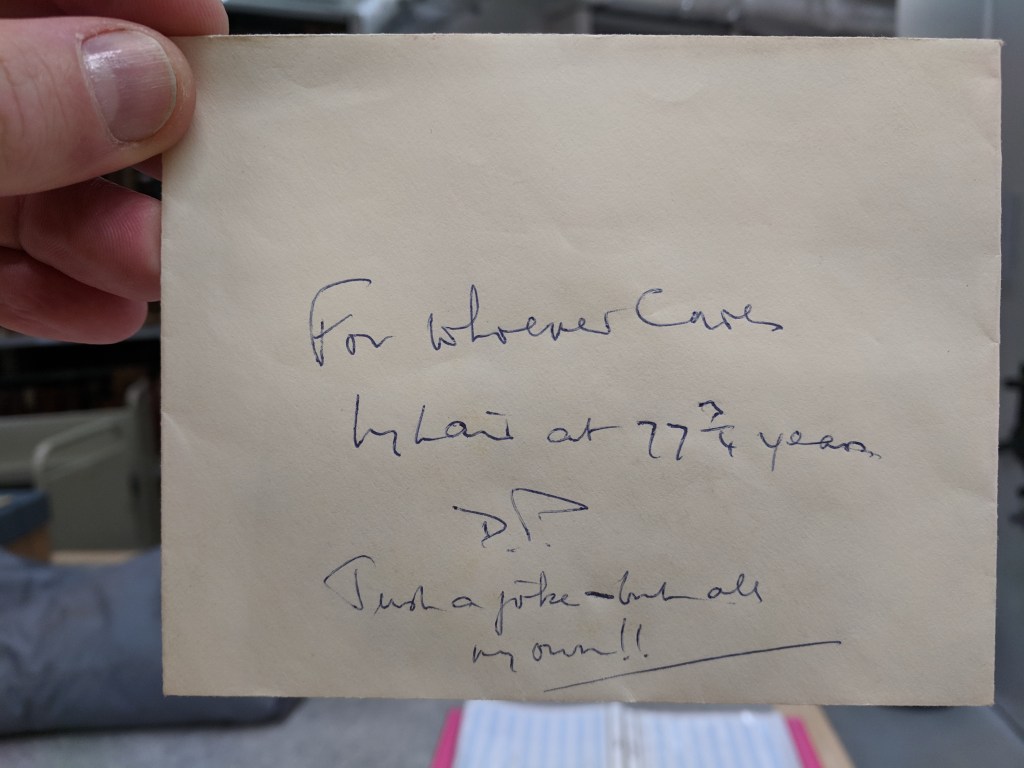
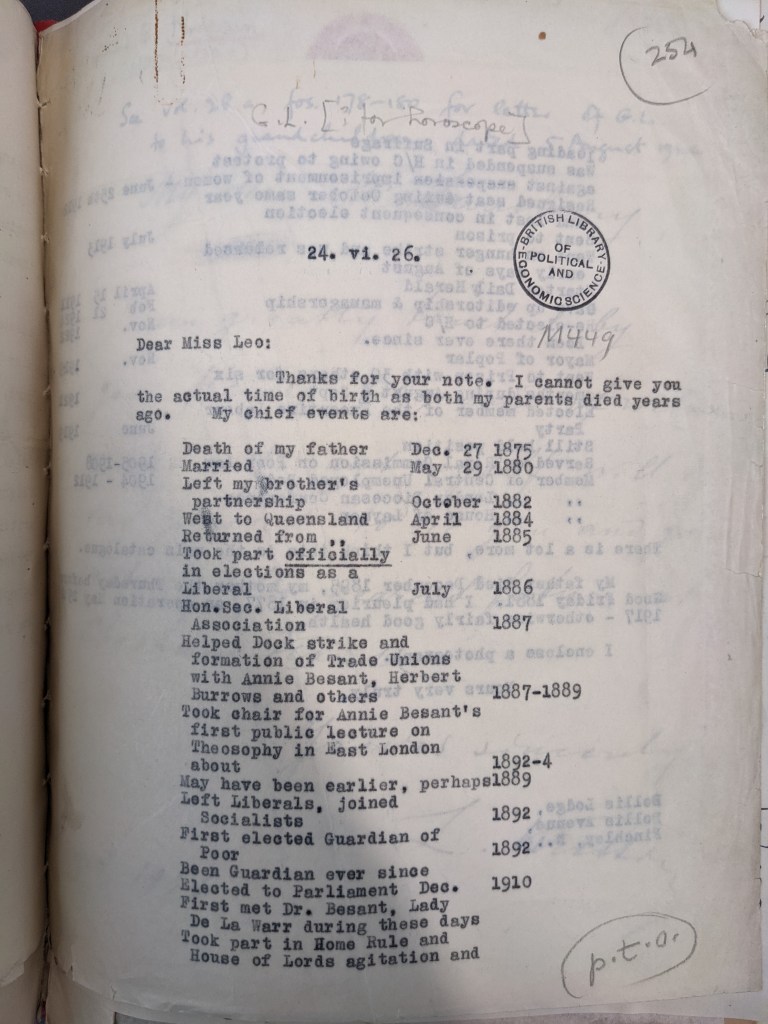

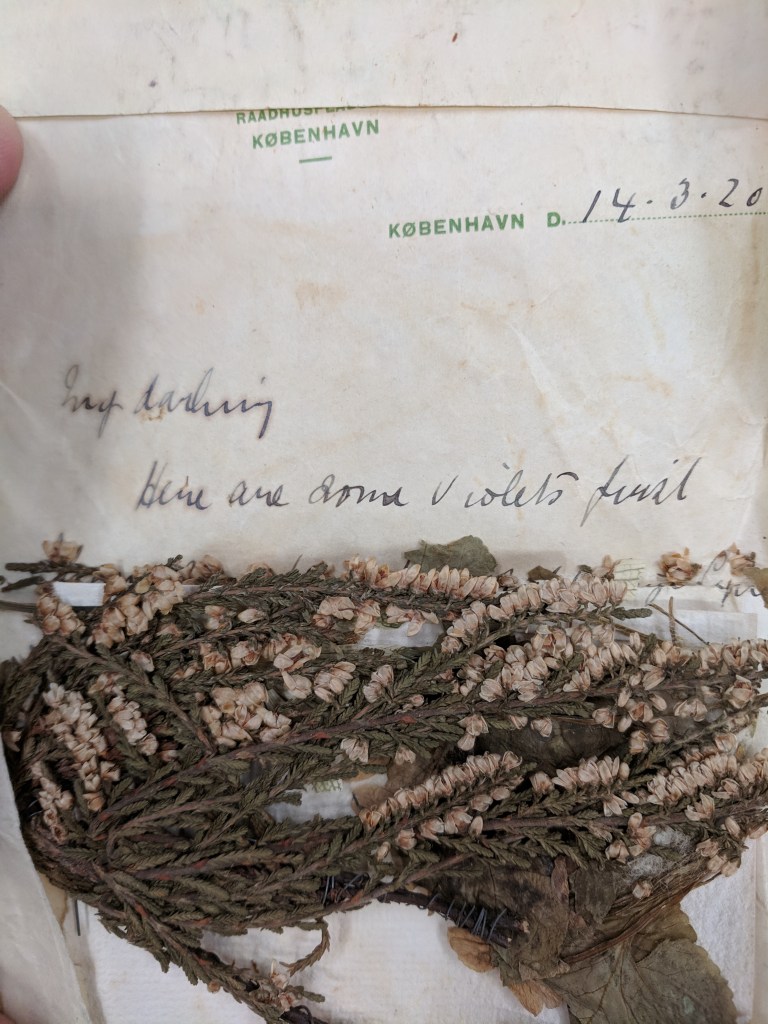
There are plenty of surprises in the collection too. Daisy Postgate unexpectedly pops up in a wonderful joke she plays on future archivists – an envelope of her hair. Another letter appears to be George sending off facts about his life in return for a bespoke horoscope. Some items are very moving and personal – here, too, is George sending dried flowers to his wife Bessie.

Digitisation of first two volumes
Recently LSE Library has invested in an in-house digitisation suite in order to digitise and make freely available online parts of the archives and special collections of which they are the custodians. Work has begun on a project to digitise the entirety of the Lansbury archive. Over the summer of 2022 a conservator assessed the collection, which was in poor condition and not generally available for consultation, to prevent it from deteriorating any further. The conservator deconstructed the bound volumes and separated each correspondence into separate items, to help preserve them and also to enable their digitisation.
This blog post announces the publication online of the first two volumes of this project. The volumes cover the period 1877–1906, which includes the family’s unhappy time in Australia and subsequent return to London, where they campaigned against untrue propaganda about the supposed ‘benefits’ of moving to the country. Also included are items relating to the Bow & Bromley Liberal Association of which he was elected General Secretary in 1886 and the Social Democratic Federation which he joined in 1892. The first two volumes in the George Lansbury Archives can be found here.

The remaining volumes and photographs will be added over the coming year (2022-2023). In the meantime they are still accessible in person by booking an appointment at the reading room of LSE Library.
Daniel Payne is Curator of the Politics and International Relations archives at LSE Library, and is a committee member of the George Lansbury Memorial Trust. For any queries please email LSE Library. All photographs in this post are from the Lansbury Archives, LSE Library, and reproduced with permission.
Discover more from Society for the Study of Labour History
Subscribe to get the latest posts sent to your email.
 Society for the Study of Labour History