Alan Campbell and John McIlroy share headline findings from their research into the leadership of the Communist Party of Great Britain during the Comintern’s Third Period, 1928–1934.
In a recent article for Labor History, we continue our extended prosopographical study of leading British Communists between the wars. It reports on a survey of the 66 members who served on the Central Committee (CC) of the British party (CPGB) between 1928 and 1934. We were able to assemble basic details of 63 of the 66 CC representatives during these years which are usually termed the Third Period of the Comintern. We drew a blank on ‘Miss Phillipson’ and ‘J. Parcell’ and were only able to establish a fragmentary profile of Alexander McLean employed at the Cowlairs Railway Workshops in Glasgow. This constitutes an authoritative sample unusual in a literature where studies which combine statistical rigour with collective biography are rare.

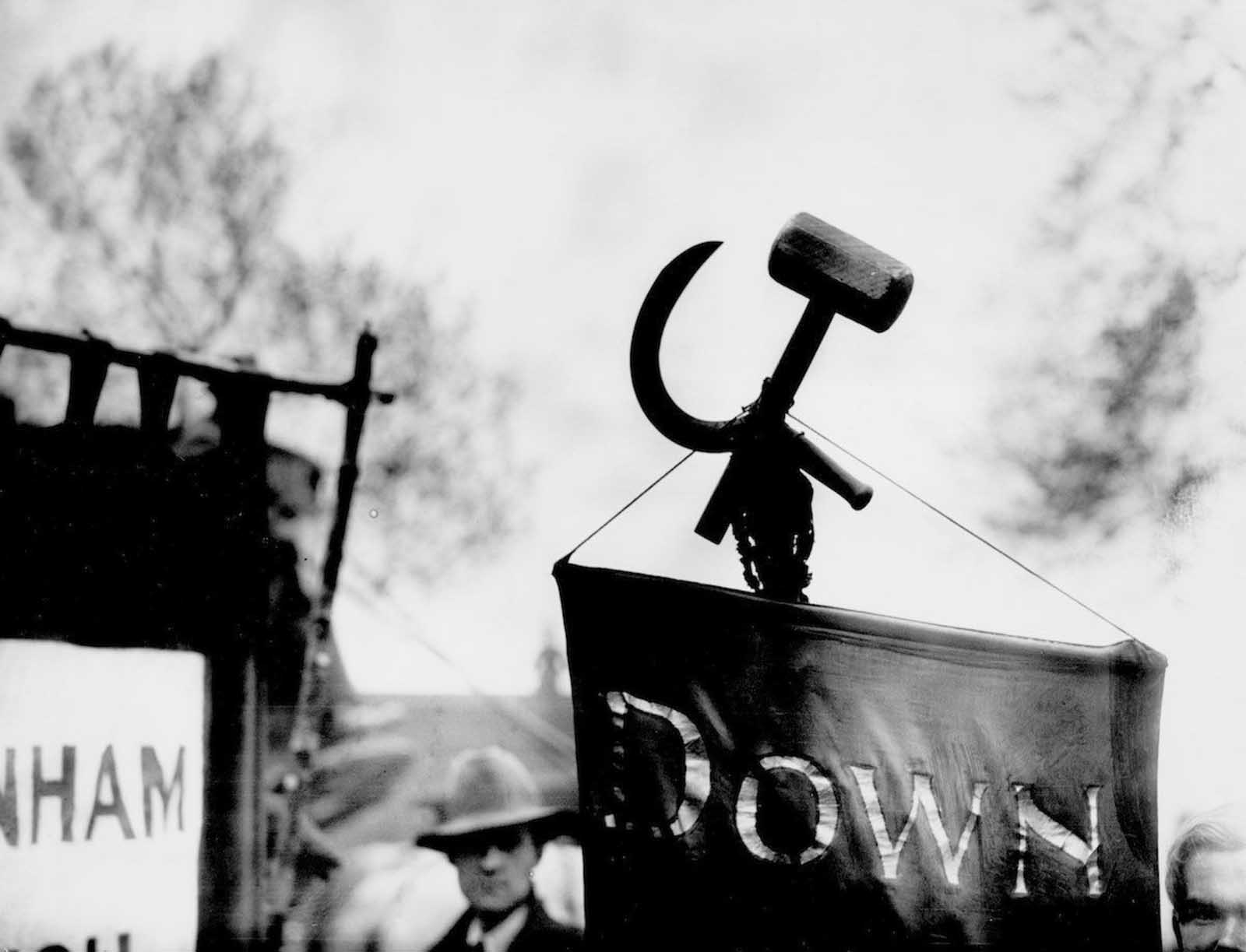
The Third Period and the politics of ‘Class Against Class’ in Britain related in intimate but distinctive fashion to the consolidation of Stalinism, brutal industrialisation and coercive collectivisation of agriculture in the Soviet Union – Stalin’s ‘second revolution’. Class Against Class announced a resurgence of capitalist crisis, the ‘revolutionisation’ of the proletariat and a turn to fascism by the leadership of the labour movement. As the ‘social fascists’ sought to integrate labour with the bourgeois state and manage their members in the interests of capital, the Comintern terminated ‘united front’ initiatives with reformist leaders, only a ‘united front from below’ of Communists and workers rebelling against reformism was permissible. The mantle of ‘independent leadership’ fell on the CPGB which in favourable conditions should attempt to build revolutionary trade unions.
Historians for the most part have concurred with the party’s official history in deeming the episode ‘a disaster’ (Branson, History of the Communist Party of Great Britain, 1927–1941, p. 17). The independent-minded scholar, Leslie Macfarlane, considered that ‘by the end of the twenties [CPGB] policies had lost almost all contact with reality’ (The British Communist Party: Its Origin and Development until 1929, p. 279). Roderick Martin believed the CPGB line was ‘alien to the whole tradition of British trade unionism, had no chance of success and could only lead to Communist isolation’ (Communism and the British Trade Unions, p. 121). James Hinton and Richard Hyman observed ‘the insane sectarianism of Stalin’s “third period” … by 1930 the CPGB was little more than an isolated sect’ (Trade Unions and Revolution, pp. 48, 73). Pronouncing ‘The view that social democracy was therefore a greater danger than the rise of Hitler, indeed that it could be described as “social fascism” bordered on political insanity’, Eric Hobsbawm reflected: ‘Excuses for the lunacies of the Comintern may no doubt be found’ (Interesting Times, pp. 68–69).
Within this all-encompassing political failure, some have drawn attention to Communist work among the unemployed, workers’ theatre, sporting activity and ‘Little Moscows’ (see, for example, Matthew Worley, Class Against Class: The Communist Party in Britain Between the Wars, 2002) – which, of course, Communists saw as an ancillary means of progressing towards revolution, not as a substitute for it.
Much has been written about the Third Period in Britain; but little is known about many of those who steered the CPGB through these stormy years. Recuperation repairs an absence in the historiography. The 63 Communists we studied were examined in relation to their origins, occupations, prior affiliations, political careers and destinations. The CC was made up overwhelmingly of workers: 89.1% were from working-class homes compared with 10.9% from middle-class backgrounds – a slight increase in working-class representation on earlier years. The male segment of the proletariat predominated, with skilled manual workers – conventionally seen as the backbone of Communist parties – but also miners strongly represented. The number of women on the committees more than doubled; but they remained a small minority – only ten of the 66 representatives, 15.2%, were women, while there was only one person of colour, Palme Dutt, who came from an atypical bourgeois background. Consonant with the Comintern’s determination to purge those leaders who had been associated with ‘the old line’, 62% of these representatives were newcomers, turnover accelerated – significantly compared with 1923–1927 – and the Old Guard was removed. Prominent among those who suffered destructive criticism and whose careers and lives changed, were Albert Inkpin, Arthur Horner, Tommy Jackson, Andrew Rothstein, Jock Wilson and, a little later, Jack Murphy.
Overall, the mean age of representatives declined from 37 to 34 years – hardly a triumph of the Comintern aspiration to youthful renewal. Moscow’s demand that the CC be restructured to include more factory militants new to the struggle met with mixed success. Many brought into the leadership on that basis at a time of high unemployment and victimisation graduated to the party payroll, rather than continuing to agitate in the workplace. By 1934, 90% of CC representatives were employed by the CPGB; although the spectrum ran from the semi-permanent to those on insecure ‘short-term contracts’. Nonetheless, professionalisation of the party, while still limited, was marked in comparison with the Communist Party’s predecessors, the British Socialist Party and the Socialist Labour Party, although they were not subsidised by a state.
But short-term upheaval in these years failed to achieve a lasting renewal of the party leadership. Around 75% of those who made their debut on the CC during the years of ‘Class Against Class’ did not survive beyond them as committee representatives; or took other leading roles. This had negative implications for Lenin’s injunctions to construct a stable cadre. On the other hand, a group of twelve who served on the CC before, during and after the Third Period was bolstered by a cohort of ten newcomers who continued in the party leadership after 1934. However, renewal was limited. In succeeding decades, none of the latter group challenged the influence and prestige of the inner core of ageing veterans, notably Harry Pollitt, J.R. Campbell, Rajani Palme Dutt, Willie Gallacher – all founder members – and Peter Kerrigan who joined a little later – a group which, for better or for worse, directed the CPGB from the 1920s until the end of the 1950s.
Read the full article at the link below.
John McIlroy and Alan Campbell, ‘Class Against Class’: The leadership of the Communist Party of Great Britain during the Comintern’s Third Period, 1928–1934, Labor History, vol. 63, no. 2 (2022), pp. 145–189.
Alan Campbell is a former chair of the Society for the Study of Labour History and former editor of its journal. John McIlroy is a former secretary of the Society.
Further reading
Communist women leaders in the 1920s and 1930s: John McIlroy and Alan Campbell introduce their papers on the women who served on the CPGB Central Committee before the second world war.
A new investigation of the leaders of British Communism in the 1920s: John McIlroy and Alan Campbell introduce two papers on British communist leaders 1923-1928.
Discover more from Society for the Study of Labour History
Subscribe to get the latest posts sent to your email.
 Society for the Study of Labour History